Process Becomes Audible
Editing, manipulation and accident remain part of the musical surface.

Psychedelic Rock Family
Psychedelic perception pursued through unfamiliar form, unstable texture and studio processes that do more than decorate a conventional song.
The Sound
Experimental psychedelia begins when altered sound changes the composition itself. Tape manipulation, collage, extended drone, abrupt edits and non-standard structure can determine where the music travels instead of appearing as effects added afterward.
The category is intentionally broad, but not meaningless. A record belongs here when uncertainty is structural: the listener cannot always predict whether a passage will resolve, repeat, dissolve or reveal that the apparent song was only one layer.
It overlaps with avant-prog, electronic experiment and free improvisation, while retaining psychedelia’s interest in perception, immersion and unstable reality.
What You’ll Hear
How It Works
Experimental psychedelia treats recording methods, unconventional instruments and unstable form as ways of changing perception. A piece may begin with recognisable psych colour, then reorganise itself through tape interruption, collage, tuning drift or a structure that refuses to return where expected.
The useful question is not whether the sound is strange, but what the strangeness does. It may erase the border between performance and environment, make time feel discontinuous or turn a repeated fragment into something the listener no longer recognises.
Useful distinction: Boundary line: novelty is not enough. Experimental psychedelia needs a perceptual logic that survives beyond the first surprise.
Editing, manipulation and accident remain part of the musical surface.
Sections may interrupt, overlap or return in altered condition.
Familiar instruments are processed until their identity shifts.
Form teaches a new way to understand what counts as foreground.
Historical Development
Experimental psychedelia describes records that use altered perception as permission to question the machinery of rock itself. Rather than decorating conventional songs with effects, these artists disrupt form, tuning, instrumentation, editing and the boundary between composition and noise. The result can remain visceral even when familiar song structure disappears.
The Red Krayola combined garage performance with free-form eruptions; Silver Apples built pulse from homemade oscillators and drums; the United States of America used electronics as an ensemble voice. Tape collage, early synthesizers, amplified objects and collective improvisation created routes that did not fit comfortably inside pop psychedelia or acid rock.
The category connects 1960s psychedelia to later industrial, electronic, noise and post-rock practice. Its historical value is not that every experiment succeeded. It documents a moment when inexpensive studios, new electronics and countercultural permission made failure part of the method.
The Real-World Foundations
Not a ranking: six useful doors into the style.
Songs and free-form noise refuse to remain separate categories.
Homemade electronics enter an abrasive psychedelic rock ensemble.
Oscillator patterns and Danny Taylor's drums anticipate electronic rock without abandoning pulse.
Ring modulators, tape and political theatre replace the conventional lead guitar.
Studio assembly turns voice, tape and electronics into a disorienting narrative space.
Primitive percussion, collage and extreme vocal sound point far beyond period psychedelia.
Start Here
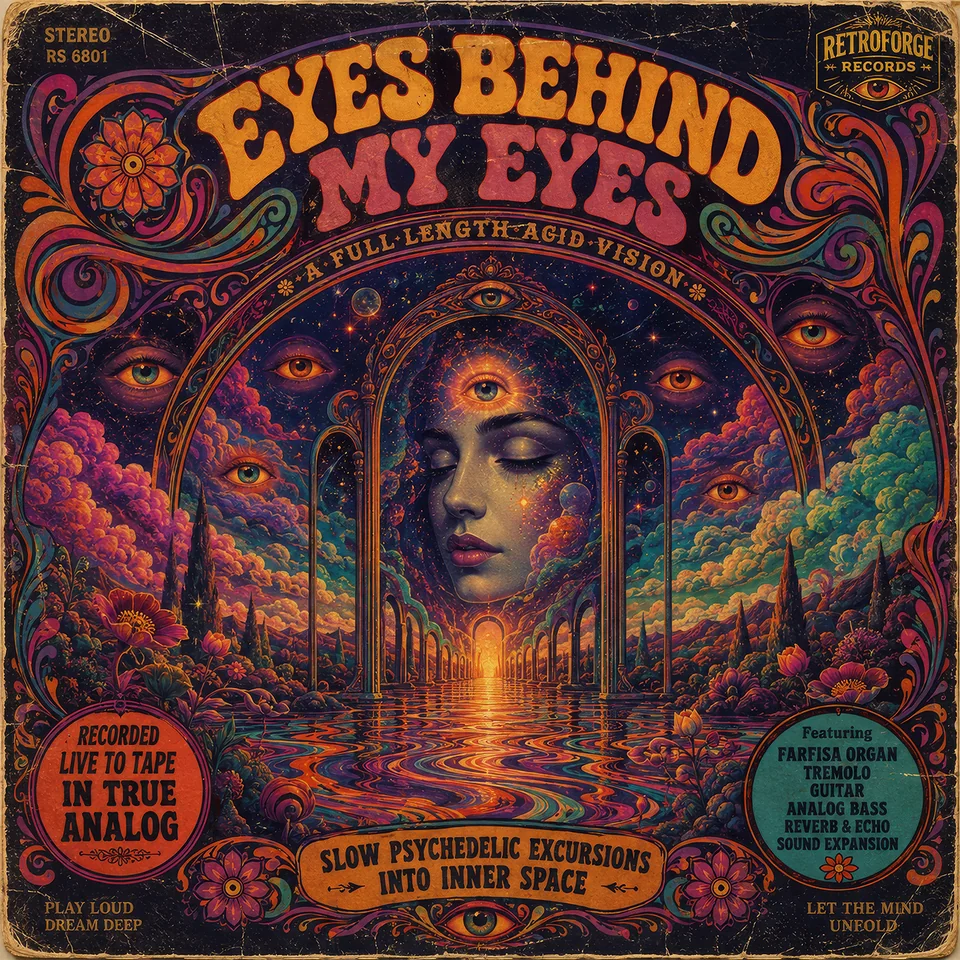
Psychedelic Rock · Perceptual Drift
A journey built around unstable viewpoint, layered perception and the difficulty of trusting the frame.
Open the liner notes →Questions from the Record Room
Sometimes only partly. The category is useful precisely because these records test how much of rock's instrumentation and form can be removed or transformed.
No. Experiment matters when the method changes structure, performance or the listener's relationship to the piece.
Its methods echo through electronic rock, industrial music, noise, post-punk, post-rock and many forms of studio-based experimental pop.
Research Trail
Deeper Discovery
Start with The Forest Where Nothing Stays as a RetroForge companion, then return through Psychedelic Rock to place it inside the wider family.
Curated paths into the people, records, events and ideas that give this subject its wider musical context.