

Edition timeline
The racecourse opens to rock
Electric Factory Concerts begins three days at Mays Landing.
A deep multi-genre programme
Soul, folk, blues, psychedelia and emerging progressive rock share one stage.
Professional continuity
A permanent venue and experienced Philadelphia promoters keep the programme moving.
An archive without a canonical film
Amateur images and press survive, but no official audiovisual monument defines the event.
Why this event matters
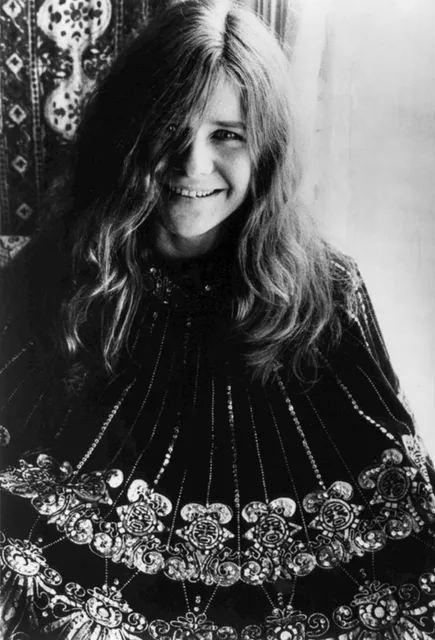
Atlantic City Pop gathered a major audience and one of the richest bills of summer 1969 before Woodstock, yet remains comparatively obscure. That contrast makes it historically useful. The event demonstrates that successful festival production alone did not guarantee lasting fame. A professional promoter, permanent racecourse and broad programme created a significant weekend, but the absence of an official film or soundtrack allowed a later event’s media mythology to eclipse it. Electric Factory Concerts grew from Philadelphia’s Electric Factory club through Larry Magid and partners Herb, Jerry and Allen Spivak with Shelly Kaplan. By 1969 the organisation had booking relationships, technical knowledge and a regional audience large enough to attempt a three-day outdoor event. Contemporary advance coverage documents a formidable advertised bill, while later artist and press records are needed to distinguish names that actually performed from names that changed before the gates opened. Despite the festival’s name, the venue was Atlantic City Race Course in Mays Landing, Hamilton Township, well inland from Atlantic City’s Boardwalk. The distinction prevents a common geographical error and clarifies the practical setting. Grandstands, access roads and established crowd facilities offered useful infrastructure, while the open infield supported a large stage audience. The place was a working racecourse adapted for music, not a beach festival. Janis Joplin, Jefferson Airplane, Joni Mitchell, Santana, Chicago, The Byrds, B.B. King, Little Richard, Procol Harum and Creedence Clearwater Revival demonstrate the programme’s reach. Soul history, folk songwriting, psychedelic improvisation, blues and brass-driven rock met in a sequence that anticipated several later genre routes. Day-by-day evidence matters because advance publicity, substitutions and performance schedules do not always align; a long poster is evidence of ambition, not automatic proof of every set.

What the audience experienced
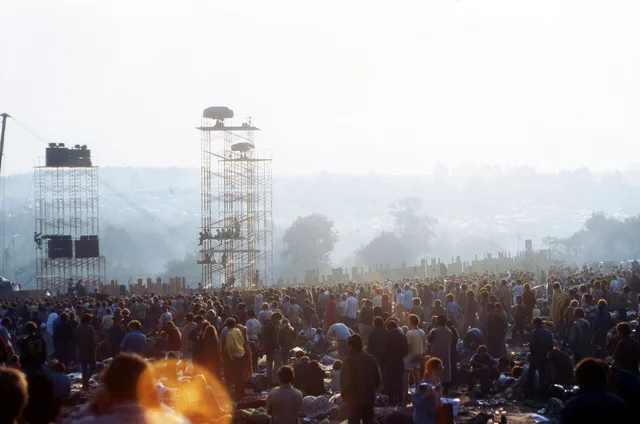
Crowd estimates vary widely, from a contemporary report of more than 50,000 to retrospective weekend totals above 100,000. The safest conclusion is scale without invented precision. Visitors occupied grandstand and infield zones within a venue accustomed to mass movement. Accounts emphasise music and relative functionality more than catastrophe. That comparative calm is part of why the weekend generated fewer dramatic headlines and, paradoxically, a weaker myth than more visibly troubled festivals. Electric Factory’s experience and the racecourse’s permanent facilities supported a dense three-day programme. The event did not need to invent every road, gate or spectator zone from raw farmland. Production competence is important because it separates Atlantic City’s later obscurity from any assumption that it failed operationally. Claims about an experimental Buckminster Fuller stage design circulate retrospectively, but should remain attributed unless supported by contemporary technical documentation. The festival’s principal historical problem is archival rather than a spectacular collapse on site. Crowd pressure, weather, schedule changes and ordinary three-day fatigue existed, but no single riot or storm defines the surviving account. Attendance disagreement is another limit: figures describe different counting methods and times. A careful page preserves that uncertainty instead of choosing the largest number because it makes the story more impressive. Electric Factory Concerts continued as an important regional and national promoter, but Atlantic City Pop did not become an annual brand. Two weeks later, Woodstock supplied the images and recordings through which the entire festival era would be remembered. Artists moved onward, audiences folded the weekend into personal memory and the racecourse returned to its normal function. The event’s organisational success therefore had no equivalent institutional or cinematic sequel.

Films, recordings and surviving documents
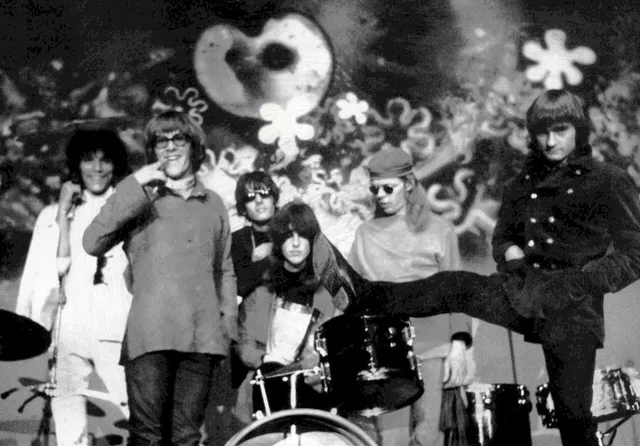
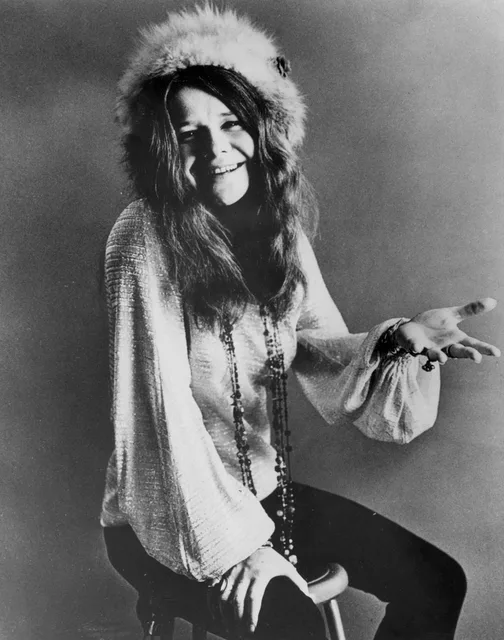
Larry Magid has stated that no professional film or tape recording was made. Amateur silent 8mm footage, photographs, contemporary newspapers, artist archives and promotional material survive. This distinction is decisive: scattered evidence can reconstruct an event without creating the immersive afterlife of a concert film. The images used here are artist context from the period and are never labelled as racecourse performances. Festival memory is built by media as much as attendance. Woodstock had a commercially released film, bestselling soundtrack and an endlessly reusable visual symbol. Atlantic City had proximity in time, many comparable artists and substantial scale, but no equivalent narrative machine. Its relative disappearance is not evidence of insignificance. It reveals how archives select which gatherings become cultural shorthand and which remain known chiefly to participants and specialist historians. The page connects chronologically to Denver, Atlanta, Newport, Texas and the two Miami festivals. Artist links to Jefferson Airplane, The Byrds and Procol Harum show touring routes crossing psychedelic, folk and progressive histories. Comparing racecourses at Mays Landing, Hampton and Lewisville also reveals a practical festival model: existing motor-sport venues offered space and infrastructure without supplying a ready-made solution to every audience need. Atlantic City Pop deserves recognition as a professionally organised, musically adventurous pre-Woodstock landmark. Its deep bill demonstrates how rapidly soul, blues, folk, psychedelia and emerging progressive rock were converging at outdoor events. Its weak audiovisual afterlife provides an equally important lesson: historical visibility depends on what survives and who controls it. The “lost” festival was not absent from 1969; it was absent from the media canon built afterward.


Follow the festival beyond the field
Timeline
Related genres
Related band guides
Explore by sound
Essential listening
Sources and further reading
- Electric Factory historyElectrified · accessed 23 July 2026
- Electric Factory RecordsTemple University Libraries · accessed 23 July 2026
- Atlantic City Pop Festival advance reportJoni Mitchell Library · accessed 23 July 2026
- 50,000 Jam First Atlantic City Pop FestRecord World · accessed 23 July 2026
- Atlantic City Race Course historyNational Museum of Racing · accessed 23 July 2026
Image credits5 licensed images
Janis Joplin in a public-domain 1969 publicity photograph, used as period context rather than as a Mays Landing stage image — Ashley Famous Agency/Albert B. Grossman-management — Wikimedia Commons — Public domain · source record · Public domain
Converted to WebP and resized; no generative or compositional alterations.
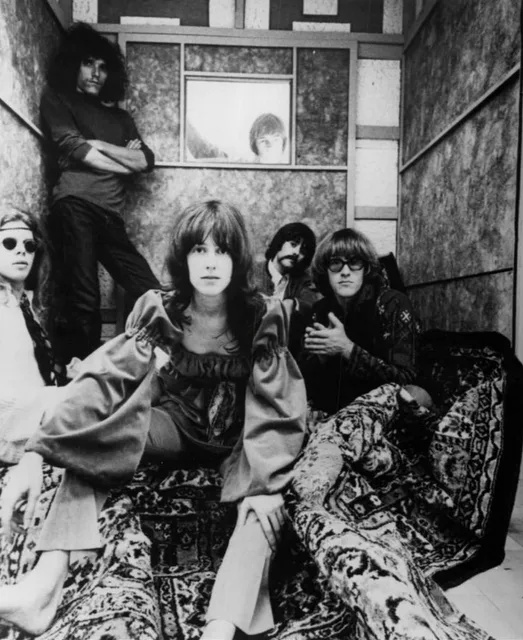
Jefferson Airplane in 1967, providing period context for the festival’s broad psychedelic programme — RCA Records/photographer: Herb Greene — Wikimedia Commons — Public domain · source record · Public domain
Converted to WebP and resized; no generative or compositional alterations.
Jefferson Airplane around 1970. The image is close-period artist context and is not presented as festival documentation — RCA Records — Wikimedia Commons — Public domain · source record · Public domain
Converted to WebP and resized; no generative or compositional alterations.
A concert photograph linking two acts associated with the 1969 festival circuit; it was not taken at Atlantic City — James M Shelley — Wikimedia Commons — CC BY-SA 4.0 · source record · CC BY-SA 4.0
Converted to WebP and resized; no generative or compositional alterations.
Janis Joplin in 1970, a later artist portrait used to illuminate a programme whose visual archive is unusually thin — Albert B. Grossman Management (personal manager), New York. — Wikimedia Commons — Public domain · source record · Public domain
Converted to WebP and resized; no generative or compositional alterations.