

Overview
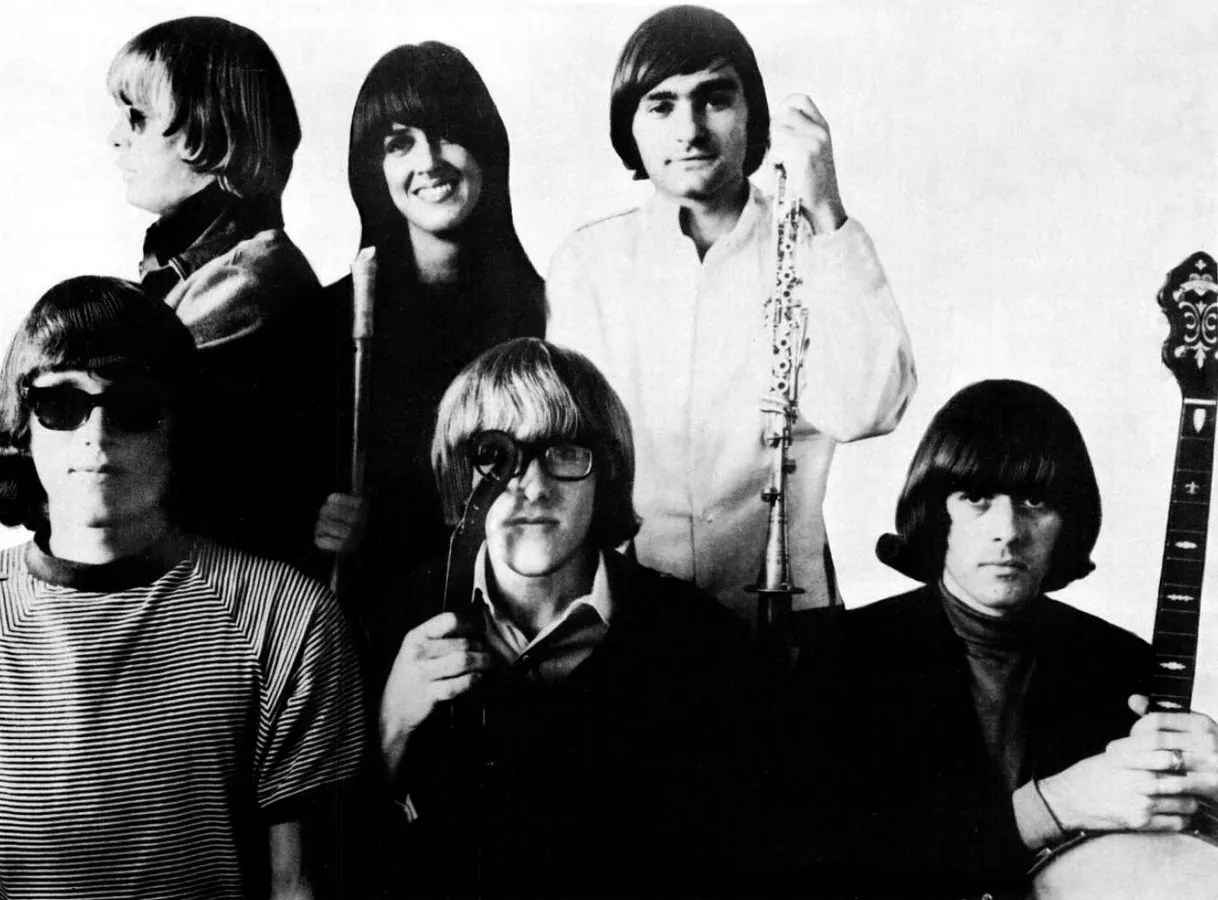
Jefferson Airplane carried the San Francisco rock scene onto a national stage. Their 1967 breakthrough, Surrealistic Pillow, joined Grace Slick and Spencer Dryden to Marty Balin, Paul Kantner, Jorma Kaukonen and Jack Casady; that six-person lineup remained intact through Volunteers in 1969.
The group could move from Balin's close-harmony ballads to Slick's tightly controlled lead vocals, Kaukonen's electric blues and collective improvisation. "Somebody to Love" and "White Rabbit" supplied the best-known singles, but the studio albums and live recordings reveal a band whose writers, singers and instrumentalists rarely occupied one fixed style.
Formation & History
Marty Balin assembled Jefferson Airplane in San Francisco in 1965. The lineup heard on Jefferson Airplane Takes Off comprised Balin, Paul Kantner, Jorma Kaukonen, Jack Casady, singer Signe Toly Anderson and drummer Skip Spence. RCA signed the band within months of its first Matrix performance, making it the first act from the emerging San Francisco scene to secure a major-label recording contract.
The rhythm and vocal lineup changed during 1966. Spencer Dryden replaced Spence in the summer; Anderson left in October after becoming a mother, and Grace Slick arrived from the Great Society. Slick brought "White Rabbit," which she wrote, and "Somebody to Love," written by Darby Slick. Recorded by the new sextet for Surrealistic Pillow, the songs became the band's national breakthrough.
The classic lineup appeared at Monterey Pop in 1967, Woodstock in August 1969 and Altamont that December. Its studio writing grew more expansive on After Bathing at Baxter's, more compressed on Crown of Creation, and explicitly political on Volunteers. Dryden left in 1970 and Balin in 1971. Kaukonen and Casady increasingly concentrated on Hot Tuna, while a changed Airplane made Bark and Long John Silver. The September 1972 tour finale at Winterland became the band's last concert of its original era. Jefferson Starship emerged separately in 1974 around Kantner, Slick, Balin, David Freiberg and other musicians; it was not simply a new name adopted by the 1972 Airplane lineup.
Sound & Style
Jefferson Airplane's identity begins with contrast. Balin, Slick and Kantner could form dense three-part vocal arrangements or take sharply different leads. Kaukonen brought fingerpicked acoustic guitar and amplified blues phrasing; Casady treated the bass as a mobile melodic voice; Dryden's jazz-informed drumming gave long performances movement without reducing them to a rigid backbeat.
The records change shape rather than repeat one formula. Surrealistic Pillow balances compact singles, ballads and the solo acoustic "Embryonic Journey." After Bathing at Baxter's groups eleven pieces into five suites and opens more space for collage, feedback and collective playing. Crown of Creation tightens that language into separate songs, while Volunteers combines harder ensemble attack, piano, steel guitar and layered guest contributions with direct political writing.
Essential Albums
Surrealistic Pillow
1967The first album by the classic sextet places Slick's "White Rabbit" and Darby Slick's "Somebody to Love" beside Balin's "Today" and "Comin' Back to Me," Kaukonen's solo acoustic "Embryonic Journey" and compact full-band rock. Rick Jarrard's production preserves separation among the three principal voices, Casady's distorted bass and Dryden's drums. The Library of Congress added the album to the National Recording Registry in 2024.
Key tracks: Somebody to Love · White Rabbit · Today · Embryonic Journey
Open album guide → View on Amazon →Volunteers
1969Recorded at Wally Heider Studios, the fifth studio album is the classic sextet's final studio statement. "We Can Be Together" and the title track make Kantner and Balin's political language explicit; Kaukonen arranges the traditional "Good Shepherd," and the Airplane's version of "Wooden Ships" sits beside contributions from Nicky Hopkins, Jerry Garcia and other guests. The record's range is part of its argument, not a detour from it.
Key tracks: We Can Be Together · Good Shepherd · Wooden Ships · Volunteers
Open album guide → View on Amazon →Released nine months after Surrealistic Pillow, the third album abandons the previous record's compact programme. Eleven tracks are arranged as five linked groups; Kantner writes or co-writes six pieces, Slick contributes piano, organ and recorder as well as two songs, and the full band shares the long improvisation "Spare Chaynge." The suite structure makes transitions, tape effects and ensemble interaction as important as individual singles.
Key tracks: The Ballad of You & Me & Pooneil · The Last Wall of the Castle · Won’t You Try / Saturday Afternoon
Open album guide → View on Amazon →Affiliate note: Amazon links on this page may earn RetroForge Records a small commission, at no extra cost to you.
Deeper Cuts
Crown of Creation
1968Crown of Creation compresses the experiments of Baxter's into eleven distinct tracks. Slick's "Lather," Kaukonen's "Star Track," Balin and Kantner's "If You Feel" and David Crosby's "Triad" give separate writers clear space, while Dryden's miniature instrumental "Chushingura" interrupts the song sequence.
Open album guide → View on Amazon →Recorded at Fillmore West and Fillmore East in October and November 1968, the first live album recasts familiar songs through Casady's louder bass, Dryden's flexible pulse and extended ensemble playing. "Bear Melt" and "Thing" document collective improvisation that the concise studio singles only imply.
Open album guide → View on Amazon →Bark
1971The first album issued on the band's RCA-distributed Grunt imprint is also the first studio record without Balin or Dryden. Joey Covington and violinist Papa John Creach alter the ensemble, while songs by Kantner, Slick and Kaukonen preserve their authors' differences instead of presenting a single unified style.
Open album guide → View on Amazon →Why They Still Matter
Jefferson Airplane matter because their best-known singles, album experiments and live improvisations document different sides of the same working band. The classic lineup could enter the pop charts without abandoning unusual vocal combinations, active bass writing or open-ended concert arrangements. Its political turn also occurred within the music itself: the harder collective attack of Volunteers differs audibly from the intimate ballads on Surrealistic Pillow.
Their historical standing is not only retrospective. Jefferson Airplane entered the Rock & Roll Hall of Fame in 1996, and the Library of Congress selected Surrealistic Pillow for the National Recording Registry in 2024. Those recognitions preserve a specific achievement: six distinct musicians making concise records and exploratory performance coexist without smoothing away their differences.
Sources & Further Reading
Jefferson Airplane official site — band overview, personnel and performance chronology.
Jefferson Airplane official 1972 timeline — final studio sessions, lineup changes and last concert of the original era.
Rock & Roll Hall of Fame — formation, classic lineup and 1996 induction.
Library of Congress National Recording Registry — Surrealistic Pillow, songwriting and musical details.
Woodstock official lineup archive — Jefferson Airplane's 1969 performance and set list.
Connected archive routes
Explore This Band
Continue through the RetroForge knowledge graph
Curated paths into the people, records, events and ideas that give this subject its wider musical context.
Genres and scenes
Festivals
- Monterey Pop 1967: The Festival That Introduced a New Rock Generation