

Edition timeline
The Deep South festival opens
A speedway becomes a temporary concert city during exceptional summer heat.
A broad Southern bill
Rock, soul, jazz, blues and brass-driven groups share the programme.
More than 100,000 visitors
The scale establishes Atlanta as a national festival centre.
Music returns to the city
Promoters stage a free Piedmont Park concert with several festival acts and the Grateful Dead.
Why this event matters
The first Atlanta festival was a regional threshold. Before Woodstock fixed mass-festival memory around rural New York, more than 100,000 people had gathered at a Georgia speedway for an international bill. New Georgia Encyclopedia and Alex Cooley’s own history describe it as the first event of its kind in the Deep South. That location gave the gathering political and cultural force during the Vietnam era and the governorship of Lester Maddox. Cooley drew inspiration from the December 1968 Miami Pop Festival. While seeking investors, he discovered another Atlanta group led by Chris McLoughlin, Robin Conant and Fred Lagerquist planning a similar event. The groups merged into a seventeen-member promotional team. That origin shows a local festival economy assembling through overlapping networks rather than a finished national industry simply importing a model into Georgia. Atlanta International Raceway at Hampton offered an infield, roads and existing crowd infrastructure, but it was not built to shelter a counterculture settlement in near-hundred-degree heat. Fire departments used hoses to cool people. Concessions and drinking-water capacity proved inadequate, with long waits for basic supplies. The site made six-figure scale possible and exposed how little first-time organisers understood about sustaining it. Janis Joplin, Creedence Clearwater Revival, Blood, Sweat & Tears, Led Zeppelin, Grand Funk Railroad and Chicago Transit Authority anchor the documented programme. Dave Brubeck and Gerry Mulligan widened the jazz route; Booker T. & the M.G.’s and the Staple Singers brought soul; Johnny Winter and the Paul Butterfield Blues Band maintained a blues line. Chuck Berry appeared in advance billing but did not perform, a useful warning against treating posters as set lists.

What the audience experienced
The audience encountered relentless heat, loud music, insufficient water and the novelty of a Southern speedway converted into a two-day youth gathering. Local visitors mixed with travellers and a developing regional counterculture. It was broadly peaceful, but describing it as effortless would erase the queues, exposure and practical strain. Hoses used as giant sprinklers became both relief and an image of infrastructure adapting in real time. Hanley Sound supplied the system, connecting Atlanta to the emerging specialist network behind American mega-festivals. The Electric Collage of Atlanta provided the light show. A raceway allowed promoters to think at stadium scale, but concessions and water showed that performance technology was only one part of production. A festival could sound convincing while the settlement around the stage remained poorly served. Atlanta 1969 is not remembered chiefly for violence or collapse. Its limits were heat, hydration, food service and the gap between unexpectedly large attendance and first-edition planning. That distinction matters. Not every major 1969 festival needs to be forced into a disaster narrative. The event’s relative orderliness made its weaknesses more instructive: organisers had proved demand and now had to learn how to care for the crowd they attracted. The event made a modest profit—Cooley later recalled roughly twelve thousand dollars—and helped establish him as a major Southern promoter. On 7 July, several festival acts joined the Grateful Dead for a free concert in Atlanta’s Piedmont Park. Cooley remembered countercultural guilt about profit as a motive; contemporary coverage also framed it as thanks for the festival’s success. The next year’s Byron event grew dramatically from this foundation.

Films, recordings and surviving documents
The archive is distributed across New Georgia Encyclopedia, Cooley’s own site, contemporary newspapers, posters and artist histories such as Led Zeppelin’s official concert archive. Recent documentary work has gathered footage, but public availability does not make every frame reusable. The photographs here are period artist context, not raceway documentation. Their captions preserve that difference while the sources reconstruct site conditions and confirmed appearances. The festival boom’s geography is often narrated from California to New York. Hampton disrupts that route. It placed an integrated international programme and a vast youth audience inside a Deep South still shaped by segregation’s immediate legacy, conservative state politics and the Vietnam conflict. The event did not erase those conditions; it made an alternative public culture visible within them and demonstrated a durable Southern market for ambitious live music. Atlanta 1969 connects directly to the Texas International Pop Festival later that summer and to the much larger Byron sequel in 1970. It also belongs beside Miami December, which inspired Cooley, and the national circuit that carried Led Zeppelin, Janis Joplin, Creedence and Chicago between cities. Internal links reveal organisers, artists and technical suppliers moving together through a rapidly forming festival network. Hampton’s success proved that large-format rock culture was not confined to the coasts. It accelerated Cooley’s career, supplied practical lessons for Byron and made Atlanta a more consequential stop in national touring. The festival remains overshadowed because Woodstock followed six weeks later and generated a stronger film mythology. Historically, that timing makes Hampton more important: it shows the mass festival already established in the South before Woodstock became the template.


Follow the festival beyond the field
Timeline
Related genres
Related band guides
Explore by sound
More routes will be connected as the archive grows.
Essential listening
Sources and further reading
- Alex CooleyNew Georgia Encyclopedia · accessed 23 July 2026
- Atlanta Pop FestivalAlex Cooley Archive · accessed 23 July 2026
- Atlanta International Pop FestivalToday in Georgia History · accessed 23 July 2026
- Atlanta International Raceway, 5 July 1969Led Zeppelin Official Website · accessed 23 July 2026
- Alex Cooley Presents collectionUniversity of Georgia Libraries · accessed 23 July 2026
Image credits5 licensed images
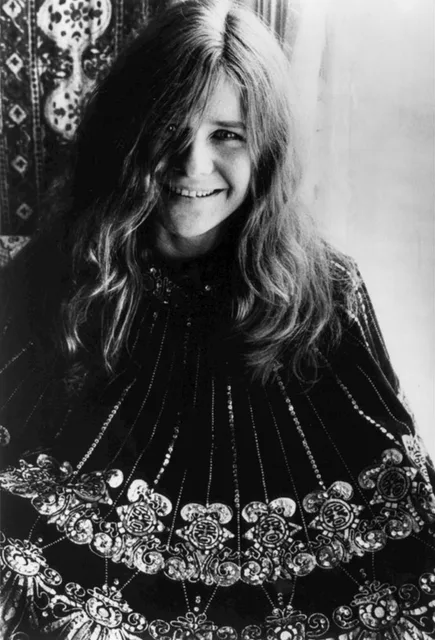
Janis Joplin in 1969, providing period artist context for Atlanta’s first international pop festival — Ashley Famous Agency/Albert B. Grossman-management — Wikimedia Commons — Public domain · source record · Public domain
Converted to WebP and resized; no generative or compositional alterations.
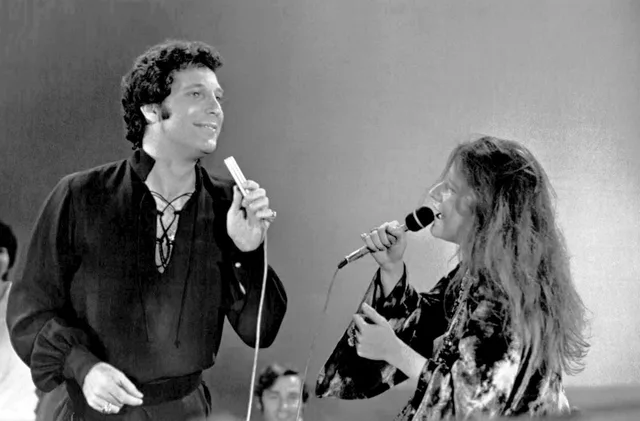
Janis Joplin during a 1969 television performance. This is period context, not an Atlanta festival photograph — ABC Television-while the release has apparently been cut down, the ABC Television New York Avenue of the Americas address can be seen on it. — Wikimedia Commons — Public domain · source record · Public domain
Converted to WebP and resized; no generative or compositional alterations.
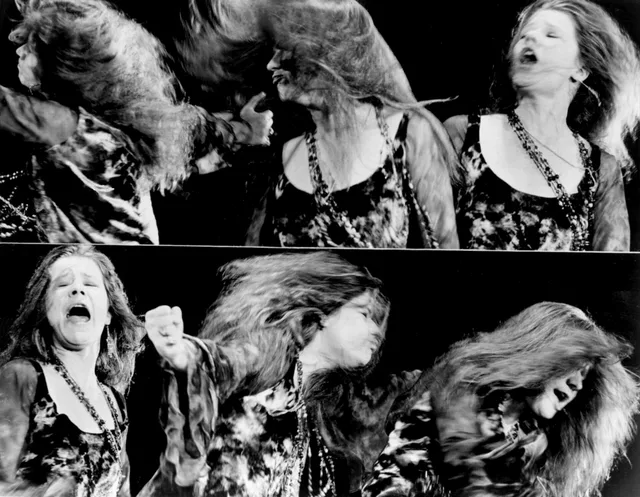
A public-domain 1969 performance montage of Janis Joplin, one of the event’s defining voices — ABC Television — Wikimedia Commons — Public domain · source record · Public domain
Converted to WebP and resized; no generative or compositional alterations.
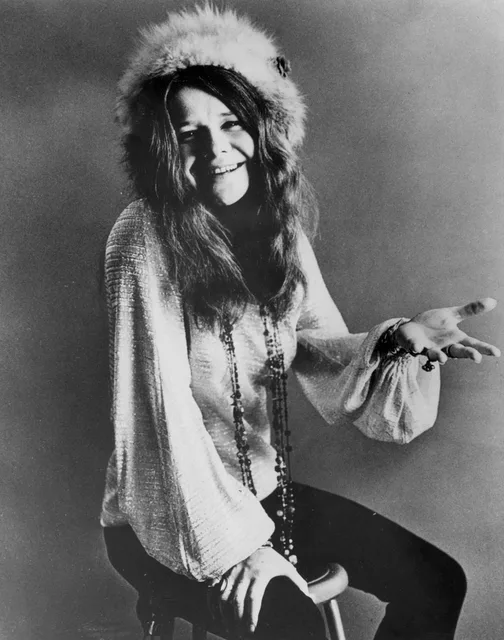
Janis Joplin in 1970. This close-period portrait is used as artist context and is not presented as an Atlanta festival photograph — Albert B. Grossman Management (personal manager), New York. — Wikimedia Commons — Public domain · source record · Public domain
Converted to WebP and resized; no generative or compositional alterations.
A later archival film still connected with Creedence Clearwater Revival, included as artist context rather than festival documentation — Eye Steel Film from Canada — Wikimedia Commons — CC BY 2.0 · source record · CC BY 2.0
Converted to WebP and resized; no generative or compositional alterations.