

Edition timeline
Underground free concerts supply early practices
Phun City, Glastonbury Fayre and parallel experiments show how temporary culture can be built.
Windsor, Stonehenge and Watchfield redefine land politics
Confrontation, autonomous occupation and negotiated tolerance coexist.
Regional and mobile circuits expand
Deeply Vale and the People’s Free Festival network demonstrate different organisational models.
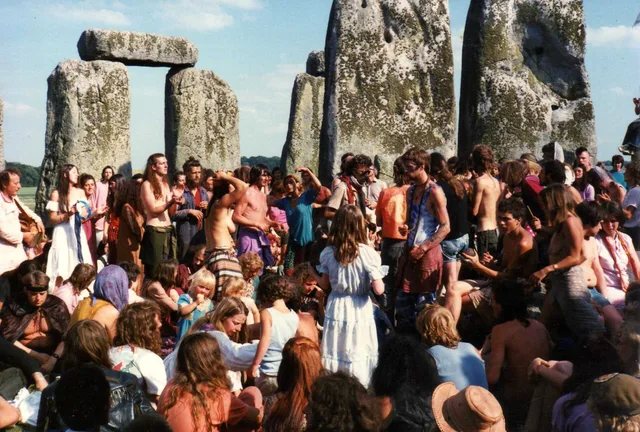
Stonehenge becomes the largest symbolic centre
Traveller infrastructure and changing punk cultures reshape the movement before the 1985 confrontation.
Why this movement matters
Free-festival culture treated the event less as a product than as a temporary way of living, with British gatherings forming the best-documented core and continental events offering parallels rather than one unified movement. Windsor turned contested access to land into a national political issue. The 1974 clearance made policing and property inseparable from the story of free music. Stonehenge grew independently from 1974 and accumulated people, vehicles, sound systems and symbolic force as other sites disappeared or became harder to secure. Government-supported use of the former airfield in 1975 showed that negotiated tolerance was possible, but the arrangement did not become stable policy.

Deeply Vale and regional expansion
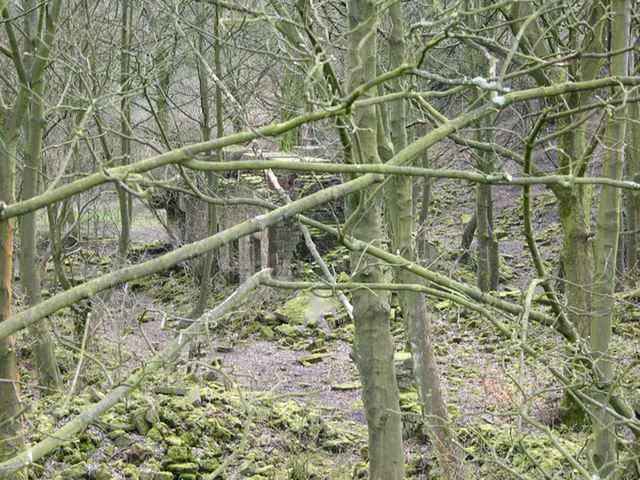
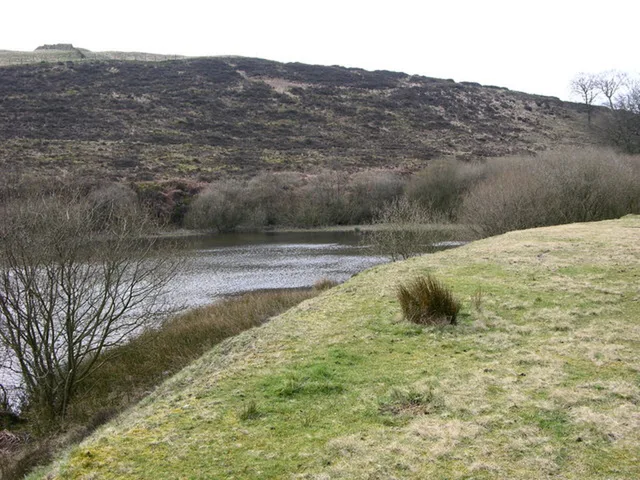
Deeply Vale demonstrated that sustained regional organisation, fundraising and local networks could create a recurring free festival outside the southern traveller route. Amsterdamse Bos and other documented European free concerts shared some practices without belonging to a central British organisation. Comparison must not become a false claim of direct coordination. For participants the movement joined music with camping, kitchens, stalls, children, political discussion and long periods of practical work. The audience often helped produce the event it attended. Vans, generators, PA systems, tents, printing skills, welfare knowledge and information about possible land made the festival portable even when no venue was secure. Psychedelic and progressive underground music overlapped with space rock, folk, punk and later anarcho-punk. The changing circuit cannot be reduced to one house style.

Law, land and policing
Injunctions, trespass law, local licensing and policing varied by site. Movement history is a sequence of specific legal encounters rather than one continuous national operation. Flyers, fanzines, photographs, benefit records and oral histories preserve a decentralised culture unevenly. Archival gaps are part of the evidence, not permission to invent a smooth chronology. The Battle of the Beanfield in 1985 ended the annual Stonehenge route under very different conditions, but mobile music, traveller culture and autonomous event practices continued in altered forms. Later DIY festivals, traveller networks, protest camps and free-party culture inherited parts of this infrastructure while developing under new laws, technologies and musical priorities.


Follow the festival beyond the field
Timeline
Related genres
Related band guides
More routes will be connected as the archive grows.
Explore by sound
Essential listening
Sources and further reading
- British free-festival archiveUK Rock Festivals · accessed 23 July 2026
- Stonehenge heritage recordsHistoric England · accessed 23 July 2026
- Parliamentary festival policy recordsUK Parliament, Historic Hansard · accessed 23 July 2026
- Licensed movement and site imagesWikimedia Commons · accessed 23 July 2026
Image credits5 licensed images
The Stonehenge Free Festival in 1984, a rare contemporary reusable view of the movement’s largest British centre — Salix alba — Wikimedia Commons — CC BY-SA 3.0 · source record · CC BY-SA 3.0
Converted to WebP and resized; no generative or compositional alterations.
A later view of the Deeply Vale landscape, documenting one regional node rather than a festival crowd — liz dawson — Wikimedia Commons — CC BY-SA 2.0 · source record · CC BY-SA 2.0
Converted to WebP and resized; no generative or compositional alterations.
The landscape near Deeply Vale in a later photograph, used to locate the regional free-festival site — liz dawson — Wikimedia Commons — CC BY-SA 2.0 · source record · CC BY-SA 2.0
Converted to WebP and resized; no generative or compositional alterations.
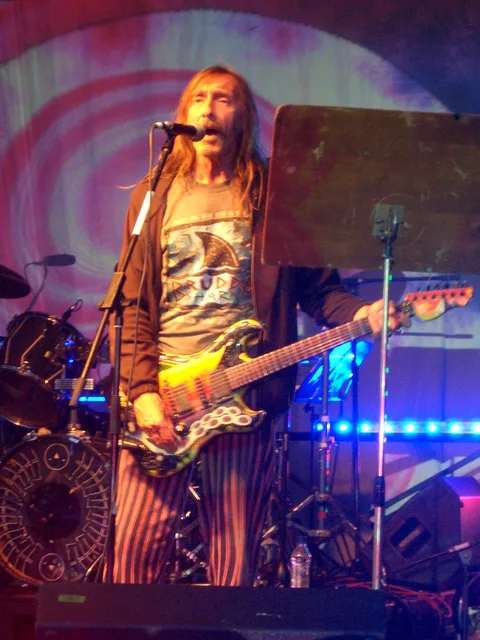
Dave Brock of Hawkwind, artist context for a band closely connected with Britain’s free-festival circuit — SilverLoz — Wikimedia Commons — CC BY-SA 3.0 · source record · CC BY-SA 3.0
Converted to WebP and resized; no generative or compositional alterations.
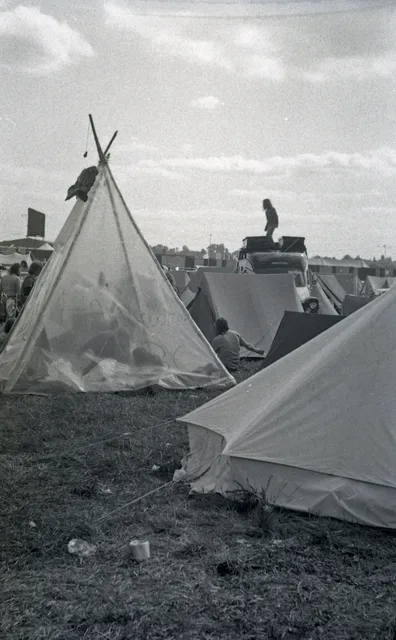
Hawkwind’s tent at Reading in 1975. The exact event is identified; the image illustrates portable festival presence rather than a free-festival site — David Major — Wikimedia Commons — CC BY 2.0 · source record · CC BY 2.0
Converted to WebP and resized; no generative or compositional alterations.