

Edition timeline
Watchfield provides an allocated site
The post-Windsor network tests negotiated permission.
Kent and Seasalter enter the route
Proposed sites and actual gathering places remain unevenly documented.
The route is uncertain
Later summaries do not provide enough evidence for a settled chronology.
Caesar’s Camp is documented
The network reaches Bracknell Forest while Stonehenge grows in importance.
Why this event matters
The People’s Free Festival story shows how a festival could survive the loss of a permanent site. People, vehicles, sound systems, kitchens and practical knowledge became portable infrastructure. After the 1974 Windsor confrontation, organisers and audiences could no longer assume that Windsor Great Park would remain available. Continuity moved from place to network. Watchfield in 1975 offered an officially allocated site, but its compromise did not become stable policy. The experience nevertheless gave the mobile network practical and political lessons. The post-Watchfield route is fragmentary: Kent and Seasalter are associated with 1976, the 1977 chronology remains uncertain, and Caesar’s Camp in Bracknell Forest is documented for 1978.

The programme was the network
PA crews, generators, transport, printers, traders, welfare volunteers and people who knew where land might be available were as important as any advertised performer. Many visitors also built, transported, traded, cooked, performed or maintained the gathering. The distinction between audience and organiser became deliberately porous. Temporary stages could be assembled without a central festival company because skills and equipment travelled between overlapping communities. Decentralisation was a method as well as an ideology. Each site involved different landowners, legal powers and local authorities. The pattern was recurrent conflict, but not one single centrally directed campaign.

What happened afterward
By the decade’s end Stonehenge attracted more of the travelling circuit, while punk and anarcho-punk opened additional political and musical routes. Flyers, fanzines, local newspapers, court records, photographs and oral histories survive unevenly. The fragmented archive reflects a movement that avoided stable institutions. The lasting innovation was organisational: a festival could be carried as a collection of relationships, vehicles, equipment and expectations rather than owned as a permanent venue. The network connects Windsor, Watchfield and later free festivals to traveller culture and autonomous temporary space without reducing every gathering to a single organisation.


Follow the festival beyond the field
Timeline
Related genres
Related band guides
More routes will be connected as the archive grows.
Explore by sound
Essential listening
Sources and further reading
- British free-festival archiveUK Rock Festivals · accessed 23 July 2026
- Watchfield archiveUK Rock Festivals · accessed 23 July 2026
- Caesar’s Camp scheduled monumentHistoric England · accessed 23 July 2026
- Licensed site imagesWikimedia Commons · accessed 23 July 2026
Image credits5 licensed images
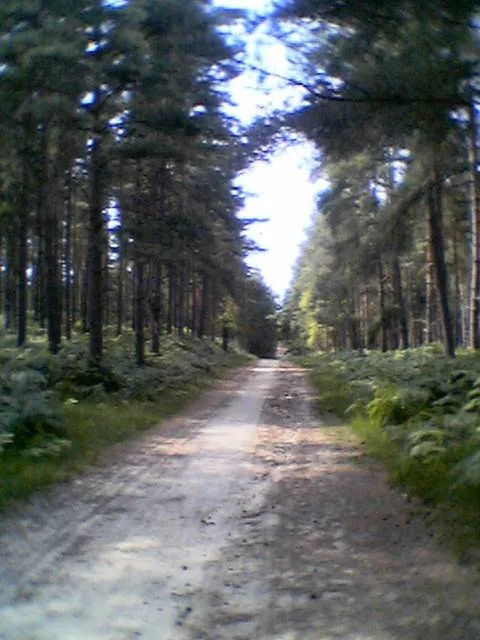
A later view through Bracknell Forest towards Caesar's Camp, the documented 1978 stop in the mobile People's Free Festival story — bruce — Wikimedia Commons — CC BY-SA 2.0 · source record · CC BY-SA 2.0
Converted to WebP and resized; no generative or compositional alterations.
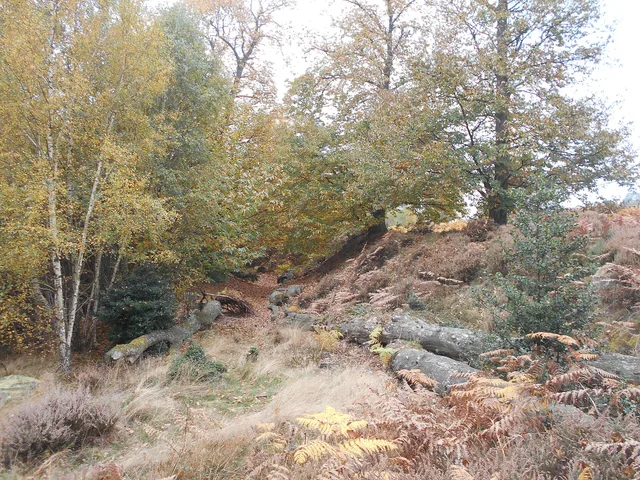
A modern view of Caesar's Camp. It documents the 1978 site landscape, not the gathering itself — Simon Burchell — Wikimedia Commons — CC BY-SA 4.0 · source record · CC BY-SA 4.0
Converted to WebP and resized; no generative or compositional alterations.
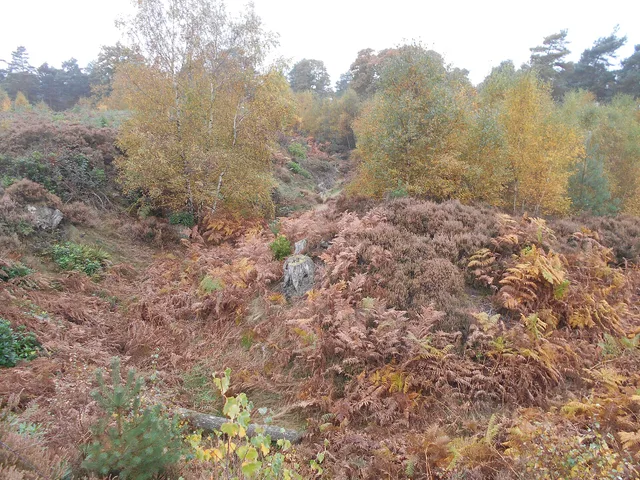
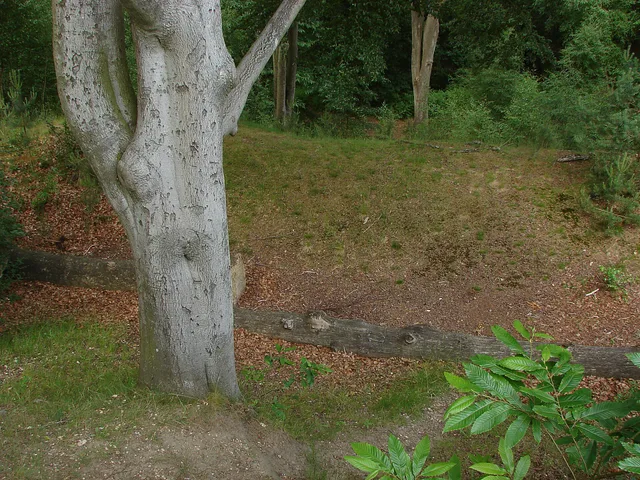
Woodland at Caesar's Camp in a later photograph, used to explain how temporary culture occupied changing sites — Simon Burchell — Wikimedia Commons — CC BY-SA 4.0 · source record · CC BY-SA 4.0
Converted to WebP and resized; no generative or compositional alterations.
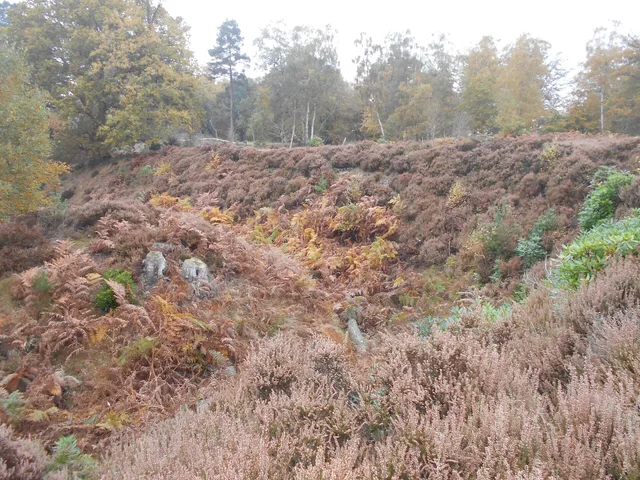
The surviving landscape at Caesar's Camp, photographed long after the 1978 festival — Simon Burchell — Wikimedia Commons — CC BY-SA 4.0 · source record · CC BY-SA 4.0
Converted to WebP and resized; no generative or compositional alterations.
The earthworks at Caesar's Camp, a material trace of the place rather than visual evidence of the free-festival crowd — Alan Hunt — Wikimedia Commons — CC BY-SA 2.0 · source record · CC BY-SA 2.0
Converted to WebP and resized; no generative or compositional alterations.