
.jpg)
Why this tour matters
Festival Express reversed the normal logic of a rock festival. Instead of asking audiences and performers to converge on one field, it moved a temporary musical community across Canada by train. The advertised events occurred in Toronto, Winnipeg and Calgary, but the surviving film made the space between them equally important. Musicians rehearsed, drank, talked and played together aboard the railcars. Travel time stopped being dead time and became the tour’s most enduring artistic environment.
That romantic image has a harder edge. The promoters sold tickets at a moment when parts of the audience argued that music associated with the counterculture should be free. Protests, gate pressure and competing free performances complicated the Toronto stop and affected the tour’s economics. Festival Express therefore joins two histories: extraordinary informal collaboration among musicians and a dispute about whether large-scale rock could remain communal while depending on professional transport, staging and paid admission.

The route across Canada
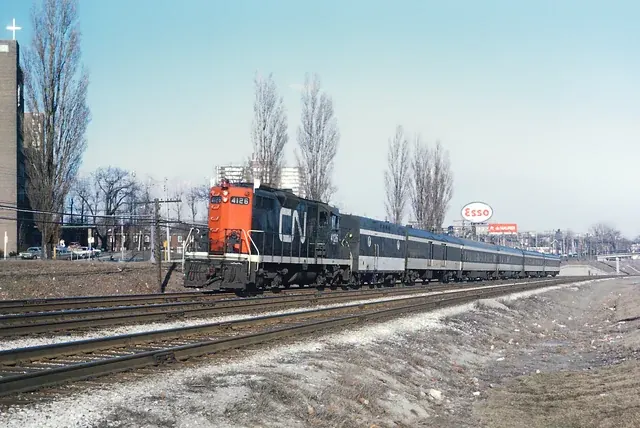
The tour began with concerts at Toronto’s Canadian National Exhibition grounds on 27 and 28 June, continued to Winnipeg on 1 July and concluded with two Calgary shows on 4 and 5 July. Plans for additional stops changed or disappeared, and sources differ when reconstructing the intended route. What was completed covered a vast distance in little more than a week. Canadian National railcars carried performers and production personnel westward while equipment and local crews prepared the next venue.
Rail travel altered the social geometry of touring. Musicians who would normally retreat into separate cars, hotels or flights shared lounges and compartments. There was time to exchange songs without an audience and without a formal running order. The train did not erase hierarchy—headline status, management and money still existed—but it created repeated proximity across groups. That proximity is the reason the journey now matters beyond the three concert bills.
A remarkable travelling company
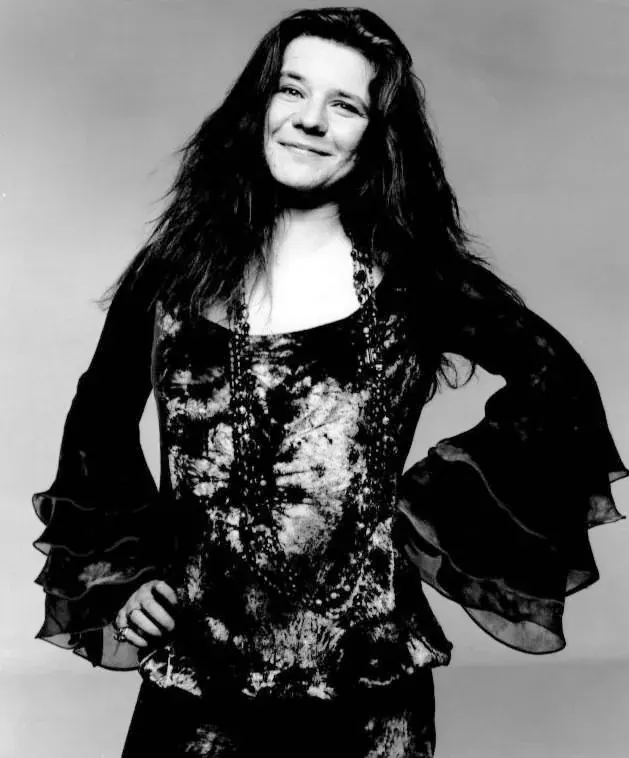
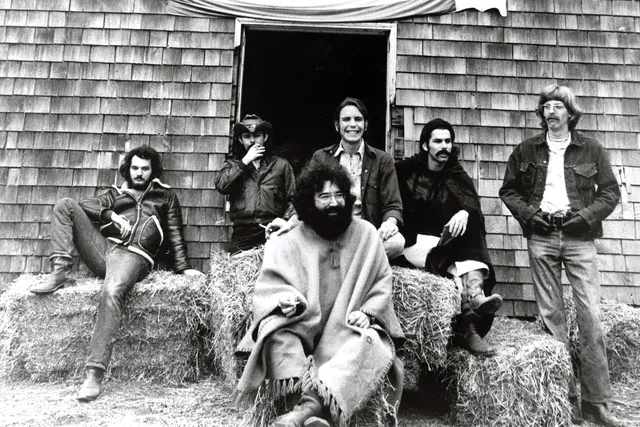
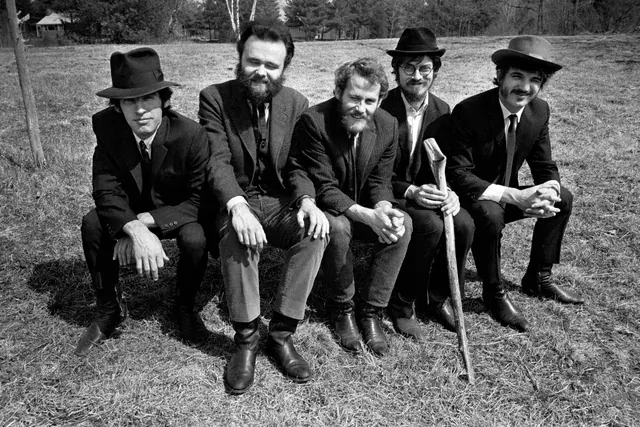
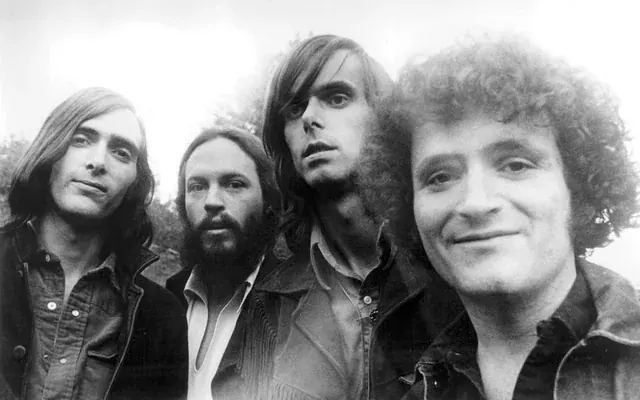
Janis Joplin, the Grateful Dead and The Band formed the documentary’s central constellation. Buddy Guy, the Flying Burrito Brothers, Ian & Sylvia’s Great Speckled Bird, Delaney & Bonnie and other performers joined parts or all of the route. Not every artist advertised for every stop travelled in the same way, and later summaries sometimes merge proposed and completed line-ups. The surviving production records remain essential for separating itinerary from legend.
Musically, the company crossed blues, country, psychedelic improvisation, gospel-inflected rock and the emerging roots style associated with The Band. The train jams worked because these traditions shared songs, chord languages and an ability to follow cues without rehearsal. They were not proof that genre had disappeared. They showed how experienced musicians could move between genres when the normal pressures of a billed performance were temporarily suspended.
_(high_quality).png)
Toronto protests and the demand for free music
In Toronto, protesters objected to ticket prices and confronted the event’s perimeter. The dispute belonged to a wider North American argument already visible at other festivals. Some activists saw high prices as extraction from a youth culture musicians and promoters claimed to represent. Organisers faced costs for artists, rail transport, staging, sound, insurance and filming. Both positions addressed something real, but slogans made negotiation difficult once a large crowd had assembled.
The Grateful Dead and other musicians later played a free performance at Coronation Park, helping defuse the conflict without solving the economic question. Free alternatives could demonstrate goodwill and preserve safety, yet they could also weaken the ticketed event funding the journey. Festival Express never found a stable answer. Its financial problems are part of the history, not an embarrassing detail to remove from the train’s communal mythology.
Music between the concerts
The film’s most affecting passages are not conventional headline performances. Rick Danko, Jerry Garcia, Joplin and others sing in crowded railway spaces where nobody can withdraw far from the sound. Instruments pass between hands. Harmonies are discovered rather than announced. Alcohol is conspicuous, and later celebration should not hide the physical risks surrounding musicians whose lives were already under strain. Joplin died three months after the tour.
Because the cameras captured intimacy, viewers may assume the train was permanently joyful. Film selects usable moments. Fatigue, privacy, routine and disagreement leave less compelling footage. The surviving material is still rare evidence of touring musicians interacting outside the controlled interview or stage. Its value increases when we resist turning every smile into proof of an ideal community.
.jpg)
The concert performances
On stage, each act returned to a public identity. The Grateful Dead’s extended playing, The Band’s compressed ensemble sound, Buddy Guy’s electric blues and Joplin’s vocal intensity did not merge into one train-born style. The route instead placed different approaches in succession and allowed offstage contact to influence the atmosphere around them. Festival structure made comparison possible without requiring artistic uniformity.
The Calgary footage of Joplin is especially important because it belongs to the final months of her career. It should not be viewed only as foreshadowing. She appears as a working performer commanding a huge outdoor space, not merely as a tragic figure approaching an inevitable end. The archive lets the performance exist in its own present before biography closes around it.
A film recovered decades later
Camera crews shot substantial material in 1970, but the intended film was not completed at the time. Elements entered archival custody, including material now described by Library and Archives Canada. Decades later, surviving footage was located, restored and shaped into the 2003 documentary Festival Express. The gap between filming and release fundamentally affected reception. Audiences first encountered the tour as recovered memory rather than current reportage.
The documentary made the train famous while necessarily constructing a concise narrative from scattered reels. Archival descriptions help identify production dates, camera rolls and people visible in the material. They also remind viewers that a finished feature is only one arrangement of a larger collection. Preservation turned an unsuccessful contemporary film project into a major historical source.

Legacy
Festival Express became the ideal road movie that happened on rails: movement across landscape, an ensemble of strong personalities and music produced in transit. Its continuing appeal comes from the contrast between the formal business of the concerts and the informal generosity of the train. Few later tours could reproduce that arrangement without self-consciousness; once the film became famous, the experiment was no longer culturally invisible to its participants.
The tour also preserves an unresolved question. Large musical gatherings cost money, while audiences may experience music as a shared social right. Festival Express tried to operate inside both truths and failed financially even as it succeeded artistically. The recovered film does not cancel that failure. It allows us to see why the idea was worth attempting and why goodwill alone could not make the numbers disappear.
Its Canadian route matters as well. The film is often remembered through American stars, yet the concerts depended on Canadian venues, rail workers, local crews, audiences, musicians and political arguments. Reading the archival production records alongside the finished documentary restores that geography. Festival Express was not merely a famous jam session placed on a picturesque train; it was a travelling production moving through specific cities whose responses shaped what the tour became.
The surviving railway photographs on this page are deliberately identified as contextual rather than as images of the actual Festival Express consist. That distinction mirrors the larger archival problem. A historically plausible train is not automatically evidence of this tour, and a publicity portrait is not a carriage scene. Keeping those boundaries visible makes the genuine 1970 film material more—not less—important.
Follow the festival beyond the field
Timeline
Related genres
Related band guides
Explore by sound
Essential listening
RetroForge Echo
Hear a Fictional Archive Response
These modern RetroForge releases echo part of the festival’s musical vocabulary; they are not historical festival recordings.
Sources and further reading
- Festival Express preproduction elements, 1970Library and Archives Canada · accessed 23 July 2026
- Festival Express production historySiegel Productions · accessed 23 July 2026
- Festival Express film recordNational Canadian Film Day · accessed 23 July 2026
- Festival Express film catalogue recordToronto International Film Festival · accessed 23 July 2026
- Rail Tales: Festival ExpressVIA Rail Canada · accessed 23 July 2026
- Film, video and sound research guideLibrary and Archives Canada · accessed 23 July 2026
Image credits5 licensed images
A Canadian National passenger train near Toronto in April 1970 — Marty Bernard from U.S.A. — Wikimedia Commons — Public domain · source record · Public domain
Converted to WebP and resized; no generative or compositional alterations.
Janis Joplin in 1970 — Grossman Glotzer Management Corporation — Wikimedia Commons — Public domain · source record · Public domain
Converted to WebP and resized; no generative or compositional alterations.
The Grateful Dead in 1970 — Herb Greene — Wikimedia Commons — Public domain · source record · Public domain
Converted to WebP and resized; no generative or compositional alterations.
The Band in 1969 — Capitol Records — Wikimedia Commons — Public domain · source record · Public domain
Converted to WebP and resized; no generative or compositional alterations.
Quicksilver Messenger Service in 1970 — Capitol Records — Wikimedia Commons — Public domain · source record · Public domain
Converted to WebP and resized; no generative or compositional alterations.