The Transmission
A tiny signal establishes mystery and becomes material the rest of the album can answer.

RetroForge Genre Guide
Cosmic atmosphere in two forms: hypnotic rock motion on one side, progressive structure and thematic return on the other.
The Sound
Space prog is less a fixed historical category than a useful listening route through progressive rock’s cosmic side. It combines long-form development with electronic distance: oscillators, radio noise, sequenced pulses, Mellotron choirs and guitar tones that seem to arrive from beyond the room.
The subject may be a planet, a transmission or a machine crossing an impossible distance, but imagery alone is not enough. The arrangement has to create scale. A narrow signal becomes a full harmonic field; an isolated pulse gathers drums and bass; a motif returns after several tracks as if changed by the journey.
RetroForge space prog ranges from structured instrumental systems to symphonic science fiction. Some records remain cold and mechanical, while others are luminous or openly theatrical. The shared quality is perspective: ordinary human music is placed against something much larger, then asked to continue speaking.
These are contemporary albums presented through imagined 1970s vocabularies. They draw on analogue studio methods and album-side pacing without claiming to be historical artefacts.
What You’ll Hear
How It Works
Reverb can make a sound distant, but convincing scale depends on contrast. A dry bass note against a wide synthesizer field gives the ear two different distances at once. A radio fragment feels small only because silence surrounds it. When the full band enters, the space appears to change dimensions.
Listen for motion that is not measured only by tempo. Filter changes, slow stereo movement and a gradually widening harmony can make a nearly static passage feel as though it is travelling. In stronger pieces, these effects support a compositional arc rather than replacing one.
Space prog versus space rock: the borders overlap. This guide emphasises thematic development and album architecture; space rock often gives more control to groove, riff and extended improvisation.
A tiny signal establishes mystery and becomes material the rest of the album can answer.
Rhythm and bass turn suspended atmosphere into forward motion.
Reduced sections use silence, drone and noise to reset the listener’s sense of scale.
An earlier melody reappears altered, proving that the journey changed more than the scenery.
Historical Development
Space rock grew from the point where late-1960s psychedelia stopped treating outer space as decoration and began using it as a model for musical time. Early Pink Floyd used organ, echo and collective improvisation to loosen ordinary song structure, while Hawkwind added relentless rhythm, amplified pressure and science-fiction imagery. Gong later joined cosmic theatre to intricate ensemble playing, making the route into progressive rock explicit.
Space prog places more weight on long-range design. Recurring themes, multi-part suites and carefully controlled dynamics can turn a hypnotic flight into an album-scale journey. The distinction is one of emphasis rather than a border: Hawkwind may hold a single riff for momentum, while Eloy or Nektar are more likely to develop a sequence of connected sections.
The genre has survived because its subject is larger than rockets and planets. Distance, transmission, altered scale and the sensation of leaving familiar ground can be created by delay, drone, synthesizer, repeated bass or a gradual harmonic ascent. Later groups such as Ozric Tentacles combined this inheritance with electronic rhythm and global instrumental colour.
The Real-World Foundations
Not a ranking: six useful doors into the style.
Motoric drive, electronics and science-fiction imagery form the central British space-rock statement.
Echoes turns an album side into a patient journey through signal, silence and return.
A continuous science-fiction concept brings psychedelic space into progressive structure.
Jazz agility, synthesizer drift and cosmic mythology reach a playful technical peak.
Symphonic development and spacious keyboards give the German branch monumental scale.
Instrumental prog, dub-informed space and electronic pulse renew the language for a later era.
Research Trail
Start Here
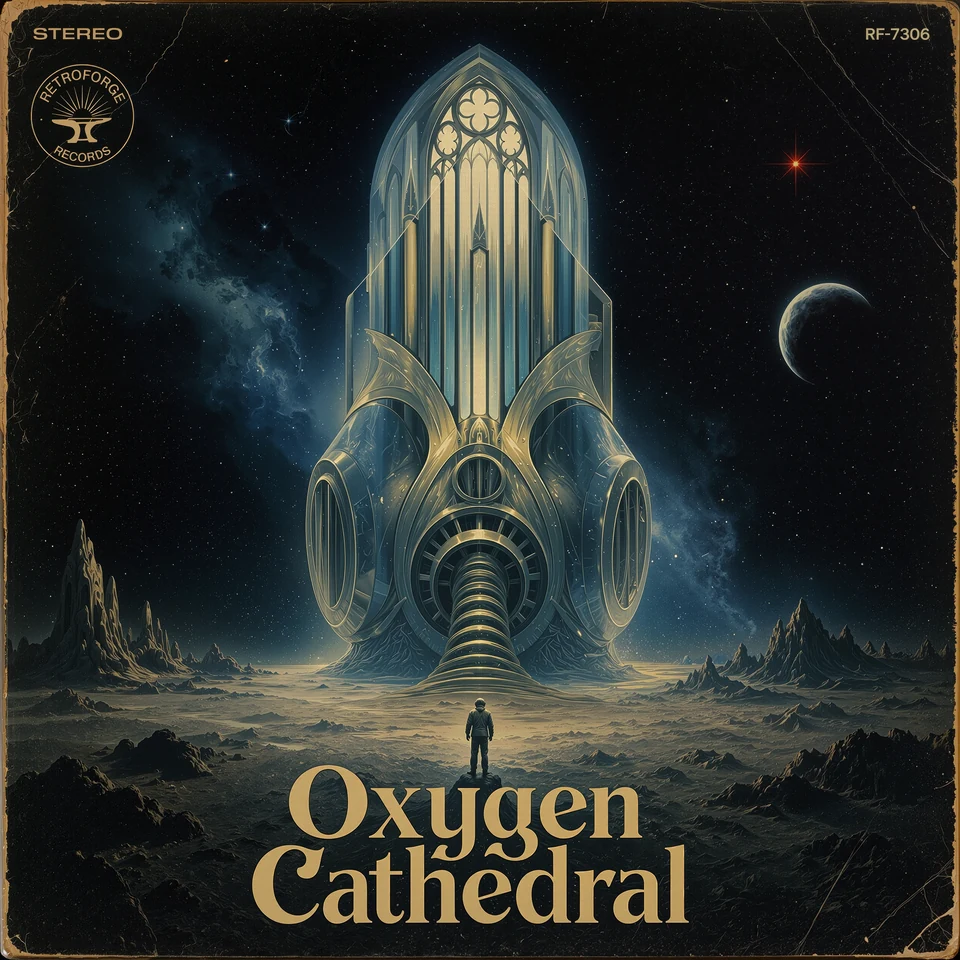
1970s · Cosmic Space Prog
A compact six-part route through radio textures, Moog signals, Mellotron atmosphere and the memory of Earth.
Open the liner notes →Three Flight Paths
Different balances of machinery, psychedelia and symphonic scale.
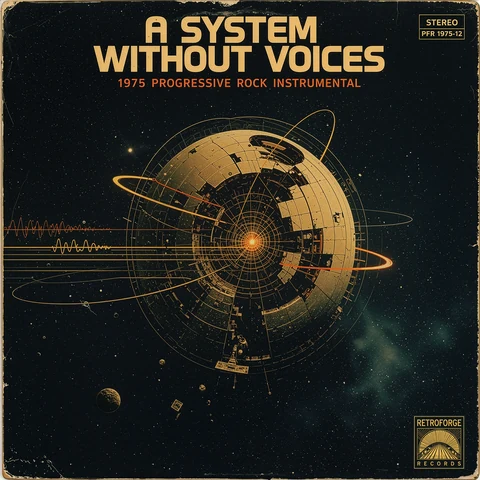
For orbital geometry, signal logic and a completely wordless mechanical journey.
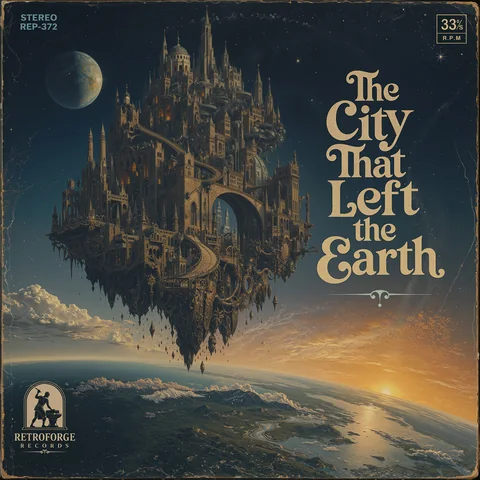
For a narrative scale large enough to lift an entire city from the planet.
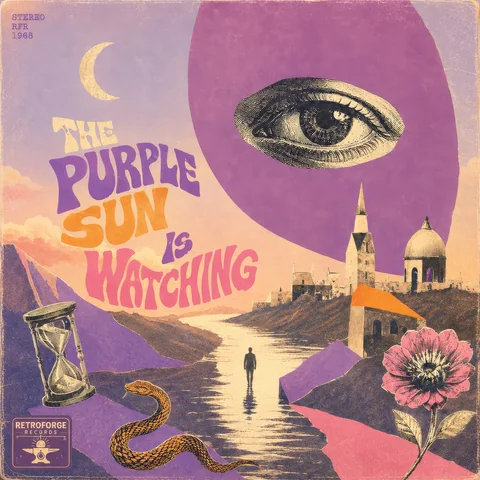
For the warmer, more hallucinatory edge of cosmic atmosphere.
Reference Points
Questions from the Record Room
Space rock makes sustained motion, distance and otherworldly texture central to the arrangement rather than using cosmic imagery as surface decoration.
Long-range thematic return, multi-part structure and carefully shaped dynamics move the music beyond an open-ended jam.
No. Guitar delay, organ, bass repetition, percussion and studio space can create the same sense of scale.
Keep Exploring
Deeper Discovery
Start with The Glass Engine Awakens as a RetroForge companion, then return through Progressive Rock to place it inside the wider family.
Curated paths into the people, records, events and ideas that give this subject its wider musical context.