
.jpg)
Edition timeline
A jazz-centred opening
Sun Ra, Bill Evans and other jazz artists anchor the first programme.
Rock pressure rises
A rock-heavy bill attracts roughly 25,000 and strains the traditional festival setting.
Electric Miles and genre collision
Miles Davis, Dave Brubeck, Sly Stone and the Mothers share a pivotal day.
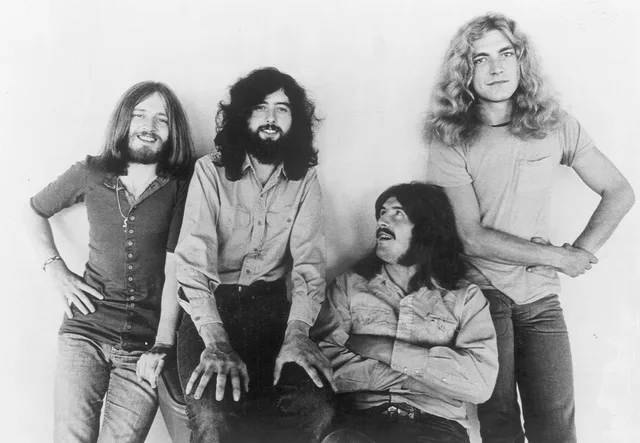
Led Zeppelin finally performs
After public-safety uncertainty and long delays, the band closes the festival late.
Why this event matters
Newport 1969 staged genre-boundary stress in public. George Wein’s established jazz institution admitted an unprecedented concentration of rock, soul and blues performers just as Miles Davis was moving decisively toward electric music. The result was artistically revealing and operationally unstable. It matters not because jazz and rock reached a tidy reconciliation, but because the programme exposed how audience economics, musical change and institutional identity had become inseparable. Wein later described the decision as both artistic and economic. Jazz audiences and markets were changing, while sophisticated rock musicians drew openly from blues and jazz. Booking Led Zeppelin, the Mothers of Invention, Sly Stone and other popular acts could enlarge attendance, but it also brought a young rock public on a scale Newport’s conventions had not absorbed. The experiment was a curatorial response to real change, not random fashion chasing. Festival Field sat within an established festival town rather than a remote farm. Ticketed spectators filled the official area while unticketed listeners occupied surrounding hillsides and tested fences. Contemporary total attendance near 80,000 is better supported than the more speculative overflow numbers. The geography created a visible divide between a traditional institution and a much larger public determined to hear the most popular acts with or without formal admission. Thursday remained jazz-centred with Sun Ra, Bill Evans, George Benson and Freddie Hubbard. Friday shifted heavily toward Blood, Sweat & Tears, Rahsaan Roland Kirk, Jeff Beck Group, Ten Years After and Jethro Tull. Saturday placed Dave Brubeck and Miles Davis beside John Mayall, Sly and the Family Stone and the Mothers. Sunday joined James Brown, B.B. King, Johnny Winter, Herbie Hancock, Buddy Rich and Led Zeppelin. Sequence reveals the collision better than an alphabetical list.
.jpg)
What the audience experienced
Excitement intensified as rock-oriented programmes drew larger crowds, especially on Friday. Inside, listeners moved between jazz virtuosity, funk, blues and amplified British rock. Outside, fence pressure and hillside overflow created an atmosphere of institutional strain. The experience differed sharply by day and position: a Thursday jazz listener and a Sunday Zeppelin seeker did not attend psychologically identical festivals even though the ticket and place carried one Newport name. Newport possessed experienced festival organisation, but its inherited scale and security assumptions were not built for a rock audience suddenly counted in tens of thousands. Long programmes overran, with Sunday’s finale arriving very late. The technical challenge was not merely volume. Different ensemble sizes, backline needs and audience behaviours had to share a structure developed through years of jazz presentation, making changeovers and public-safety decisions part of the artistic experiment. After crowd pressure and disturbances, local authorities sought to remove Led Zeppelin from the Sunday finale in the interest of public safety. Radio reports said the band would not appear, discouraging more arrivals. Management objected and circumstances evolved; Zeppelin ultimately performed very late. The episode should not be reduced to Wein simply changing his mind. It involved municipal authority, crowd-control strategy, artist representation and a timetable already stretched beyond its intended shape. Wein pulled the 1970 Newport programme back toward a more orthodox jazz emphasis, and attendance fell to 40,400 according to a contemporary comparison with 1969’s 80,000. That retreat was neither a permanent expulsion of crossover nor proof that the artistic idea had failed. Newport continued engaging soul, blues and fusion. The lesson was that musical openness required different economics, security and infrastructure when it also attracted a radically larger audience.
.jpg)
Films, recordings and surviving documents
Miles Davis’s 5 July set was professionally recorded and preserves early live evidence of “Miles Runs the Voodoo Down” and the revamped electric “Sanctuary” shortly before the Bitches Brew sessions. Led Zeppelin’s official archive preserves contemporary reports, programme material and the cancellation drama. Smithsonian oral history adds Wein’s retrospective voice. The later George Wein images here document his institution, not the 1969 Festival Field. The strongest interpretation is not that rock invaded jazz or that jazz successfully modernised itself. Newport became a contested public institution with several identities at once: a jazz canon, an electric laboratory, a soul showcase, a commercial rock attraction and a civic crowd problem. Miles Davis and Led Zeppelin occupied different routes through that argument, yet both demonstrated that the old boundary around “jazz festival” could no longer remain culturally sealed. The page connects directly to jazz-rock and progressive histories through Miles Davis, Herbie Hancock, Frank Zappa, Jethro Tull and the British blues boom. It also belongs beside the 1969 raceway festivals, where scale created different practical conflicts. Following artist and genre links turns Newport from a story of crowd trouble into a map of how electric improvisation, funk and long-form rock were sharing audiences before their categories stabilised. Newport 1969 remains a defining moment in festival crossover. It produced an important electric Miles recording, exposed the commercial power of rock audiences and forced George Wein to reconsider what his institution could safely contain. Its controversies should not erase the artistic intelligence of the programme. The edition’s lasting value is precisely that it made the unresolved relationship among jazz tradition, experimentation, popular demand and public order impossible to ignore.
.jpg)
.jpg)
Follow the festival beyond the field
Timeline
Related genres
Related band guides
Explore by sound
Essential listening
Sources and further reading
- Newport Jazz Festival, 6 July 1969Led Zeppelin Official Website · accessed 23 July 2026
- Miles Davis at Newport 1955–1975Miles Davis Official Site · accessed 23 July 2026
- George Wein discusses Bitches Brew LiveMiles Davis Official Site · accessed 23 July 2026
- George Wein oral historySmithsonian National Museum of American History · accessed 23 July 2026
- 1970 Congressional Record attendance comparisonU.S. Government Publishing Office · accessed 23 July 2026
Image credits5 licensed images
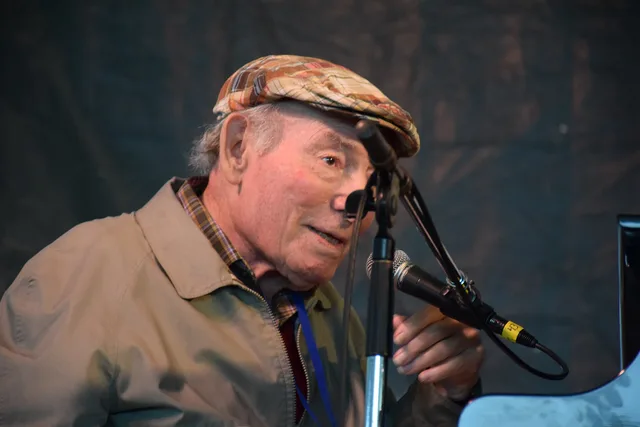
Festival founder George Wein with the Newport All-Stars in a later photograph, used to explain the curatorial institution behind Newport — Todd Van Hoosear — Wikimedia Commons — CC BY-SA 2.0 · source record · CC BY-SA 2.0
Converted to WebP and resized; no generative or compositional alterations.
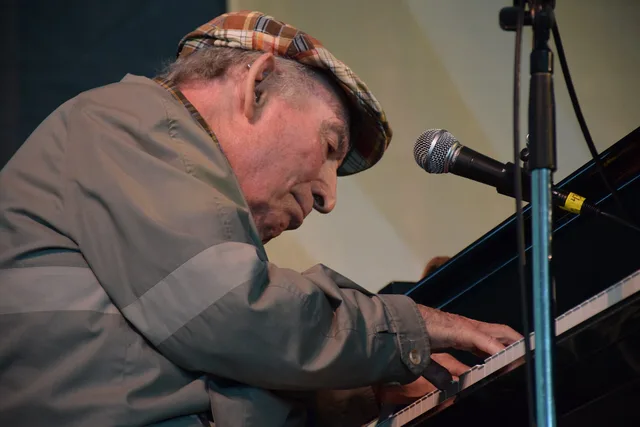
George Wein performing with the Newport All-Stars. This later image is institutional context, not a photograph of the 1969 festival — Todd Van Hoosear — Wikimedia Commons — CC BY-SA 2.0 · source record · CC BY-SA 2.0
Converted to WebP and resized; no generative or compositional alterations.
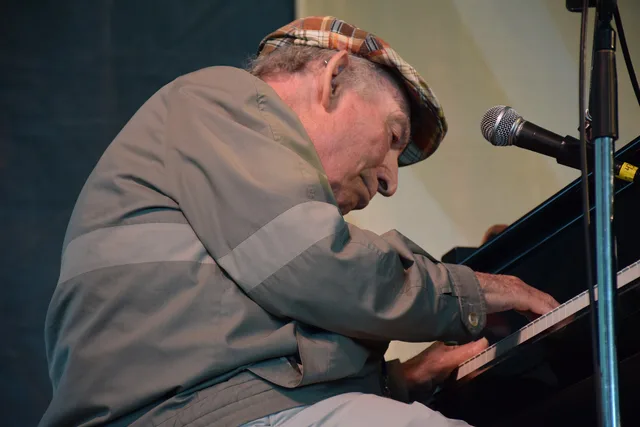
The Newport All-Stars in a later performance photograph, illustrating Newport’s durable jazz network — Todd Van Hoosear — Wikimedia Commons — CC BY-SA 2.0 · source record · CC BY-SA 2.0
Converted to WebP and resized; no generative or compositional alterations.
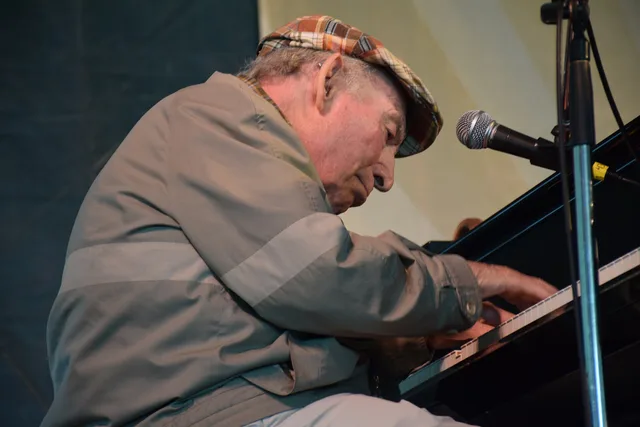
A later stage view of George Wein and the Newport All-Stars, clearly separated from the 1969 historical record — Todd Van Hoosear — Wikimedia Commons — CC BY-SA 2.0 · source record · CC BY-SA 2.0
Converted to WebP and resized; no generative or compositional alterations.
Led Zeppelin in 1971. This close-period promotional image gives artist context for Newport’s controversial rock crossover — Atlantic Records — Wikimedia Commons — Public domain · source record · Public domain
Converted to WebP and resized; no generative or compositional alterations.