
Why this event matters
Amougies sits unusually close to RetroForge's musical centre: the point where progressive rock had not yet settled into a genre, free jazz was testing collective form, psychedelic performance was stretching beyond the song and European organisers were willing to place all of it in one programme. Its bill makes familiar categories look provisional. Soft Machine, Pink Floyd, the Nice and the young Yes appeared beside Archie Shepp, Don Cherry, Anthony Braxton, the Art Ensemble of Chicago and many more.
The festival is less useful as a list of famous names than as evidence of circulation. British groups, American jazz musicians, French organisers and a Belgian village were connected by records, magazines, clubs, touring routes and political pressure. Amougies did not present rock with a token jazz afternoon. It allowed unlike approaches to duration, rhythm, volume and improvisation to collide over several days.

A festival displaced from France
Festival Actuel was planned by people around the French magazine Actuel and BYG Records, whose Actuel series documented important strands of free jazz. Proposed French locations changed under official resistance. Posters survive with superseded place names, a paper trail of an event trying to find legal ground. The festival ultimately crossed the border into Amougies, close enough to France to preserve access but far removed from the metropolitan setting originally imagined.
That move was not a romantic discovery of an ideal village. It was emergency logistics. A temporary site had to receive musicians, equipment and a large travelling audience under late-October conditions. The covered tent was essential rather than decorative. It created an interior world where long performances could continue while weather, mud and cold shaped the surrounding experience.
The village and the tent
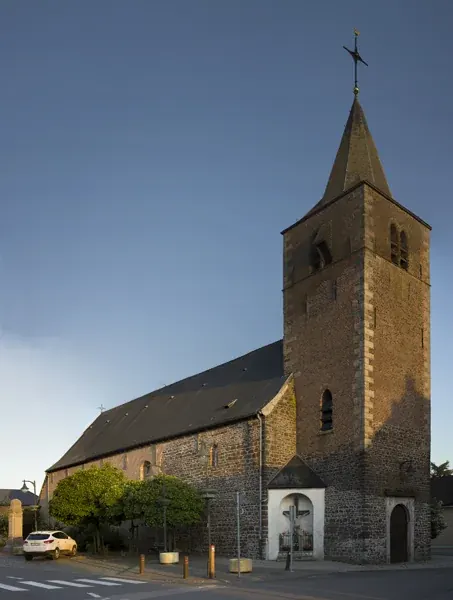
Amougies was not an established festival centre. The contrast between a small rural community and a transnational avant-garde gathering gave the event much of its later fascination. Residents encountered traffic, visitors and sound on a scale for which the village had not evolved. Festivalgoers arrived through improvised routes, sometimes after first travelling toward one of the previously advertised locations.
Inside the tent, the audience and performers shared a more enclosed acoustic and social space than at the era's giant open fields. A roof offered protection, but it also concentrated sound, smoke, bodies and delay. Long changeovers and programmes extending through day and night blurred ordinary concert boundaries. The physical setting suited music that already resisted fixed length, although comfort and technical consistency were another matter.

The musical programme
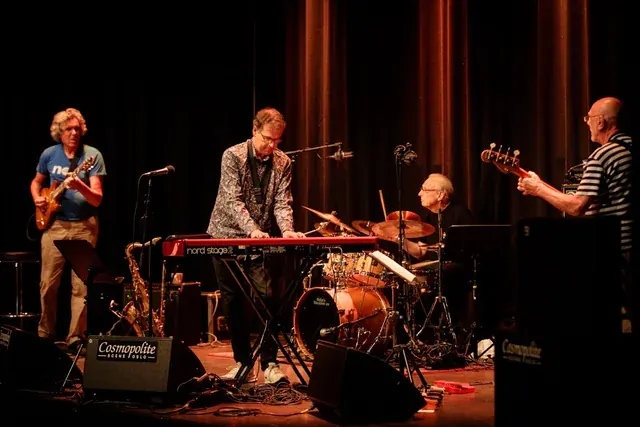
The rock side of Amougies caught several bands in motion. Pink Floyd were moving beyond concise psychedelia toward extended pieces and spatial sound. Soft Machine were turning decisively toward electric jazz. The Nice brought Keith Emerson's aggressive transformation of classical material; Yes were at the start of a much longer development; Caravan represented a more melodic Canterbury route. Captain Beefheart's Magic Band carried a sharply different rhythmic language that did not fit polite ideas of either blues or progressive rock.
The jazz programme was not secondary. Archie Shepp, Don Cherry, Anthony Braxton, Sunny Murray, Grachan Moncur III, the Art Ensemble of Chicago and other musicians represented multiple positions inside the new jazz and free-improvisation world. Their presence matters because later rock histories often describe experimentation as if rock musicians invented it alone. At Amougies, listeners could hear that extended form, collective improvisation, timbral exploration and political intensity had deep contemporary lives outside rock.
Frank Zappa as connective figure
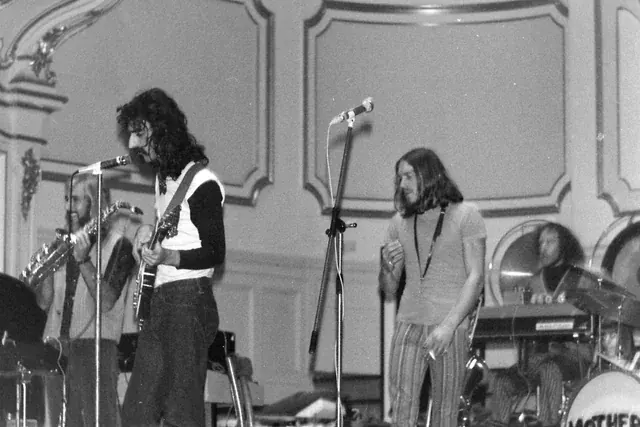
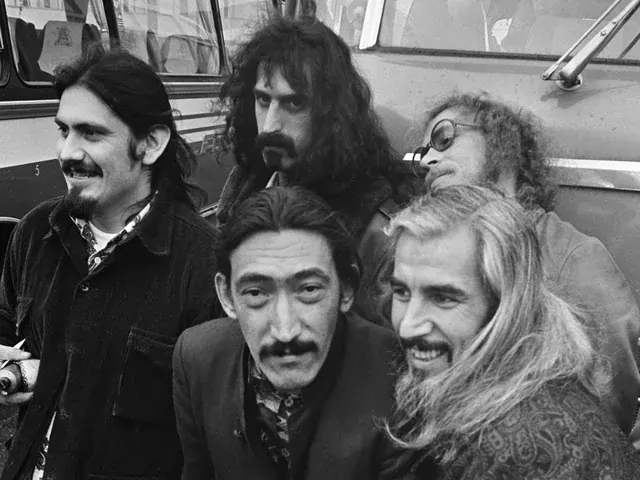
Frank Zappa appeared as a master of ceremonies and joined musicians onstage. Contemporary and later records associate him with improvisations involving Pink Floyd, Captain Beefheart, Aynsley Dunbar and jazz performers, although the exact documentation is uneven and should not be inflated into a complete nightly log. His role suited the programme: he was recognisable to rock audiences but alert to modern composition, rhythm-and-blues craft and avant-garde performance.
Calling Zappa the festival's organiser would overstate his position. He became its visible connective personality after the event was already conceived and displaced. His appearances are historically interesting because they made the boundary-crossing audible. They did not erase the labour of the magazine, label, technicians, local contacts and musicians who created the conditions in which those encounters could occur.
.jpg)
Canterbury, Zeuhl and roads not yet named
Amougies is frequently claimed by later genre histories. Canterbury listeners hear Soft Machine and Caravan; avant-prog histories recognise the refusal of conventional form; jazz-rock histories find an early shared platform; Zeuhl listeners trace connections through musicians, continental scenes and the influence of free jazz. These routes are valid if they remain retrospective tools rather than labels pasted onto every performance.
In October 1969, much of this vocabulary was unstable. Progressive rock had not acquired one settled canon. Magma's Zeuhl language was only beginning to emerge in France. Fusion was developing through multiple jazz and rock projects. The festival's importance lies precisely in that instability: it lets us hear a field before later record shelves separated its participants.
Sound, endurance and audience experience
More than sixty hours of performance are often claimed in retrospective descriptions, but duration should be treated as an indication of scale rather than a promise that every attendee heard a continuous, perfectly documented sequence. Audiences slept, moved, waited and missed sets. Equipment and musicians had to be cycled through one covered environment. The distinction between a concert and a temporary listening settlement became thin.
Weather appears repeatedly in accounts, yet the archive should resist using discomfort as automatic proof of authenticity. Cold and mud do not make music radical. They do reveal the material cost of assembling an alternative cultural space with limited infrastructure. The freedom of the programme depended on people maintaining power, shelter, food, transport and stage operation over several demanding days.
.jpg)
Film, recordings and missing access
Jérôme Laperrousaz and Jean-Noël Roy filmed the event, producing two related works: Amougies – Music Power and Amougies – European Music Revolution. The Cinémathèque française says their circulation was soon curtailed after Pink Floyd complained that performance rights had not been negotiated. That history is a warning against treating surviving footage as frictionless public property. An image can be culturally important and still unavailable for commercial reuse.
Audio fragments and authorised releases have surfaced through artist archives, while unofficial recordings circulate with uncertain provenance. They can help establish repertoire and collaboration but should not be mistaken for a complete official record. Amougies remains partly inaccessible because the event's musical ambition exceeded the rights and preservation systems around it.
Legacy
Amougies did not become an annual institution. Its legacy is therefore less visible than Pinkpop's continuity or Glastonbury's growth. It survives as a concentrated map of possibilities: European progressive groups before their canonical albums, American free-jazz musicians finding audiences abroad and organisers imagining that a festival could operate like an adventurous record catalogue in physical form.
The event deserves flagship status because it complicates the standard festival story. It was not simply pastoral counterculture, blues-rock spectacle or a sequence of future stars. It was a temporary laboratory in which rock and jazz met without first agreeing on a common language. The resulting archive is incomplete, legally difficult and musically invaluable.
Its obscurity is also a lesson in how musical canons are made. A festival with a famous film, stable rights ownership and an annual anniversary campaign is easier to remember than one displaced across a border and preserved in fragments. Amougies asks the archive visitor to work harder: compare posters, contemporary reporting, artist recollections, tapes and photographs without treating any one of them as a complete view.
Follow the festival beyond the field
Timeline
Related genres
Related band guides
Explore by sound
Essential listening
RetroForge Echo
Hear a Fictional Archive Response
These modern RetroForge releases echo part of the festival’s musical vocabulary; they are not historical festival recordings.
Sources and further reading
- Affiche d’Amougies – European Music RevolutionLa Cinémathèque française · accessed 23 July 2026
- Amougies festival report, 15 November 1969 issueBillboard / World Radio History · accessed 23 July 2026
- Festival d’Amougies 1969 archivesJean-Jacques Birgé / Mediapart · accessed 23 July 2026
- Actuel 1969 film and performance notesGlobalia Frank Zappa Videography · accessed 23 July 2026
- Amougies 1969 contemporary memory archiveMémoire 60–70 · accessed 23 July 2026
Image credits5 licensed images
Frank Zappa and the Mothers of Invention in Hamburg in 1968 — ThomasFHH — Wikimedia Commons — CC BY-SA 4.0 · source record · CC BY-SA 4.0
Converted to WebP and resized; no generative or compositional alterations.
Saint Bavo church in Amougies — PMRMaeyaert — Wikimedia Commons — CC BY-SA 4.0 · source record · CC BY-SA 4.0
Converted to WebP and resized; no generative or compositional alterations.
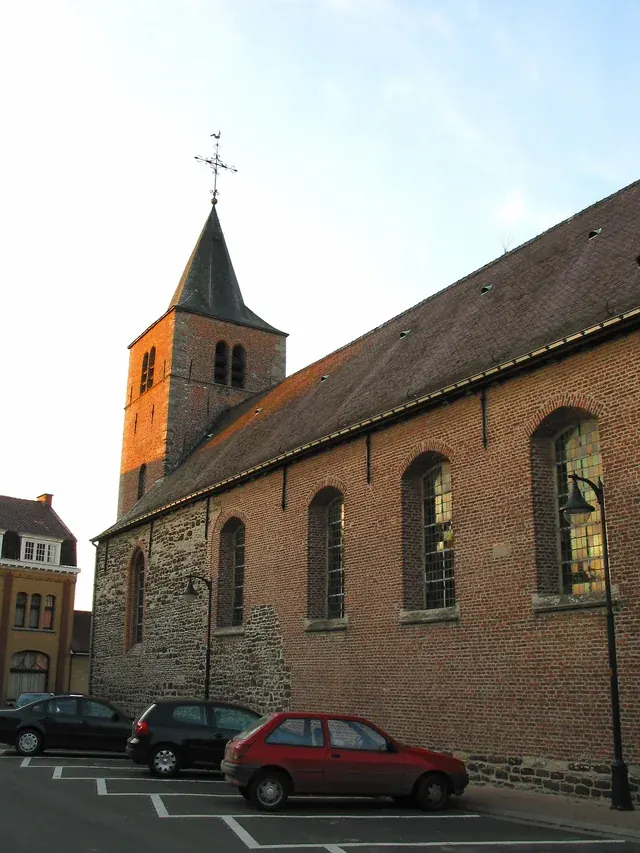
Amougies in a later photograph — Jean-Pol Grandmont — Wikimedia Commons — CC BY 2.5 · source record · CC BY 2.5
Converted to WebP and resized; no generative or compositional alterations.
The Mothers of Invention at Schiphol in 1968 — Ron Kroon for Anefo — Nationaal Archief / Wikimedia Commons — CC0 · source record · CC0
Converted to WebP and resized; no generative or compositional alterations.
Soft Machine performing in Oslo in 2018 — Tore Sætre — Wikimedia Commons — CC BY-SA 4.0 · source record · CC BY-SA 4.0
Converted to WebP and resized; no generative or compositional alterations.