Background Can Lead
Environmental texture carries structure without demanding constant focus.

Krautrock & Electronic Family
Electronic composition in which tone, depth and gradual transformation matter more than obvious event or destination.
The Sound
Ambient electronic music asks the listener to notice states rather than plot points. Sustained synthesizer, processed acoustic sound, tape decay and quiet repetition create an environment that can support close attention without demanding it in conventional song language.
Stillness does not mean absence of structure. Filter position, harmonic density, stereo depth and the relationship between foreground and background may change slowly enough that the piece seems transformed before the exact moment of change can be identified.
RetroForge does not yet have a pure ambient electronic album. Oxygen Cathedral is a nearby route because its sustained cosmic atmosphere and electronic signals sometimes approach that space, but its progressive movement remains more explicit.
What You’ll Hear
How It Works
Ambient electronic music changes the relationship between event and background. A sustained field, slowly shifting harmonic colour or distant pulse may matter more than melody in the conventional sense. The listener is invited to inhabit the sound rather than follow a sequence of dramatic instructions.
Stillness does not mean nothing happens. Listen across longer spans: one overtone becomes brighter, a texture moves forward in the mix, or a barely audible rhythm changes the scale of the space around it. Development is measured through perception.
Useful distinction: Boundary line: quiet electronic music is not automatically ambient. The defining work lies in composing depth, duration and attention rather than merely lowering intensity.
Environmental texture carries structure without demanding constant focus.
Small shifts gain significance because the surrounding field remains stable.
Reverb tails and fading tones remain part of the composition.
The work supports both immersion and peripheral listening.
Historical Development
Ambient electronic music places tone, space and duration ahead of conventional song movement. It did not begin from a single invention: electronic studios, minimalism, tape music, kosmische experimentation and environmental sound all prepared the ground. Brian Eno gave the field a durable name and philosophy in the 1970s, but artists including Cluster, Tangerine Dream and Klaus Schulze had already explored related forms.
The music can be quiet without being empty. A sustained chord changes colour; tape delay creates a self-renewing pattern; room tone becomes part of the composition. Eno's Discreet Music and Music for Airports made process audible without demanding constant foreground attention, while Cluster & Eno and Harold Budd showed how touch and instrumental personality could remain inside the field.
Ambient electronic is not simply slow synthesizer music. Its defining question is how sound inhabits an environment and how closely a listener chooses to attend. Rhythm may appear, but it rarely dictates the whole experience. Form emerges through accumulation, decay, recurrence and changes in perceived distance.
The Real-World Foundations
Not a ranking: six useful doors into the style.
Near-static electronic and acoustic masses anticipate ambient scale before the term was established.
A tape-delay system demonstrates composition through process and self-regulation.
Electronic atmosphere retains the irregular touch of individual performers.
Piano, ensemble colour and spacious production join ambient thought to composed performance.
A clear manifesto turns repetition, pause and environmental function into form.
Processed trumpet and electronics create an imagined acoustic geography.
Closest RetroForge Route
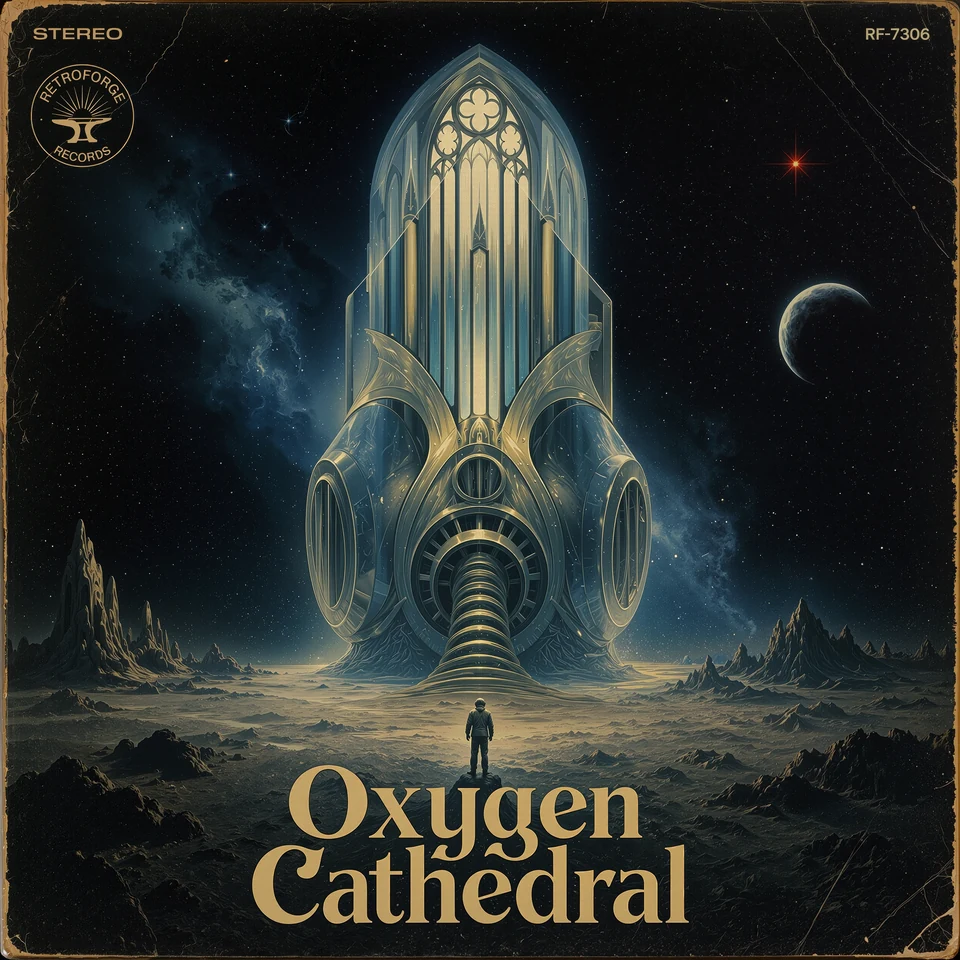
Adjacent: Cosmic Progressive Rock
A sustained atmospheric bridge, clearly labelled rather than recast as pure ambient electronic music.
Open the liner notes →Questions from the Record Room
No. It can accommodate different levels of attention, rewarding close listening without demanding constant foreground intensity.
No. Rhythm may exist as pulse, delay or recurrence, but it is not a requirement.
Ambient electronic is the wider field; Berlin School ambient retains a clearer connection to the German sequencer and kosmische lineage.
Research Trail
Deeper Discovery
Start with A System Without Voices as a RetroForge companion, then return through Progressive Electronic to place it inside the wider family.
Curated paths into the people, records, events and ideas that give this subject its wider musical context.