Sequence as Skeleton
Repeating voltage patterns supply motion and structural memory.

Progressive Rock Family
Long-form music in which synthesis, sequencing and timbral transformation perform the structural work once assigned to the rock band.
The Sound
Progressive electronic music develops ideas through sound itself. A sequencer pattern can gather notes, shift accent and change harmonic meaning over several minutes. A sustained tone can open into layers, while filters and tape delay transform a stable pulse into an entire landscape.
The genre overlaps with Berlin School, kosmische music, ambient electronics and electronic progressive rock. The broad distinction is one of emphasis: progressive electronic work does not require drums, guitar or vocals to supply form. Its electronic instruments are not merely colour added to a band; they generate duration, rhythm and narrative.
Analogue equipment shaped the classic vocabulary because its limitations encouraged performance. Sequences drifted, tuning moved and changes had to be played into the machine. Modern tools can reproduce the surface, but the deeper principle is patient development. A long piece earns its length by allowing small changes to become consequential.
What You’ll Hear
How It Works
Progressive electronic music builds form through evolving timbre, sequence and spatial depth. Instead of assigning melody, harmony and rhythm to a fixed band, one electronic source can move between all three functions as filters open, envelopes change and layers enter or disappear.
The development is often gradual but not static. Follow a repeating pulse and notice how its apparent speed changes when another sequence crosses it, how a drone becomes harmonic tension, or how a small alteration in tone can divide one long movement into distinct chapters.
Useful distinction: Boundary line: synthesizers do not automatically make music progressive electronic. The defining work happens in long-range development and the organisation of sound over time.
Repeating voltage patterns supply motion and structural memory.
Filter movement changes the emotional function of a sustained pitch.
Depth is composed by placing events at different apparent distances.
Arrival, accumulation and decay replace ordinary song sections.
Historical Development
Progressive electronic music emerged when synthesizers, sequencers, tape systems and studio processing became the primary means of composition rather than colour added to a rock ensemble. Technology did not dictate one sound: Tangerine Dream built long sequencer arcs, Klaus Schulze shaped continuous solo forms, Jean-Michel Jarre refined layered electronic melody and Vangelis treated the synthesizer as a highly expressive performance instrument.
The word progressive refers to development across time as much as technical novelty. A filter opening over several minutes, a sequence acquiring new accents or a timbre slowly losing its recognisable source can perform the structural work once assigned to chord changes and verses. Many defining records use the full album side because gradual transformation is their subject.
The field overlaps Berlin School, ambient, electronic art music and progressive rock without belonging entirely to any one of them. Acoustic instruments may appear, but electronic sound has equal or greater structural authority. The best work avoids displaying equipment for its own sake: the machine becomes a way to organise feeling, space and memory.
The Real-World Foundations
Not a ranking: six useful doors into the style.
Moog sequencing and unstable analogue texture establish a new form of album-side development.
Two long pieces turn pulse, harmony and timbral movement into a complete architecture.
Layered melody and studio precision bring progressive electronic music to a broad audience.
Expressive performance and sequenced design keep the machines fluid and dramatic.
Larry Fast translates orchestral scale into an entirely synthesized studio language.
Sequencers, electronics and aggressive guitar expose the style's harder experimental edge.
Closest RetroForge Route
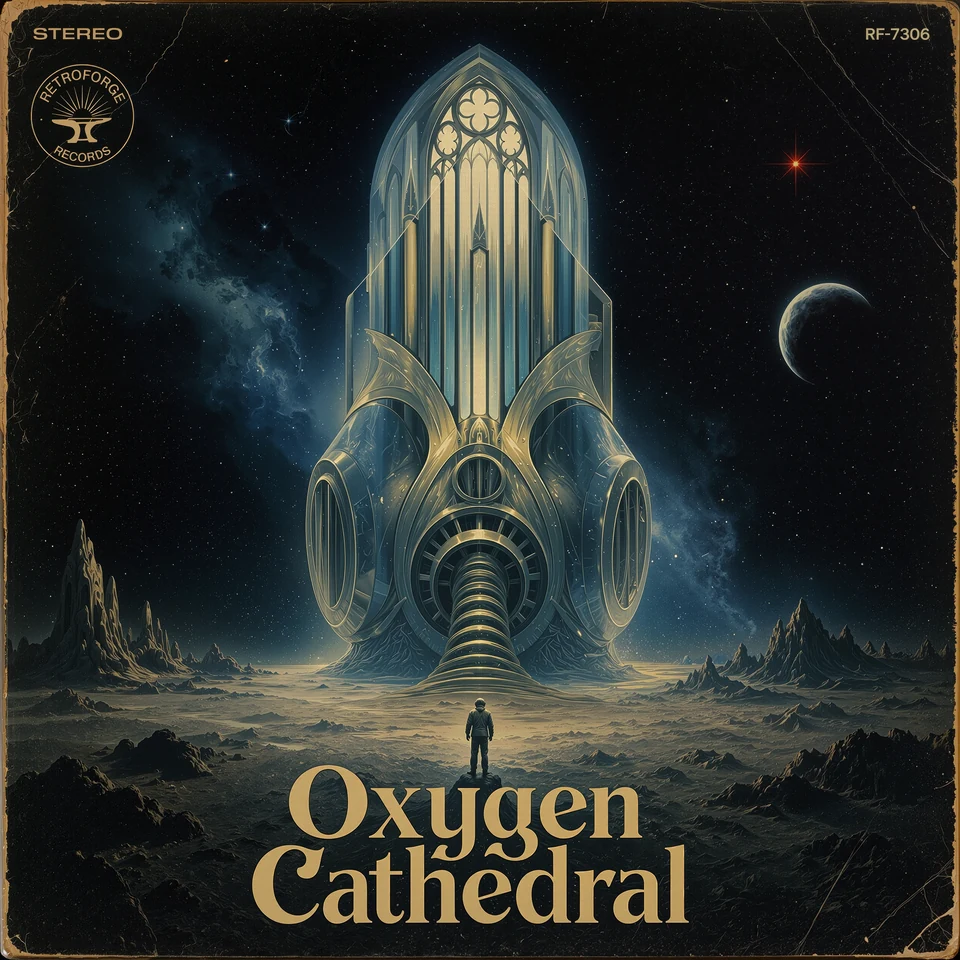
Electronic Progressive Route
Cosmic synthesis and conceptual scale make this the most direct current route into RetroForge’s progressive electronic branch.
Open the liner notes →Questions from the Record Room
No. Its structures often arise from sequencing, synthesis and timbral change rather than adapting rock-band composition.
Slow electronic transformation needs time for small changes in pattern, filter and texture to become structurally meaningful.
No. Analogue instruments shaped its early language, but compositional use of electronic process matters more than the age of the device.
Related Styles
Research Trail
Deeper Discovery
Start with A System Without Voices as a RetroForge companion, then return through Progressive Rock to place it inside the wider family.
Curated paths into the people, records, events and ideas that give this subject its wider musical context.