Riff as Invocation
Repetition gives symbolic language a physical foundation.

Psychedelic Rock Family
Rock organised around ritual, esoteric symbolism and the feeling that the performance has opened a door it may not be able to close.
The Sound
Occult rock is better understood through subject and atmosphere than through one fixed musical grammar. Heavy riffs, progressive suites, folk instruments and psychedelic repetition can all carry the label when ritual and hidden knowledge shape the record’s world.
The strongest examples make imagery and arrangement reinforce one another. Repetition behaves like invocation, drones create ceremonial space and the vocal often sounds less like everyday confession than testimony, warning or spell.
Under the Green Moon is labelled occult acid folk rather than pure occult rock. It is included as the catalogue’s nearest bridge, not silently recategorised.
What You’ll Hear
How It Works
Occult rock brings ritual, folklore and esoteric imagery into a recognisable rock-band frame. Riffs, organ, drums and theatrical vocals give symbolic material bodily force. The music may be psychedelic, progressive or heavy, but it remains anchored by performance rather than dissolving entirely into atmosphere.
Listen for how conviction is created. A repeated riff can function like an invocation; organ can suggest sacred or forbidden space; a singer can move between storyteller and participant. The most effective records build a complete dramatic world instead of relying on isolated references.
Useful distinction: Boundary line: lyrics about witches or ritual are not sufficient. Occult rock needs a musical atmosphere and performance language that make those subjects structurally present.
Repetition gives symbolic language a physical foundation.
Sustained keyboards create ceremonial scale around the band.
Delivery determines whether the lyric feels observed or enacted.
Suggestion can carry more power than constant theatrical excess.
Historical Development
Occult rock emerged when late-1960s psychedelia and early heavy rock began treating ritual, witchcraft and esoteric symbolism as more than passing decoration. Coven's Witchcraft Destroys Minds & Reaps Souls and Black Widow's Sacrifice are key early documents: both placed ceremonial imagery at the centre of songs, artwork and performance, although their music drew from different combinations of psychedelia, hard rock, jazz and theatrical arrangement.
Black Sabbath's debut transformed supernatural dread into a heavier musical grammar, while Blue Öyster Cult approached occult suggestion through cryptic writing, hard-rock precision and literary distance. The route never became a single continuous scene. It survived as a recurring method in which vintage keyboards, minor-key riffs, folk ceremony and theatrical storytelling could be recombined by later generations.
The twenty-first-century revival associated with bands such as Witchcraft, Blood Ceremony and Ghost restored melodic singing and 1970s instrumentation to a heavy landscape often dominated by more extreme metal. Occult rock is therefore defined less by one guitar tone than by the integration of esoteric narrative, atmosphere and rock songcraft. Imagery alone is not enough if the music never participates in the ritual.
The Real-World Foundations
Not a ranking: six useful doors into the style.
A foundational meeting of psychedelic rock, ritual presentation and explicitly occult narrative.
Flute, jazz-rock movement and theatrical ceremony give British occult rock an early identity.
Dread becomes musical structure through slow riffs, tritones, weather and negative space.
Cryptic writing and controlled hard rock make occult suggestion feel intellectual and unstable.
Warm production and concise songs show the modern revival moving beyond simple 1970s imitation.
Flute, organ and folk-horror narrative connect heavy rock to ceremonial atmosphere.
Closest RetroForge Route
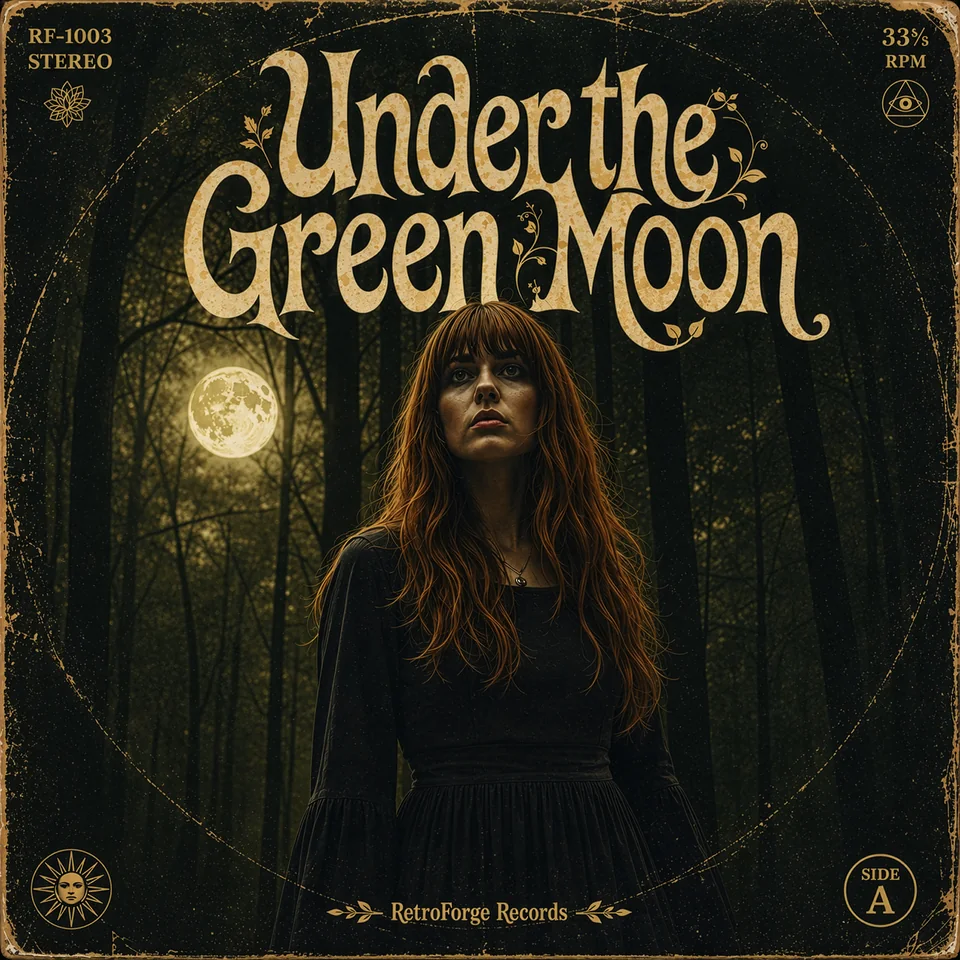
1968 · Occult Acid Folk
The catalogue’s clearest ritual world, reached through acoustic and psychedelic language.
Open the liner notes →Questions from the Record Room
No. It can draw on folklore, ritual, mysticism, horror and esoteric symbolism without adopting one religious or anti-religious position.
No. Psychedelic, progressive and folk-based records can belong when occult narrative and atmosphere genuinely shape the music.
Occult rock usually keeps clearer rock songs and riffs at its centre; occult psychedelia places more emphasis on altered perception, drift and unstable sonic space.
Research Trail
Deeper Discovery
Start with The Purple Sun Is Watching as a RetroForge companion, then return through Psychedelic Rock to place it inside the wider family.
Curated paths into the people, records, events and ideas that give this subject its wider musical context.