The Riff Develops
A central figure changes shape instead of repeating unchanged.

Progressive Rock Family
Progressive development carried by physical guitar, bass and drum weight without abandoning movement, contrast or atmosphere.
The Sound
Heavy prog occupies the territory where progressive rock’s changing structures meet the force of hard rock. Riffs matter, but they do not simply cycle beneath a vocal. They change length, return in altered metre, collide with quieter passages or become thematic material across a longer piece.
The rhythm section is crucial. Bass may lead the harmony while drums create asymmetric momentum, and the guitar often moves between blunt weight and more fragile detail. Hammond organ and analogue synthesizers can deepen the mass without turning the arrangement into symphonic prog. Dynamic contrast prevents heaviness from becoming a flat surface: the loud sections feel larger because the music knows when to withdraw.
Heavy prog is not automatically progressive metal. Much of its vocabulary predates metal’s later precision and extremity, favouring a warmer, more human ensemble sound. The useful test is structural: if the weight serves development and the piece keeps transforming, the “progressive” half of the name is doing real work.
What You’ll Hear
How It Works
Heavy prog uses distortion, low-end force and physical drumming inside arrangements that still depend on development. The riff is rarely the entire destination. It becomes material that can be displaced, reharmonised, broken into odd groupings or returned at a different scale.
Dynamics are crucial. Sustained heaviness quickly becomes flat, so the style gains power from restraint: acoustic openings, exposed bass figures, organ interludes and sudden empty space allow the next impact to register as structural change rather than simple volume.
Useful distinction: Boundary line: heavy prog is not automatically progressive metal. Its centre can remain rooted in seventies hard rock, analogue keyboards and organic ensemble movement.
A central figure changes shape instead of repeating unchanged.
Odd groupings feel physical because bass and drums move as one body.
Reduced passages make the following return larger.
Distortion defines scale, but structure determines direction.
Historical Development
Heavy prog emerged wherever progressive rock's long structures met the physical force of amplified guitar, organ, bass and drums. King Crimson's most abrasive passages supplied an early model, but the approach was never limited to one scene. British hard rock, European symphonic music and the increasingly powerful sound of early-1970s studios all contributed to a form in which weight could become part of the composition rather than a break from it.
During the 1970s, bands including Rush, Uriah Heep and Atomic Rooster showed different ways of balancing impact with development. A riff might return in a new metre, an acoustic interval could change the scale of the next electric entrance, and an organ could function as a second wall of amplification. The heaviness mattered because the surrounding arrangement gave it direction.
Later groups such as Anekdoten and Porcupine Tree inherited the tension between muscular playing and patient form without simply reproducing classic hard rock. Heavy prog remains broader than progressive metal: it can be severe without relying on metal technique, and its most revealing moments often come from contrast, restraint and the transformation of a recurring figure.
The Real-World Foundations
Not a ranking: six useful doors into the style.
Vincent Crane's organ and John Du Cann's guitar turn progressive development into physical pressure.
Hard-rock momentum, choral colour and a side-long title suite occupy the same dramatic space.
Compressed riffs, fractured rhythm and stark dynamics establish a severe heavy-progressive benchmark.
A long conceptual suite and sharply articulated trio playing make complexity feel forceful rather than ornamental.
Mellotron, cello and grinding bass reconnect modern progressive rock with its heaviest early language.
The first Porcupine Tree album with Gavin Harrison pairs detailed production and carefully paced songs with a new heavy-rock direction.
Closest RetroForge Route
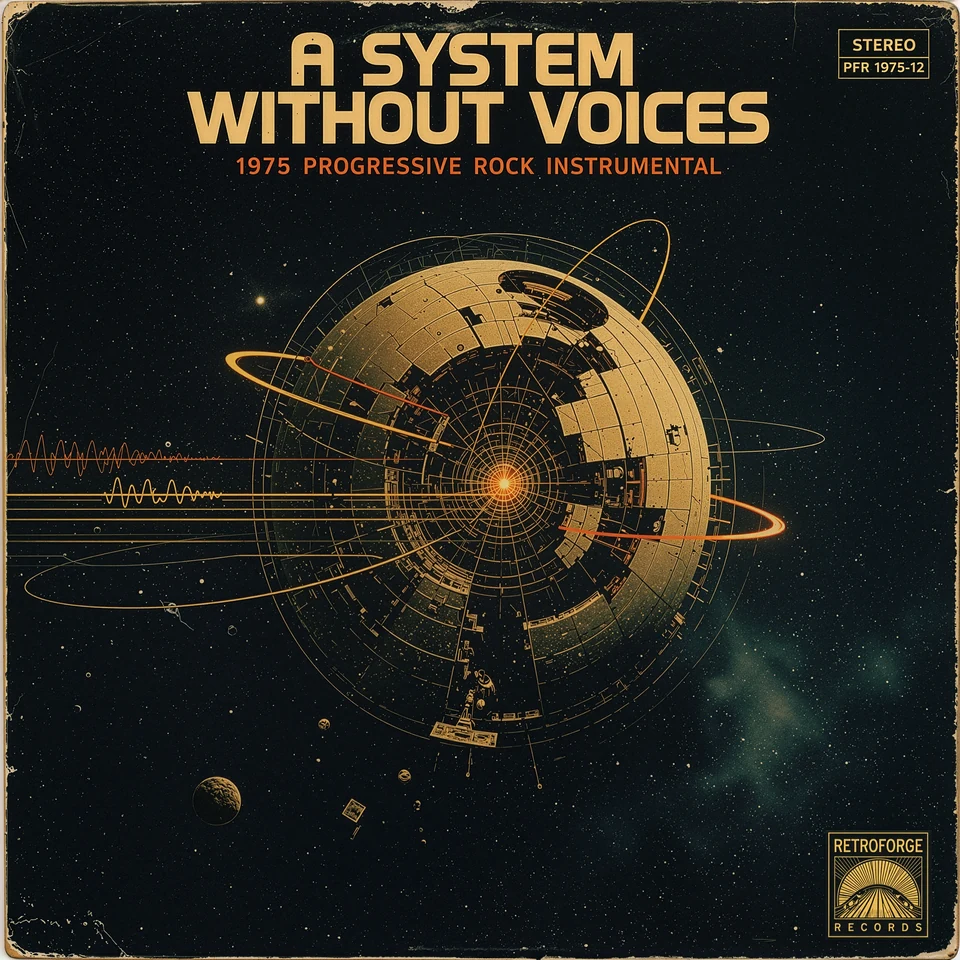
1975 · Instrumental Progressive Rock
Instrumental architecture, forceful rhythm and machine-like guitar weight make this the strongest current route into heavy prog.
Open the liner notes →Questions from the Record Room
Heavy prog does not require metal's riff vocabulary, production or technique. Its weight may come from organ, bass, dynamics and arrangement as readily as distorted guitar.
No. Volume alone is not enough: heaviness must influence the development, pacing and emotional architecture of the music.
Quiet, acoustic or spacious passages give the heavy returns proportion. Without that contrast, force can become a constant surface instead of part of the composition.
Research Trail
Related Styles
Deeper Discovery
Start with The River Beneath the World as a RetroForge companion, then return through Progressive Rock to place it inside the wider family.
Curated paths into the people, records, events and ideas that give this subject its wider musical context.