
History Archive · 1970
Black Sabbath, ELP and the Year Rock Split Open
In 1970, rock’s expanded possibilities stopped looking like one movement. Weight, virtuosity, electronics and composition began forming distinct traditions.
What Happened
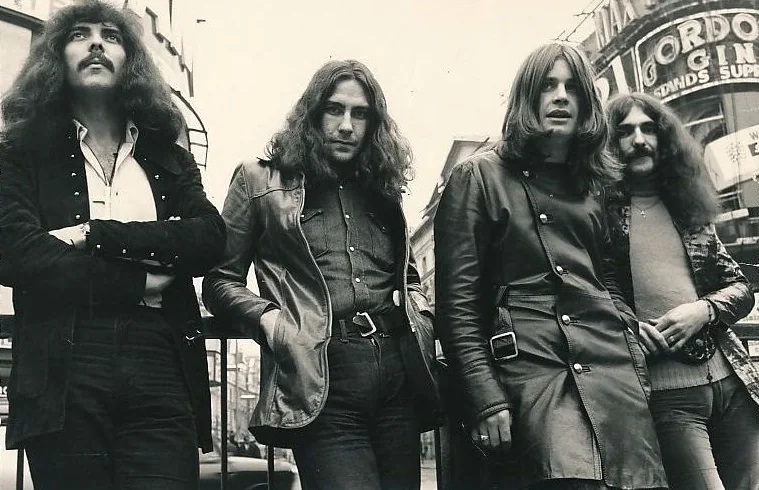
Black Sabbath released its self-titled debut and Paranoid within the same year, giving blues-based hard rock a darker harmonic centre and an identity built around riffs, volume and dread. Emerson, Lake & Palmer formed from the Nice, King Crimson and Atomic Rooster, played their first concerts and released a keyboard-centred debut in Britain.
The contrast was striking but not absolute. Both groups treated the ordinary three-minute pop song as insufficient and used the album to construct a more imposing musical world.
What the Music Sounded Like
Sabbath relied on Tony Iommi’s low, memorable riffs, Geezer Butler’s mobile bass, Bill Ward’s jazz-informed drumming and Ozzy Osbourne’s stark melodic delivery. ELP placed Keith Emerson’s organ and Moog against Greg Lake’s voice and bass and Carl Palmer’s precise, explosive drumming.
How It Was Made
Black Sabbath recorded its debut quickly, essentially performing the live set in the studio. ELP’s debut required a different balance: acoustic piano, organ, overdubbed arrangement and the Moog solo on “Lucky Man” all occupied the same record.
The Wider Musical Context
King Crimson, Yes, Genesis, Van der Graaf Generator and Canterbury groups were developing separate progressive languages. At the same time, Deep Purple and Led Zeppelin were redefining heavy rock. The family tree was branching in real time.
What Followed
Metal and prog were later treated as opponents, but 1970 shows their common origin in amplified experimentation. Progressive metal would eventually reunite the branches.
One Year, Two Opposite Kinds of Ambition
Black Sabbath and Emerson, Lake & Palmer are useful together precisely because they do not tell one tidy story. Both groups treated late-1960s rock as insufficient, but their answers moved in opposite directions. Sabbath reduced the music to dread, weight and blunt physical repetition. ELP enlarged it through virtuosity, keyboards, classical adaptation and spectacle. The same audience culture could make room for both. Rock was no longer widening along one road; it was splitting into specialised worlds.
This fragmentation was not a decline from psychedelic unity. It was evidence that the album market had become large enough to support extremes. Listeners could approach records as identities and complete environments, not merely collections of singles. Labels, concert promoters and the music press increasingly learned to address distinct audiences whose tastes overlapped but no longer needed to agree.
Birmingham Turns Industry into Atmosphere
Black Sabbath emerged from Birmingham with a sound shaped by blues, factory-city experience and the need to be heard in loud rooms. Tony Iommi’s guitar accident and adapted technique are part of the history, but they do not alone explain the music. Geezer Butler’s bass frequently moves as a lead voice, Bill Ward brings swing and jazz flexibility to the heaviness, and Ozzy Osbourne’s vocal often doubles the riff with an exposed, warning-like directness.
The opening title track of the debut slows the blues-derived tritone into a scene of terror. Rain, bell and sustained intervals make atmosphere inseparable from the riff. Paranoid, recorded soon afterwards and released later in 1970 in Britain, widened that language toward war, mental distress, technological menace and isolation. Heavy metal did not suddenly appear without ancestors, but Sabbath gave heaviness a coherent musical, lyrical and visual identity that earlier hard rock had not assembled in the same way.
ELP Makes the Keyboard a Front-Line Instrument
Keith Emerson, Greg Lake and Carl Palmer formed with substantial reputations already attached to them. Their first concerts, including the Isle of Wight Festival, presented the trio as a supergroup without a conventional guitarist. Emerson’s Hammond organ, piano and Moog synthesizer could carry harmony, aggression and theatrical gesture at once. Lake supplied voice, bass, guitar, songwriting and production experience; Palmer’s precision and force prevented the music from becoming keyboard recital with accompaniment.
The debut moves between Bartók-derived attack, jazz-inflected ensemble work, church-like organ and the acoustic simplicity of “Lucky Man.” Its famous closing Moog solo helped make the synthesizer audible to a mass rock audience not as laboratory equipment but as a dramatic lead voice. ELP’s ambition could become excessive, but excess was part of the historical proposition: a rock trio could claim the scale of concert music while using the volume and machinery of an arena act.
The Split Created New Listening Tribes
The contrast established two durable routes. Sabbath offered a foundation for metal, doom and every later genre in which repetition becomes pressure. ELP helped define symphonic prog and the expectation that technical ability, long structures and electronic instruments could occupy centre stage. Both turned away from the concise social world of the single, and both made the album a statement of belonging.
The rivalry between “primitive” heaviness and “pretentious” complexity was partly manufactured by later taste-making. Sabbath’s rhythms are more flexible than the stereotype suggests, while ELP’s most effective passages often depend on direct physical impact. What 1970 truly revealed was that rock’s new branches remained connected beneath their contrasting surfaces. Amplification, repetition, dramatic staging and the freedom of the LP allowed darkness and virtuosity to grow from the same transformed culture.
Essential Listening
- Black Sabbath — Black Sabbath
- Black Sabbath — War Pigs
- Emerson, Lake & Palmer — The Barbarian
- Emerson, Lake & Palmer — Knife-Edge
- Emerson, Lake & Palmer — Lucky Man
Related Genres and Guides
Related RetroForge listening
Hear the Archive Connection
Research notes
Sources and Further Reading
- Black Sabbath history — Black Sabbath
- Emerson, Lake & Palmer — Official ELP site
- Carl Palmer discography — Carl Palmer
- Paranoid 50th-anniversary history — Black Sabbath
- Carl Palmer biography — Carl Palmer