
History Archive · 1960
Hamburg: How the Beatles Became a Real Band
Before Abbey Road and Beatlemania, there were exhausting club sets, rough accommodation and an audience that demanded the band become louder, faster and more flexible.
What Happened
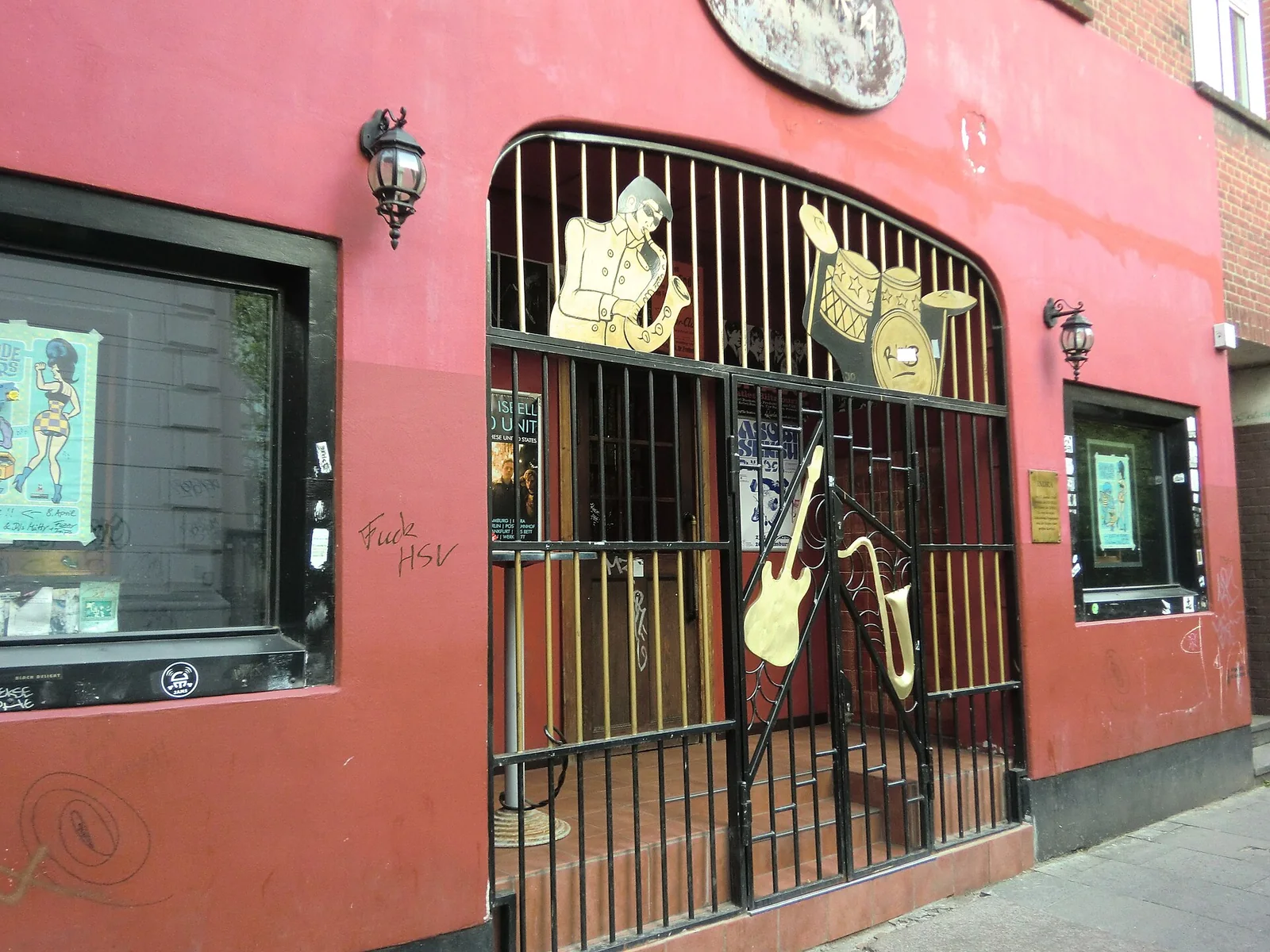
In August 1960, the Beatles travelled from Liverpool to Hamburg with John Lennon, Paul McCartney, George Harrison, Stuart Sutcliffe and newly recruited drummer Pete Best. They played in the St. Pauli district, first at the Indra and later the Kaiserkeller, working far longer sets than ordinary British bookings demanded.
The trip did not instantly create the finished Beatles. It began a repeated Hamburg education that continued into 1962. The group expanded its repertoire, learned to hold difficult rooms and discovered that stage identity could be constructed through pressure and repetition.
What the Music Sounded Like
The repertoire mixed American rock and roll, rhythm and blues, girl-group songs, standards and theatrical novelties. Volume and tempo helped command attention, but variety kept the sets alive. The later image of a self-contained British rock band began inside this borrowed American material.
How It Was Made
There was no single production breakthrough. The instrument was the nightly schedule itself. Amplifiers, close vocal harmonies and a constantly changing set became a workshop. During a later Hamburg visit, the group backed Tony Sheridan on recordings including “My Bonnie”.
The Wider Musical Context
Liverpool and Hamburg were port cities with access to imported records and international traffic. British musicians were absorbing sounds that mainstream domestic radio did not fully represent. The coming beat boom depended on that circulation.
What Followed
Back in Liverpool, the Beatles drew an expanding Cavern Club audience, met Brian Epstein and eventually reached EMI. Hamburg remained the hidden foundation beneath the apparent speed of their 1962–63 rise.
A Job Before It Was a Legend
Hamburg did not greet the Beatles as future revolutionaries. They arrived as a young Liverpool group hired to fill long hours in clubs around the Reeperbahn. Their first engagement at the Indra required sets far longer than the short appearances common on British bills. When the room thinned, the instruction was simple: make a show. Volume, comedy, shouted requests and physical stamina became survival skills rather than carefully planned image-making.
The schedule forced an enormous repertoire. American rock and roll remained central, but rhythm and blues, girl-group songs, country, standards and comic numbers all entered the act. A weak arrangement could not hide when played repeatedly in front of the same audience. Songs had to be rebuilt until the rhythm held, vocal parts projected and transitions worked without explanation. Hamburg was less a romantic apprenticeship than accelerated quality control.
The Lineup Was Still Becoming the Beatles
The group that first travelled to Hamburg included John Lennon, Paul McCartney, George Harrison, bassist Stuart Sutcliffe and drummer Pete Best. The familiar four-man identity did not yet exist. Sutcliffe’s presence connected the band to an art-school circle, while photographer Astrid Kirchherr and her friends introduced them to a visual culture far removed from conventional British show-business polish. Clothing, hair and photography began to matter alongside the music.
The changes were not instantaneous or tidy. Harrison was deported during the first stay because he was underage; McCartney and Best were later deported after an incident involving a fire in their accommodation. Sutcliffe left the group in 1961, and McCartney settled into bass. Ringo Starr replaced Best in August 1962, after the main Hamburg apprenticeship but before the recording career took off. The city did not create the final lineup in one stroke; it put every role under pressure until the group understood what it needed.
From Club Repertoire to Recording Experience
During the 1961 visit, the Beatles backed singer Tony Sheridan in sessions produced by Bert Kaempfert. The resulting recordings were released under Sheridan’s name, with the group billed as the Beat Brothers, but the sessions gave them experience of a professionally produced German recording date before their EMI contract. The venue was not a conventional studio but the stage of Hamburg’s Friedrich-Ebert-Halle. The difference between stage impact and recorded impact became tangible: an arrangement that works at two in the morning in a packed club must be reconsidered when microphones preserve every imbalance.
That lesson can be heard in their early Parlophone work. “Love Me Do” is modest compared with what followed, yet its economy is deliberate: harmonica, close vocal exchange and a beat that leaves space around the hook. George Martin did not receive a finished masterpiece from nowhere. He encountered musicians who had already spent thousands of stage hours learning how to hold attention, recover from mistakes and reshape borrowed material into a recognisable group language.
Why Hamburg Still Matters
Stories of the period often dwell on pills, poor rooms and marathon sets because hardship makes good mythology. The deeper significance is repetition. The Beatles became unusually responsive to one another because they played together for durations that modern touring schedules rarely permit. They learned when to simplify, when to stretch a number, how to support a lead singer and how to turn four individual personalities into one public event.
Hamburg also complicates the idea of a purely British musical breakthrough. A Liverpool band absorbed American records while working in a German port city, surrounded by sailors, club owners, art students and travelling performers. Their later success would be marketed through national identities, but the working method was already international. The British rock band that emerged in 1962 had been assembled from Atlantic records, Mersey humour and nights spent learning what a difficult room would tolerate.
Essential Listening
- The Beatles — Ain’t She Sweet
- Tony Sheridan and the Beat Brothers — My Bonnie
- The Beatles — Cry for a Shadow
- The Beatles — Some Other Guy
- Little Richard — Long Tall Sally
Related Genres and Guides
Related RetroForge listening
Hear the Archive Connection
Research notes
Sources and Further Reading
- The Beatles Anthology: Hamburg — The Beatles
- The Red and Blue Timeline — The Beatles
- The Beatles: a Hamburg music career — Free and Hanseatic City of Hamburg
- In Memory of Astrid Kirchherr — The Beatles
- The Beatles in Hamburg: historical background — Hamburg Marketing