
History Archive · 1962
The Beatles, the Stones and the Birth of the British Rock Band
In 1962, “Love Me Do” and the Rolling Stones’ first performances made the British group—not the solo singer—the unit that would drive the decade.
What Happened
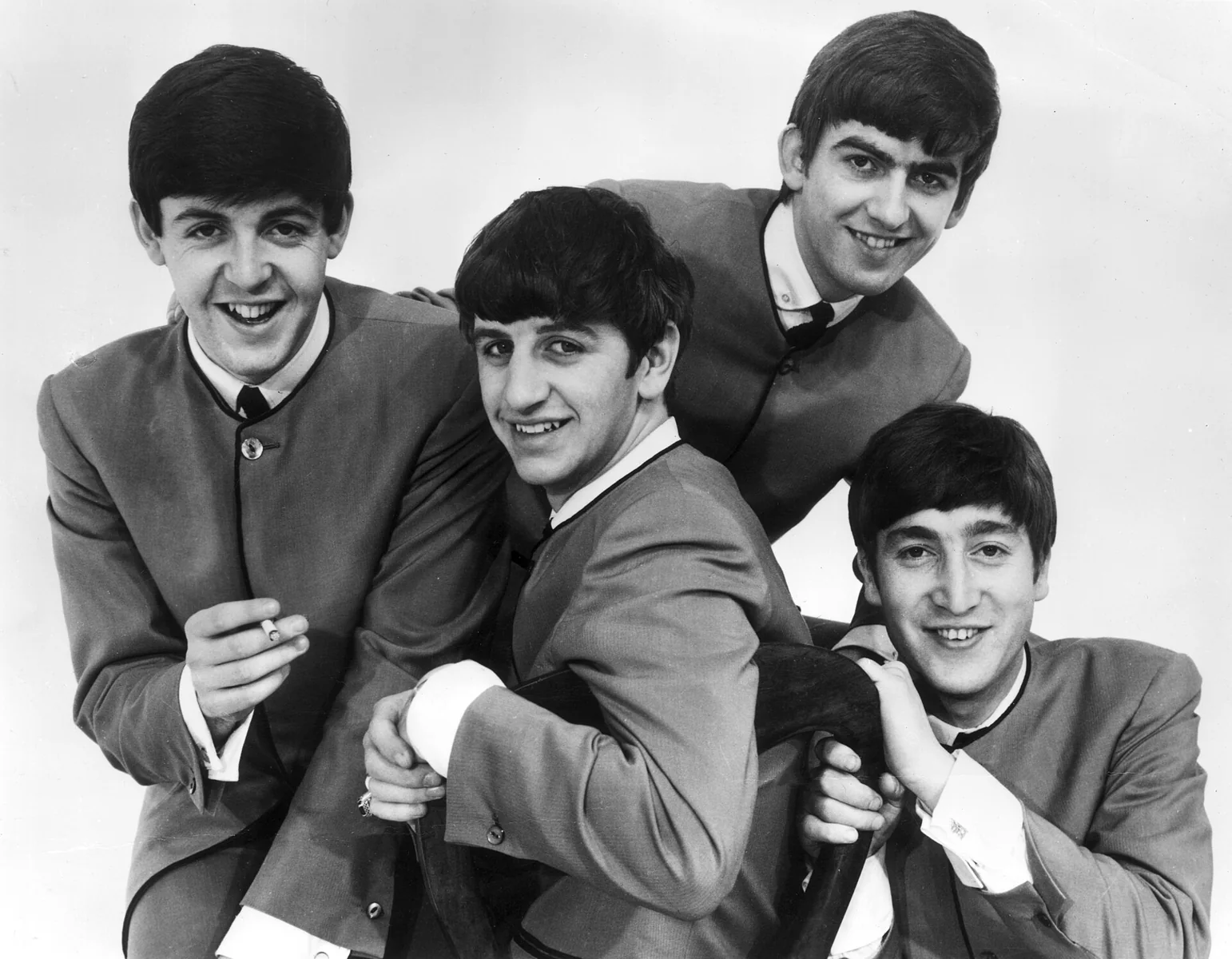
The Beatles signed with EMI’s Parlophone label, worked with producer George Martin and released “Love Me Do” in October. The single was modest rather than revolutionary, but it established Lennon and McCartney as writers inside a performing group. Ringo Starr replaced Pete Best as the familiar four-person lineup settled into place.
In London, Brian Jones, Mick Jagger and Keith Richards assembled the Rolling Stones around a deeper commitment to American blues and rhythm and blues. Their first performance under the name took place at the Marquee Club in July.
What the Music Sounded Like
“Love Me Do” used harmonica, a direct beat and close vocal exchanges. The early Stones drew from Muddy Waters, Jimmy Reed, Chuck Berry and Bo Diddley, favouring guitar interplay and a club sound that resisted tidy variety entertainment.
How It Was Made
George Martin’s role showed how a producer could develop alongside a band. The Stones grew through live work and the collecting instincts of musicians who treated American records as a hidden curriculum. Both models depended on ensemble personality.
The Wider Musical Context
British skiffle had already taught teenagers to form groups cheaply. Imported blues and rock-and-roll records supplied repertoire. Regional scenes in Liverpool and London turned those ingredients into different accents.
What Followed
Beatlemania made the band format commercially unavoidable in 1963. The Stones followed into the charts, and hundreds of groups formed around guitars, bass, drums and a belief that they could write their own material.
1962 Was a Year of Assembly
At the beginning of 1962, the British group boom was not inevitable. American solo stars and professional songwriters still defined much of the market, while British rock and roll had produced successful singers more often than self-contained bands. The Beatles were popular in Liverpool but had been rejected by Decca. The Rolling Stones did not yet have a stable lineup or a record contract. By the end of the year, both had established models that other young musicians could understand and imitate.
The key development was organisational as much as musical. A band could choose its own repertoire, build a local following, develop a visual identity and eventually bring original songs to a producer. That combination shifted authority away from the old arrangement in which a featured singer stood in front of anonymous backing players. The group itself became the story.
Two Different Answers to American Music
The Beatles drew from a wide stage repertoire: Chuck Berry, the Shirelles, Arthur Alexander, Little Richard, country songs, Broadway standards and whatever else survived a long club set. Lennon and McCartney were already writing, and “Love Me Do,” released on 5 October 1962, made that authorship visible. Its chart peak was modest compared with later singles, but a British group had entered the market with its own name, its own song and a sound built around vocal partnership rather than a single star.
The Rolling Stones formed around a narrower declaration of taste. Brian Jones, Mick Jagger, Keith Richards, Ian Stewart and their changing rhythm section concentrated on Chicago blues and rhythm and blues. Their early performances treated Muddy Waters, Jimmy Reed, Bo Diddley and Chuck Berry not as distant historical figures but as urgent contemporary repertoire. Where the Beatles turned breadth into pop flexibility, the Stones turned concentration into identity.
Clubs, Managers and the New Group Image
Local venues were laboratories. The Beatles’ Cavern following demonstrated that repeated appearances could build a community before national media arrived. The Stones’ early work at the Marquee and then the Crawdaddy Club created a different kind of audience, drawn to volume, blues knowledge and a deliberately unpolished presence. These rooms allowed bands to improve in public and gave managers evidence that loyalty could be converted into a larger market.
Brian Epstein presented the Beatles with discipline and professional coherence without erasing their humour. Andrew Loog Oldham, who began managing the Stones in 1963, would push contrast: if the Beatles appeared approachable, the Stones could appear dangerous. The simplified rivalry was partly publicity, but it taught the industry that a band’s attitude, clothing and group chemistry could be marketed as powerfully as a lead singer’s face.
The Band Becomes a Creative Unit
The most consequential idea was still developing: members of a working rock group could become writers, arrangers and studio decision-makers. Lennon and McCartney reached that position early. Jagger and Richards were encouraged toward songwriting later, initially because reliance on American covers limited the Stones’ commercial independence. In both cases, the pressure to create original material transformed the group from interpreter into author.
This did not end the debt to American music. It intensified it, sometimes uncomfortably. British bands benefited from records made by Black American artists who had often received less promotion and poorer compensation. Yet their advocacy also directed new listeners back toward blues and rhythm-and-blues catalogues. The British rock band was born from admiration, appropriation, translation and ambition at the same time. That complicated mixture would power the next decade.
Essential Listening
- The Beatles — Love Me Do
- The Beatles — P.S. I Love You
- Chuck Berry — Come On
- Muddy Waters — Rollin’ Stone
- The Rolling Stones — Route 66
Related Genres and Guides
Related RetroForge listening
Hear the Archive Connection
Research notes
Sources and Further Reading
- Love Me Do — The Beatles
- The Red and Blue Timeline — The Beatles
- The Rolling Stones — Rock & Roll Hall of Fame
- The Beatles Anthology — The Beatles
- The Rolling Stones induction essay — Rock & Roll Hall of Fame