
History Archive · 1961
Greenwich Village and the Rise of the Singer-Songwriter
In 1961, Greenwich Village offered a young songwriter something the record industry could not: a living archive, a debating chamber and a stage within walking distance.
What Happened
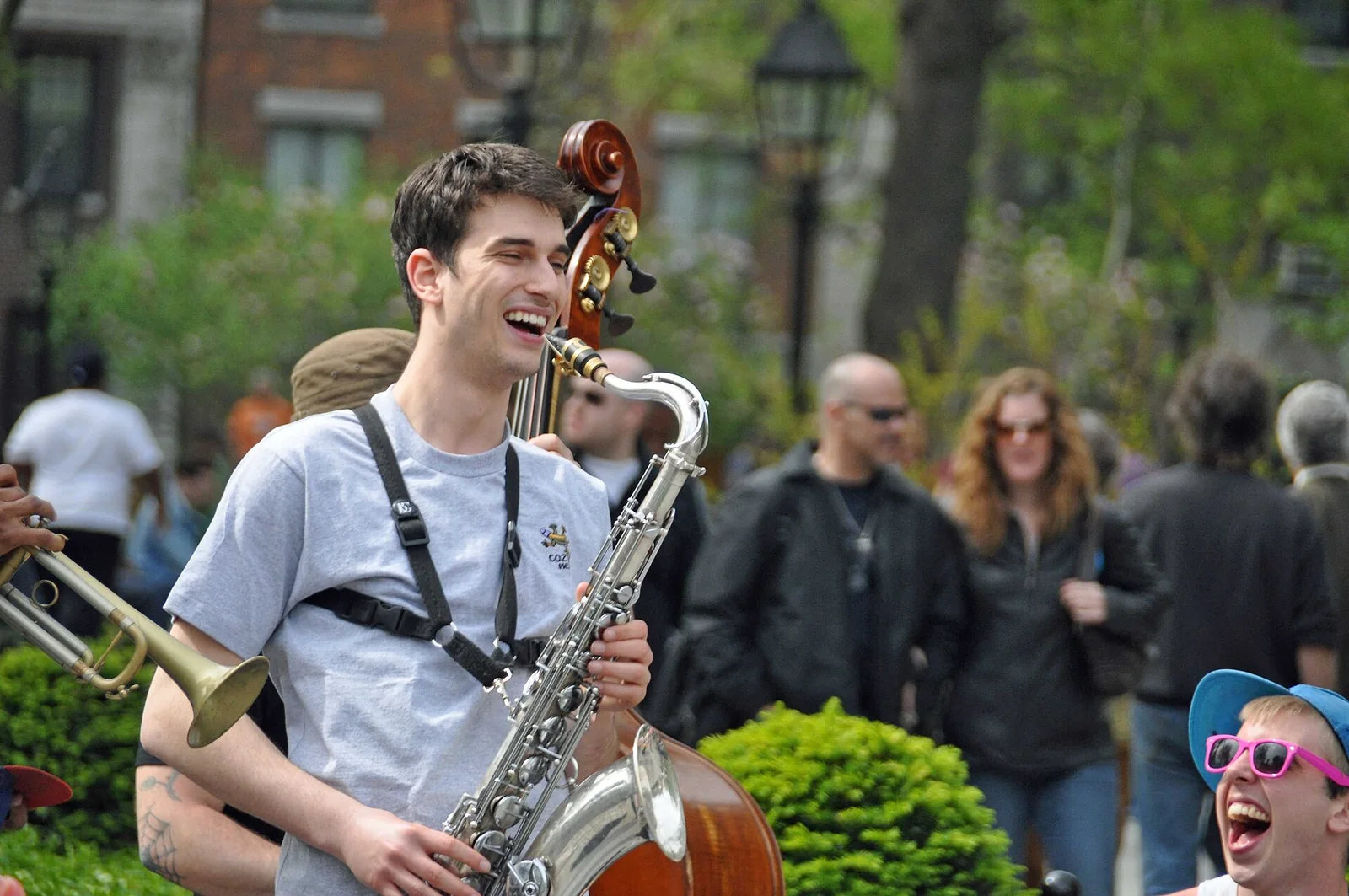
Bob Dylan arrived in New York in January 1961 and entered a folk community already sustained by performers, collectors, organisers and small venues. The Folklore Center on MacDougal Street functioned as an information exchange, while coffeehouses such as the Gaslight and clubs such as Gerde’s Folk City gave singers room to test material.
Dylan was not the scene’s sole creation. Joan Baez, Dave Van Ronk, Odetta, Pete Seeger and many others connected traditional repertoire to contemporary politics. Izzy Young organised what is regarded as Dylan’s first formal New York concert in November 1961.
What the Music Sounded Like
Acoustic guitar and voice dominated, but the scene included banjo, blues, old-time music, poetry and jazz. Authority came less from polish than from the feeling that a song had travelled through history before arriving in the room.
How It Was Made
The infrastructure was human-scale: mimeographed notices, small labels, live tapes, songbooks and word of mouth. Material changed through performance. Singers learned verses from one another and rewrote emphasis through phrasing rather than elaborate production.
The Wider Musical Context
The civil-rights movement gave topical song immediate purpose. At the same time, record collectors and folklorists were restoring older rural music to circulation. The scene joined preservation to reinvention.
What Followed
Dylan’s writing expanded rapidly, and within four years electric folk rock would erase the apparent border between the Village and the rock band. The singer-songwriter became a central figure in popular music.
The Village Worked Like a Workshop
Greenwich Village was valuable not simply because famous singers happened to live nearby. Its compact network of coffeehouses, record shops, apartments, organisations and informal gatherings allowed songs to circulate quickly. A performer could hear an old ballad at one venue, find a recording or lyric the next day, and test a new arrangement that evening. Knowledge moved by conversation as much as by publication.
Izzy Young’s Folklore Center, opened in 1957, became one of the network’s essential rooms. It sold books and records, advertised performances, handled correspondence and connected musicians who might otherwise have remained strangers. The Gaslight, Café Wha? and Gerde’s Folk City supplied stages of different sizes and atmospheres. Washington Square gatherings made performance public and contested; the right to sing there became part of the scene’s argument about who controlled urban space.
Tradition Was Material, Not a Rulebook
The revival gathered people with very different ideas about authenticity. Some pursued old-time music, regional ballads and instrumental techniques with archival seriousness. Others connected folk repertoire to labour politics, civil rights or contemporary songwriting. Blues singers, bluegrass players, Beat poets and jazz musicians shared parts of the same geography without becoming one uniform movement.
Dave Van Ronk brought deep knowledge of blues and jazz; Odetta demonstrated the dramatic force of a single voice; Pete Seeger linked participatory song to political organising; Joan Baez showed that traditional material could reach a large young audience. The Friends of Old Time Music brought Southern traditional performers to New York on their own terms, challenging the assumption that revivalists had invented the culture they admired. The scene’s best work came from the friction between preservation, interpretation and invention.
Dylan Arrives and the Song Begins to Change
Bob Dylan arrived in New York in January 1961 carrying an identity already under construction. He visited Woody Guthrie, absorbed songs from musicians around the Village and developed a repertoire that mixed inherited material with rapidly growing original ambition. Young organised Dylan’s first formal New York concert at Carnegie Chapter Hall on 4 November 1961. The audience was small, but the event belongs to a process by which an unknown performer became legible as an individual artist.
Dylan did not create the singer-songwriter from nothing, nor did the Village wait passively for him. The scene supplied models, rivals, songs, arguments and listeners capable of recognising transformation. What changed was the authority granted to the newly written song. A topical composition could draw on the gravity of an old ballad while speaking in a personal, unstable voice. By the middle of the decade, that possibility would reshape both folk and rock.
What the Coffeehouse Image Conceals
The familiar picture—one singer, one guitar, brick wall, drifting smoke—can make the revival seem gentle and isolated from the music business. In reality, managers, labels, publishers, magazines, radio producers and festival organisers watched the Village closely. As audiences grew, questions about ownership and representation became unavoidable. Who could claim a traditional song? Who was paid when it was recorded? Which voices were promoted as authentic, and which source musicians remained marginal?
Those questions followed folk music into electric rock. The Byrds, Dylan and later singer-songwriters carried Village habits into a louder commercial field: close attention to words, respect for older forms and the belief that a popular song could hold political or literary weight. The scene’s lasting achievement was not a single sound. It created a social method for turning listening, borrowing, argument and performance into authorship.
Essential Listening
- Bob Dylan — Song to Woody
- Joan Baez — House of the Rising Sun
- Dave Van Ronk — Cocaine Blues
- Odetta — Gallows Pole
- Pete Seeger — Where Have All the Flowers Gone?
Related Genres and Guides
Related RetroForge listening
Hear the Archive Connection
Research notes
Sources and Further Reading
- The first stop for aspiring 1960s folkies — Library of Congress
- More Treasures from the Izzy Young Collection — Library of Congress
- Izzy Young collection, 1942–2015 — Library of Congress
- Friends of Old Time Music — Smithsonian Folkways
- Dave Van Ronk — Smithsonian Folkways
- Greenwich Village and the coffeehouse folk scene — Smithsonian Folkways