
History Archive · 1964
The British Invasion Changes American Music
The British Invasion was a feedback loop: American records travelled to Britain, were reorganised by young groups and returned with a new collective identity.
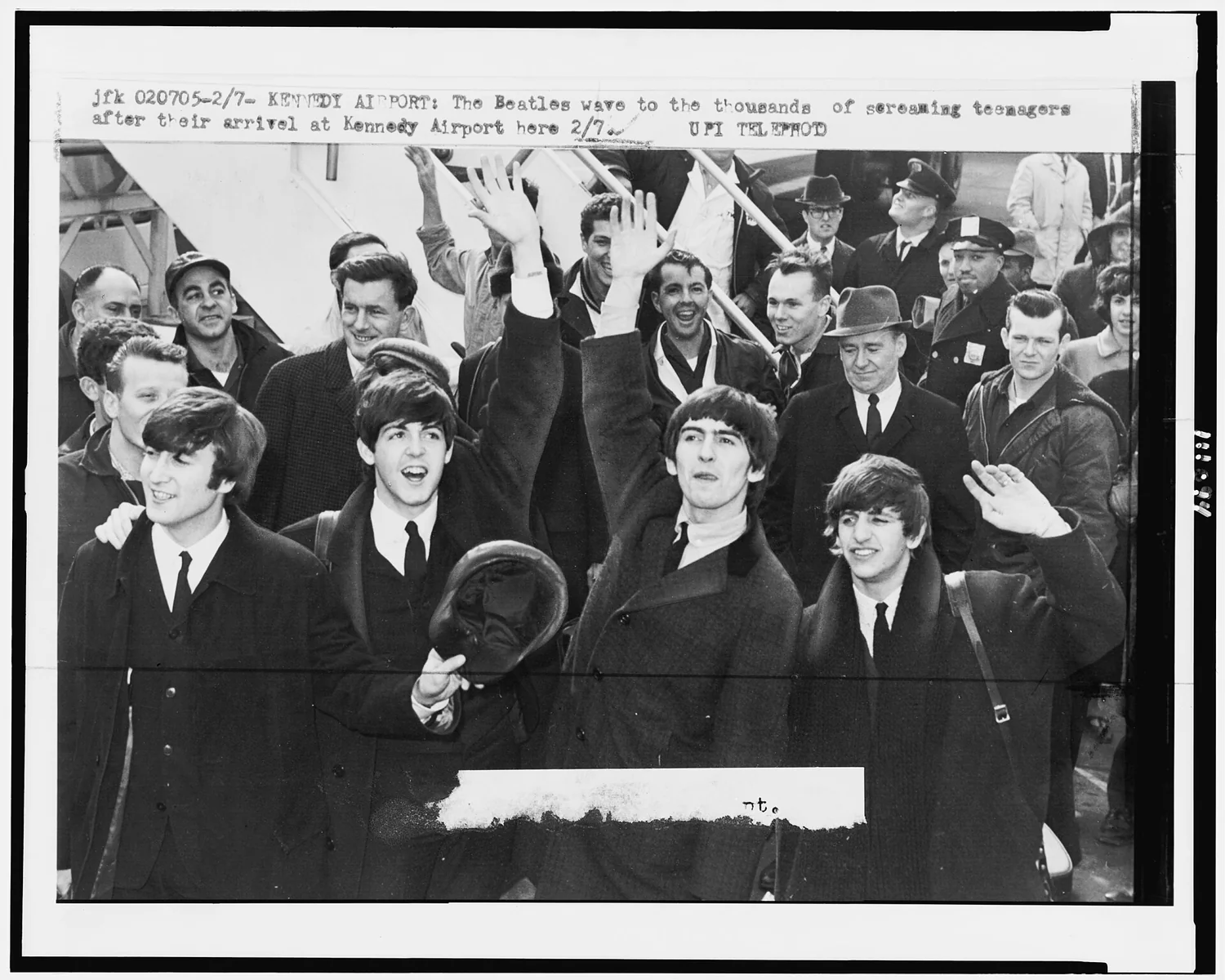
What Happened
The Beatles reached American television audiences in February 1964 through The Ed Sullivan Show, then toured North America that summer. Their records occupied an extraordinary amount of chart space. The Rolling Stones, the Animals, the Kinks, the Dave Clark Five and other British groups followed through the opening.
The invasion was not one sound. It included polished vocal pop, hard rhythm and blues, folk-derived drama and distorted guitar. What united it was the visibility of the band as a self-contained cultural unit.
What the Music Sounded Like
The Beatles offered melody and harmony; the Stones offered loose blues attack; the Kinks made distortion into a hook; the Animals used organ and a severe minor-key arrangement to turn a traditional song into modern drama.
How It Was Made
Television compressed distance. A single performance could establish faces, haircuts, humour and sound at once. Record labels, radio and package tours then converted attention into a continuous stream of releases.
The Wider Musical Context
Motown, soul, surf music and folk remained powerful in America. The British Invasion did not replace them; it forced them into new competition and exchange.
What Followed
By 1965, British bands were absorbing Dylan, Indian music and studio experimentation. American groups answered with folk rock, garage psych and the first signs of a heavier sound.
The Breakthrough Was Prepared Before the Plane Landed
The Beatles’ arrival at John F. Kennedy Airport in February 1964 remains the defining image, but American interest had already been organised by records, radio and television. “I Want to Hold Your Hand” spread through radio before its planned release and reached number one. Capitol Records committed to promotion after earlier hesitation. When more than seventy million viewers watched the group on The Ed Sullivan Show on 9 February, they were witnessing the peak of a campaign and a public curiosity already in motion.
The performance nevertheless changed scale. Television allowed the same event to enter millions of homes at once, combining close views of the band with shots of the excited studio audience. Two days later, the Washington Coliseum concert showed how forceful the Beatles could be in the round, rotating their equipment to face different sides of the arena. The television image introduced personalities; the concert confirmed a working rock band.
An Invasion Made of Different Sounds
“British Invasion” is useful shorthand, but it can imply a coordinated movement with one sound. The Dave Clark Five offered hard, bright beat music; the Animals brought organ-heavy rhythm and blues; the Kinks turned guitar distortion and clipped riffs into a new aggression; the Rolling Stones foregrounded blues and cultivated unease; the Searchers refined chiming guitar textures. Dusty Springfield arrived as a solo singer with deep command of American soul vocabulary.
What united these acts was not musical sameness. American audiences encountered British performers who had listened intensely to American records and returned those influences in altered form. The exchange could be flattering, commercially opportunistic and historically revealing all at once. Muddy Waters, Chuck Berry, Buddy Holly, Motown, girl groups and early rock and roll reappeared through British accents, group identities and new production choices.
What Changed Inside America
The impact extended beyond imported records. American teenagers formed bands because the group format looked attainable: several friends, guitars, drums, shared clothes and the possibility of writing songs. Garage rock accelerated. Existing artists adapted; the Byrds fused Beatles-influenced instrumentation with folk material, while American producers pursued stronger group identities and more self-contained acts. Competition sharpened arrangements, studio work and album ambitions on both sides of the Atlantic.
The invasion also changed the hierarchy of the business. A successful band could be marketed as a collective of recognisable individuals rather than one interchangeable singer. Songwriting partnerships acquired enormous value. Managers, publishers and labels moved quickly to find the next group, sometimes signing inexperienced musicians on the strength of haircuts and regional buzz. The creative opening and the commercial rush were inseparable.
The Story Was Never a Simple Conquest
The military metaphor conceals the circular route of the music. British musicians did not conquer an untouched America; they arrived carrying American forms that the mainstream US industry had often segregated, softened or neglected. Their success helped some listeners discover the Black artists behind the repertoire, and British groups frequently named those influences. Recognition, however, did not automatically correct unequal royalties, exposure or historical credit.
By the end of 1964, the exchange was moving in both directions faster than ever. British bands listened to Motown, soul and blues; American musicians answered with folk rock, garage rock and increasingly experimental studio records. The useful legacy of the British Invasion is not that one country defeated another. It is that popular music became an accelerating transatlantic conversation in which every borrowed idea returned changed.
Essential Listening
- The Beatles — I Want to Hold Your Hand
- The Animals — House of the Rising Sun
- The Kinks — You Really Got Me
- The Rolling Stones — It’s All Over Now
- The Yardbirds — I Wish You Would
Related Genres and Guides
Related RetroForge listening
Hear the Archive Connection
Research notes
Sources and Further Reading
- US Tour Timeline — The Beatles
- The British Invasion — Rock & Roll Hall of Fame
- The Beatles’ first appearance on The Ed Sullivan Show — Smithsonian Institution
- The Beatles’ first US concert — National Museum of American History
- Beatles ’64 ? The Beatles