Few Chords, Strong Identity
Repetition makes tone and attitude impossible to ignore.

Psychedelic Rock Family
Primitive garage-rock drive colliding with fuzz, organ, echo and the suspicion that the rehearsal room has changed dimensions.
The Sound
Garage psych keeps the economy and impatience of mid-1960s garage rock. Chords are blunt, drums push forward and vocals often sound one step away from breaking. Psychedelic effects enter that compact frame without polishing it: Farfisa organ, fuzz guitar, tape echo and sudden studio movement.
Where acid rock opens songs into long improvisation, garage psych usually leaves before the room settles. The power comes from compression—an unusual sound or altered lyric forced into a two- or three-minute attack. Technical perfection matters less than identity, momentum and the feeling that the record captured an event no careful remake could reproduce.
The border with freakbeat is close. Garage psych is the wider American and international route; freakbeat refers more specifically to hard-edged British mod and beat groups later recognised as a bridge toward psychedelia.
What You’ll Hear
How It Works
Garage psych keeps the blunt impact of a local band—simple chords, insistent drums, sharp vocals—and subjects it to psychedelic tone and studio instability. Its limitations become strengths because a small amount of echo, organ or fuzz can transform a deliberately narrow musical frame.
Listen for immediacy. The performance should still feel close enough to touch even when the room begins to bend. Garage psych is most convincing when experimentation increases urgency rather than polishing away the roughness that gave the song its identity.
Useful distinction: Boundary line: lo-fi sound alone does not define garage psych. The essential tension is between direct beat-group attack and an altered sonic environment.
Repetition makes tone and attitude impossible to ignore.
A simple keyboard line can turn a raw song into a stranger room.
Distortion arrives as impact rather than extended virtuoso display.
Human roughness survives every psychedelic treatment.
Historical Development
Garage psych grew when local beat groups absorbed the first wave of psychedelic ideas before losing the directness of garage rock. Farfisa organ, fuzz guitar, shouted vocals and simple chord patterns remained central, but lyrics became stranger, arrangements less predictable and production more distorted. The result often sounds like a three-minute single trying to contain a much larger hallucination.
Much of the music was regional and short-lived. Bands cut one single or one album, played local clubs and disappeared before a stable scene could form around them. Later compilations—most famously the Nuggets tradition—made those scattered records audible as a connected history. That retrospective view is useful, provided it does not erase the different cities, labels and local audiences behind the records.
Polish is not the point. Timing may lurch, effects may overwhelm the mix and a borrowed riff may be transformed more by attitude than technique. Garage psych works because its experiment feels urgent: new sounds enter the room before anyone has learned to handle them safely.
The Real-World Foundations
Not a ranking: six useful doors into the style.
Garage propulsion, electric jug and visionary language form an early complete statement.
Minimal riffs and organ repetition turn limitation into hypnotic identity.
The self-titled debut turns an oscillating guitar effect, fuzz and compact hooks into psychedelic pop with a garage-rock attack.
Snarling band performances share the LP with producer Ed Cobb's overdubs, replacement vocals and studio-built psychedelia.
One explosive riff and a rave-up structure demonstrate how little material the style needs.
Fred Cole's Weeds, renamed by management, give Pacific Northwest garage a darker psychedelic afterimage.
Start Here
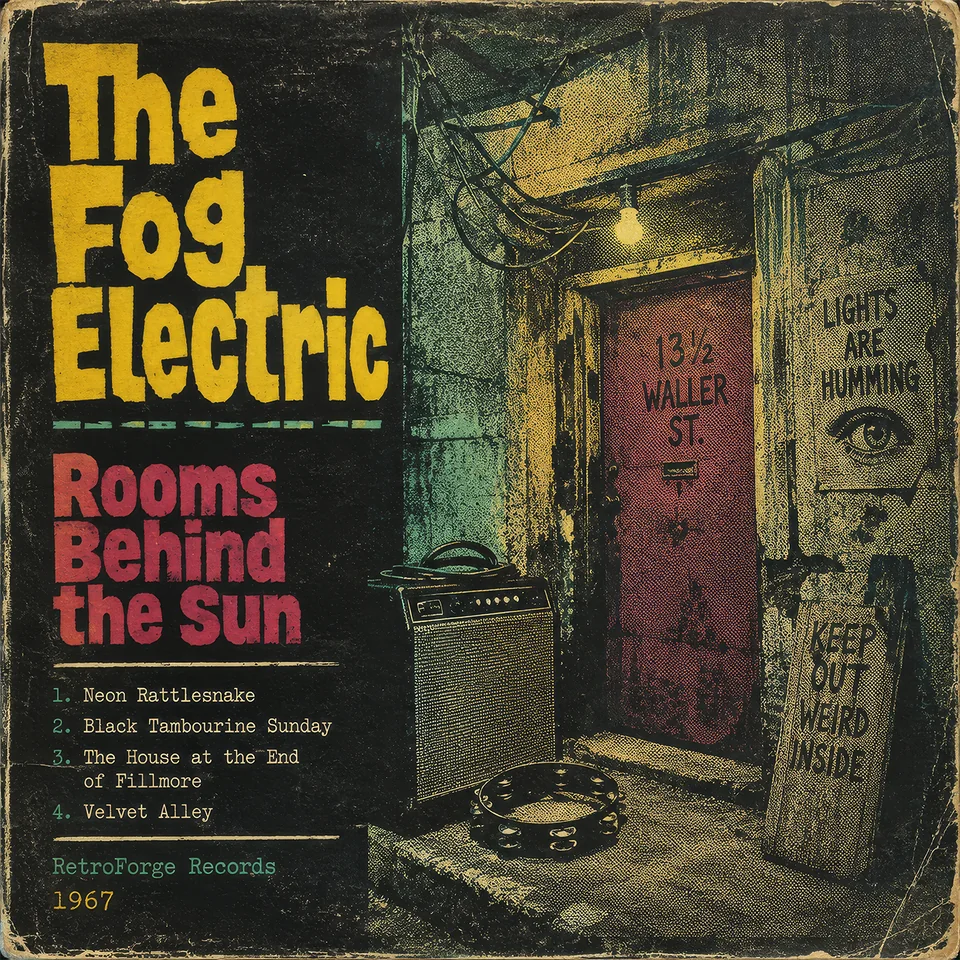
1967 · San Francisco Garage Psych
A compact EP built around raw psychedelic energy rather than long-form drift.
Open the liner notes →Questions from the Record Room
No. Rough sound is common, but direct performance, compact form and the collision of garage energy with psychedelic ideas matter more.
Many bands left only singles or scarce regional releases, so later compilations reconstructed a history that was difficult to hear at the time.
No. Fuzz alone is insufficient; the music also needs the altered imagery, arrangement or atmosphere associated with psychedelia.
Research Trail
Related Styles
Deeper Discovery
Start with The Purple Sun Is Watching as a RetroForge companion, then return through Psychedelic Rock to place it inside the wider family.
Curated paths into the people, records, events and ideas that give this subject its wider musical context.