
History Archive · 1965
Dylan Goes Electric and Folk Rock Breaks Through
When Bob Dylan appeared with an electric band at Newport, the controversy made visible a change already happening on records.
What Happened
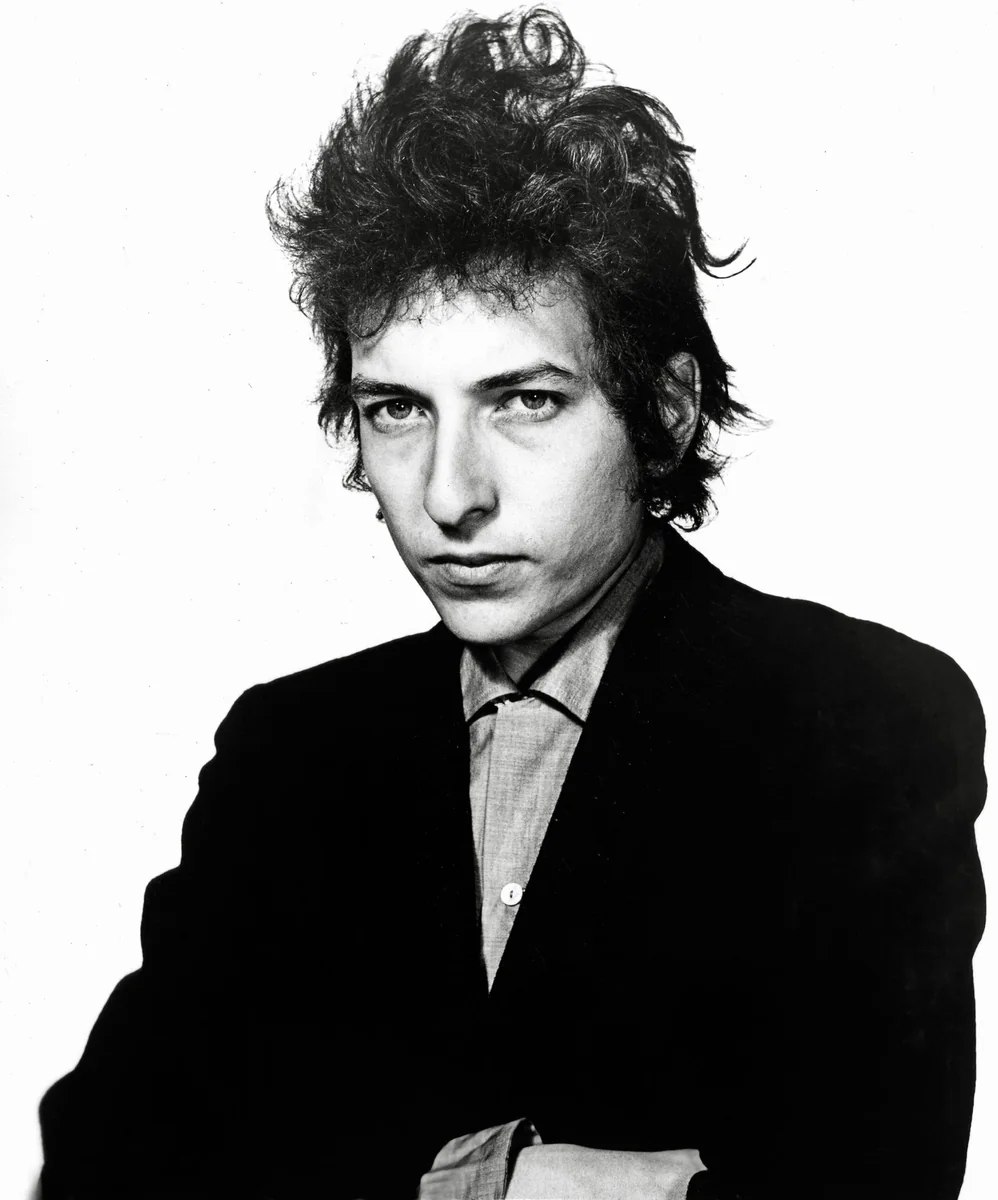
Dylan released Bringing It All Back Home with an electric first side, followed it with the single “Like a Rolling Stone” and the album Highway 61 Revisited. On 25 July he performed three electric songs at the Newport Folk Festival with musicians including Mike Bloomfield and Al Kooper.
The audience response was mixed and the event quickly accumulated legends. The essential fact is simpler: the most prominent young folk songwriter publicly refused the boundary between acoustic authenticity and electric rock.
What the Music Sounded Like
“Like a Rolling Stone” placed organ, electric guitar, piano and a hard snare beneath a vocal that stretched conversational phrasing across the bar line. The Byrds used twelve-string guitar and vocal harmony to create a brighter route.
How It Was Made
Al Kooper’s organ part became central despite his arriving at the session as a guitarist. The records preserve the productive instability of musicians finding a new language while the tape runs.
The Wider Musical Context
The Beatles were becoming more introspective, American garage bands were multiplying and protest music was under pressure from a rapidly changing political climate. Folk rock became a bridge between several audiences.
What Followed
Psychedelia inherited folk rock’s drones, literary ambition and willingness to extend the song. Progressive folk, acid folk and singer-songwriter traditions all continued different parts of the argument.
The Electric Turn Began Before Newport
Newport is remembered as a single switch being thrown, but Dylan’s recorded music had already crossed the boundary. Bringing It All Back Home, released in March 1965, placed an electric band on its first side and acoustic performances on its second. “Subterranean Homesick Blues” compressed talking blues, Beat writing and a rock rhythm section into something that belonged fully to neither established folk nor conventional pop.
Other musicians were moving through the same opening. The Animals had transformed “House of the Rising Sun” into an electric hit; the Byrds’ version of “Mr. Tambourine Man” placed Dylan’s writing inside chiming guitars and close harmony. When Dylan entered Columbia’s Studio A in June to record “Like a Rolling Stone,” the six-minute result ignored the tidy scale expected of a single. Al Kooper’s improvised organ part and Mike Bloomfield’s guitar helped make uncertainty itself sound monumental.
What Happened at Newport
On 25 July, Dylan performed a short electric set with musicians including Bloomfield and members of the Paul Butterfield Blues Band. The volume, compressed preparation and abrupt change from the festival’s acoustic expectations produced a chaotic response. Booing is audible, but its meaning remains disputed. Some listeners objected to electrification, some to poor sound, some to the brevity of the set; later retellings often combine those reactions into one clean act of betrayal.
The famous story that Pete Seeger tried to cut the power cable should not be repeated as settled fact. Seeger later explained his anger in terms of distorted sound and an inability to hear the words, and versions of the incident changed as the story became mythology. The important point is not an axe. Newport exposed a real argument about ownership: did a folk audience have a claim on what Dylan should represent, or did the songwriter’s authority include the right to abandon expectations?
Folk Rock Was More Than Acoustic Songs with Drums
The new hybrid changed the function of rock writing. Electric instruments did not merely make folk louder; they altered pacing, emphasis and emotional scale. A backbeat could turn an observation into accusation. Organ and sustained guitar could create an environment around words rather than simply accompany them. Repetition allowed long, image-heavy verses to gather force without requiring the neat release of a traditional chorus.
At the same time, folk methods changed rock. Older melodies, topical argument, surreal narrative and the expectation that words deserved close attention entered a mass market. The Byrds made the synthesis luminous; Dylan made it abrasive and unstable. Simon & Garfunkel’s electrified “The Sound of Silence” showed how a studio revision could carry an acoustic song into pop radio. By the end of 1965, the distinction between “serious” folk and commercial rock was no longer sustainable.
What the Legend Can Hide
The simplified story casts Dylan as a lone modernist confronting conservative purists. That flatters the hero and diminishes the scene around him. Folk musicians had long adapted instruments and repertoire, the Newport festival itself presented a wide range of traditions, and many listeners were open to change. The conflict was intensified because Dylan had become symbolically important to people involved in civil rights, topical song and the revival’s community institutions.
His electric work did not destroy that history. It carried parts of it into a different arena, where the songwriter could address a mass audience without offering a stable message or identity. Highway 61 Revisited and the tours that followed made confrontation part of the music. The lasting breakthrough was freedom from a false choice: a song could be literary and physical, traditional and technologically modern, rooted in collective memory yet unwilling to obey the community that first recognised it.
Essential Listening
- Bob Dylan — Like a Rolling Stone
- Bob Dylan — Maggie’s Farm
- The Byrds — Mr. Tambourine Man
- The Byrds — Turn! Turn! Turn!
- Simon & Garfunkel — The Sound of Silence
Related Genres and Guides
Related RetroForge listening
Hear the Archive Connection
Research notes
Sources and Further Reading
- Bob Dylan induction essay — Rock & Roll Hall of Fame
- Bob Dylan bibliography — Library of Congress
- Dylan Goes Electric! Music, Myth, and History — Library of Congress
- Newport Folk Festival set list, 25 July 1965 ? Bob Dylan
- A Complete Unknown: A Listening Companion ? Smithsonian Folkways
- Al Kooper ? Rock & Roll Hall of Fame