
History Archive · 1984
1984: The Last Year of the Classic Rock Era
Calling 1984 an ending is useful only if it is also understood as an opening: classic rock scale remained enormous while pop, video, metal and hip-hop reorganised the centre.
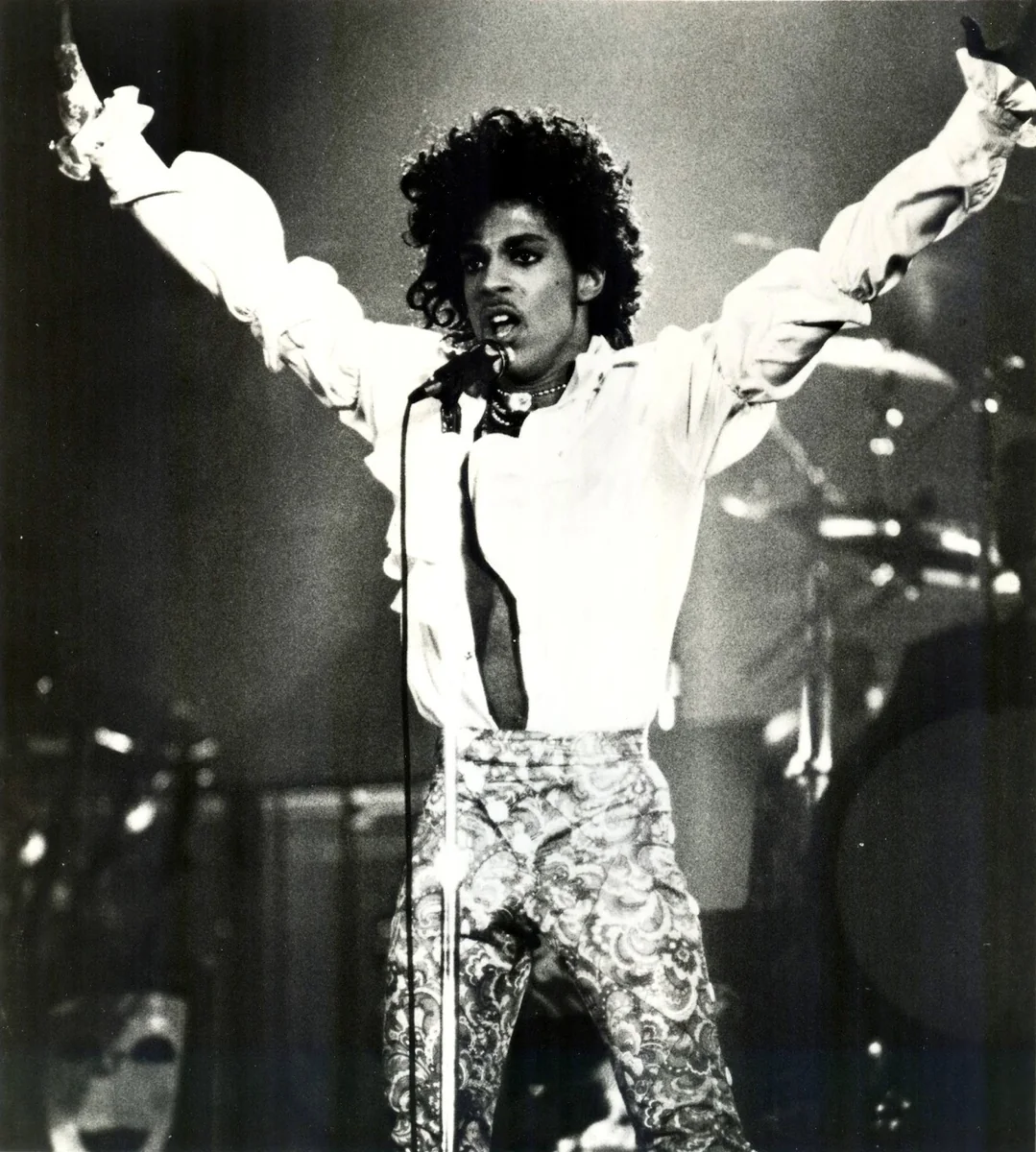
What Happened
Prince released Purple Rain and used an album, film, band and visual identity as one crossover project. Van Halen released 1984, placing Oberheim synthesizer beside Eddie Van Halen’s guitar. Bruce Springsteen, Tina Turner and Madonna also issued defining records, while Run-D.M.C. helped carry hip-hop toward a national audience.
MTV reached nationwide distribution in the United States, making visual presentation an everyday part of how many listeners discovered music. The channel’s power also exposed exclusions in its early programming and forced arguments about who appeared within the new mainstream.
What the Music Sounded Like
Gated drums, bright digital reverberation, analogue and early digital synthesizers, precise guitar and highly separated mixes defined much mainstream production. Outside it, thrash metal and hip-hop pursued harder rhythmic economies.
How It Was Made
Recording and visual production became increasingly linked. Videos could require budgets and planning comparable to record campaigns. Sampling, MIDI and programmable instruments were beginning to standardise workflows that had been improvised only a few years earlier.
The Wider Musical Context
Prince’s synthesis of rock, funk, R&B and pop challenged genre boundaries. Metal divided into commercial and underground forms. Independent post-punk was becoming alternative rock, and hip-hop was expanding beyond New York.
What Followed
Classic rock did not end after 1984, but it stopped being the uncontested frame for ambitious popular music. The later 1980s belonged to several overlapping systems: MTV pop, metal, alternative music, electronic dance production and hip-hop.
“Last” Is a Boundary, Not an Obituary
Rock did not end in 1984, nor did every tradition formed between the 1950s and 1970s suddenly become irrelevant. The year works as an editorial boundary because several systems reached unusual intensity at once: stadium touring, blockbuster albums, music television, corporate promotion and rapidly changing recording technology. After this point, the idea of one central rock narrative becomes increasingly difficult to defend.
Calling it the last year of a “classic” era is therefore a claim about shared attention, not quality. Established rock could still dominate, but it now occupied the same marketplace as hip-hop, synth-pop, metal, college rock, club music and global pop forms with their own institutions and histories. The centre did not collapse. It multiplied until no single map could contain it honestly.
Blockbusters Joined Sound, Character and Screen
Prince’s Purple Rain stands at the centre of the year because album, film, band and public persona reinforce one another without reducing the music to merchandise. Prince and the Revolution fused funk, synth-pop, soul and guitar rock; “When Doves Cry” famously removed the expected bass line, while portions of the title track came from a live performance at First Avenue in Minneapolis. The album’s success turned a regional scene and an uncompromising artist into mass culture.
Bruce Springsteen’s Born in the U.S.A., Van Halen’s 1984 and U2’s The Unforgettable Fire offered very different versions of scale. Synthesizers could sharpen hard rock, open atmospheric space or make an arena song instantly recognisable. Music video and photography helped establish the public meaning of each record before many listeners heard the full album. The visual frame had become part of the first listen.
The Underground Was Building Its Own Eighties
A blockbuster-only view misses the year’s other foundations. The Smiths’ debut gave British guitar pop a literate, anti-arena identity. Hüsker Dü’s double album Zen Arcade forced hardcore punk into narrative scale and stylistic range. Cocteau Twins’ Treasure made voice, guitar effects and studio atmosphere more important than literal lyrical clarity. These records did not wait for the mainstream to finish before proposing what came next.
Metal was also fragmenting into distinct technical and cultural routes, while hip-hop’s recorded language continued to expand beyond novelty classifications. The future did not belong to one successor genre. It belonged to networks: independent labels, college radio, clubs, specialist press, tape exchange and local scenes capable of sustaining identities outside a universal rock audience.
Technology Changed the Meaning of a Performance
By 1984, digital synthesizers, samplers, drum machines and MIDI were altering how records were arranged and reproduced. Compact discs were gaining a foothold, though vinyl and cassette remained central. A performer could be represented by a live band, a programmed sequence, a video character or a combination of all three. Studio precision and stage authenticity were no longer useful opposites.
This is the threshold that gives the period its ending. Earlier rock history can be narrated through a sequence of dominant album cultures and band movements, even when that simplification is imperfect. After 1984, media, scenes and production methods proliferate too quickly for one lineage to remain convincing. Classic rock continues—sometimes brilliantly—but it becomes one tradition among many rather than the default language through which every new development must pass.
Essential Listening
- Prince and the Revolution — Purple Rain
- Prince and the Revolution — When Doves Cry
- Van Halen — Jump
- Bruce Springsteen — Born in the U.S.A.
- Run-D.M.C. — Rock Box
Related Genres and Guides
Related RetroForge listening
Hear the Archive Connection
Research notes
Sources and Further Reading
- 1984 exhibition — Rock & Roll Hall of Fame
- Prince — Rock & Roll Hall of Fame
- MTV at 40 — Smithsonian Magazine
- Purple Rain and the National Recording Registry — Library of Congress
- Purple Rain registry essay — Library of Congress
- RUN DMC — Rock & Roll Hall of Fame