
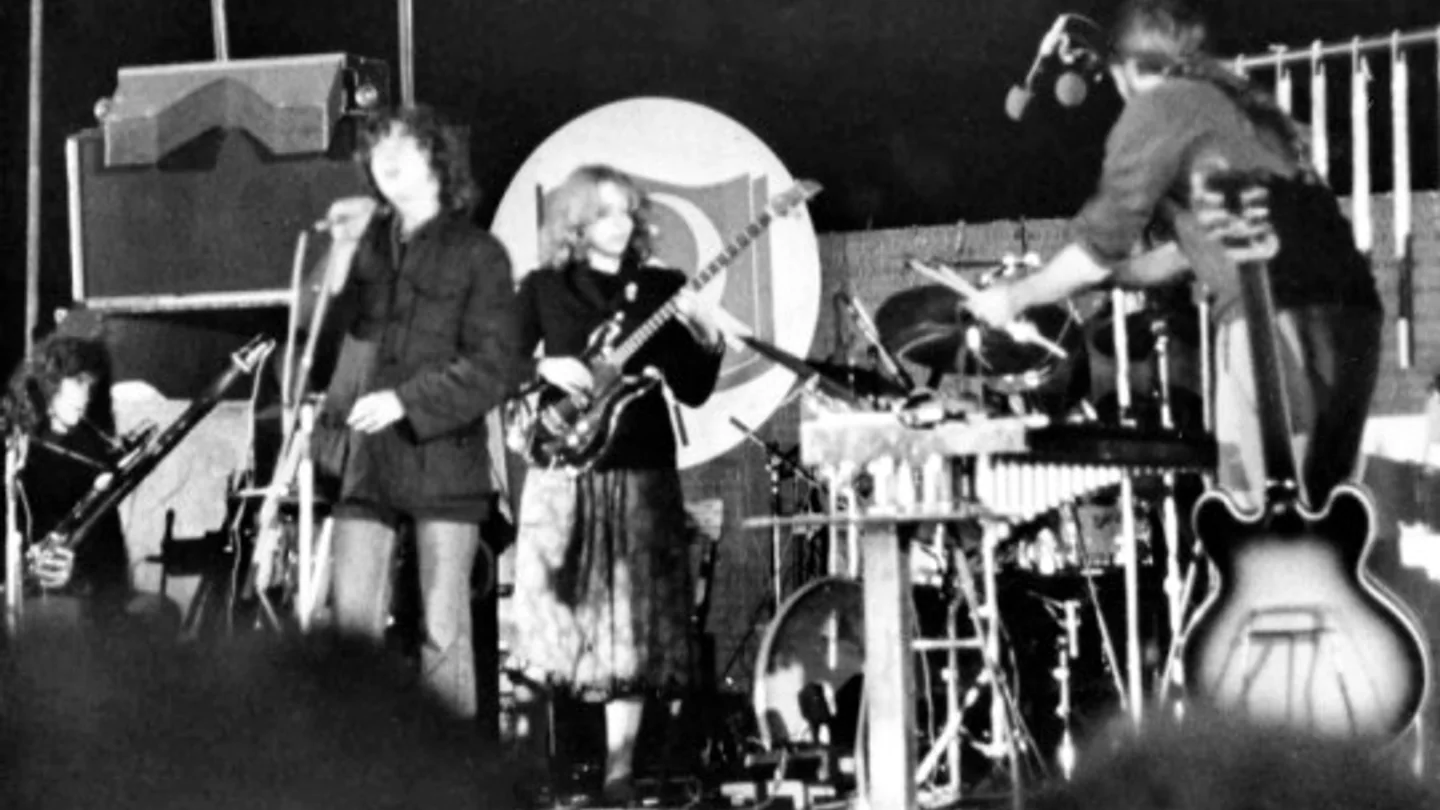
From European Touring to a London Stage
Henry Cow’s years of touring continental Europe brought the British group into contact with adventurous bands that remained little known outside their own countries. At the same time, Henry Cow’s relationship with Virgin Records had deteriorated. The group’s answer was not merely aesthetic: self-management, alternative concert circuits and cooperation became part of its musical politics.
That background matters because “opposition” referred to material conditions as well as compositional choices. The problem was how independent groups could perform, circulate recordings and reach listeners when established companies saw little commercial value in their work.
12 March 1978: Five Groups, One Festival
The first Rock in Opposition festival took place at the New London Theatre on 12 March 1978. Henry Cow represented Britain; Etron Fou Leloublan came from France, Univers Zero from Belgium, Samla Mammas Manna from Sweden and Stormy Six from Italy. Contemporary publicity called them “five rock groups the record companies don’t want you to hear.”
The wording named a shared obstacle, not a common musical recipe. Chris Cutler’s account in Sound International described the emerging organisation as reciprocal aid between groups in different countries. That practical purpose is the most reliable starting point for understanding RIO.
From Festival to Cooperative
The concert generated enough momentum for the participants to continue working together. The organisation remained small and provisional, coordinating contacts, knowledge and opportunities across national borders rather than functioning as a conventional label or management company.
Musicologist Jacopo Costa describes RIO’s historical designation as a sequence: festival, collective and eventually musical genre. The organised collective lasted only a few years, from 1978 to 1982, but collaborations among its musicians and the circulation of the name continued after the structure itself had ended.
The Original Five Did Not Share a House Style
Henry Cow joined written composition to improvisation and collective politics. Stormy Six carried Italian song and political writing into increasingly elaborate arrangements. Samla Mammas Manna brought humour and rhythmic agility; Univers Zero concentrated acoustic chamber sonorities; Etron Fou Leloublan favoured a raw, theatrical attack. These are listening distinctions, not membership criteria.
The alliance’s stylistic breadth was central to its purpose. Academic accounts caution that treating the original RIO groups as one unified genre obscures the very diversity that made mutual organisation necessary. Their common ground was a working method and a position toward the industry, not a preset combination of bassoon, odd metre and dissonance.
How RIO Became Avant-Prog
After the cooperative ended, “Rock in Opposition” continued to circulate. Over time, listeners and promoters increasingly used it for music that resembled parts of the historical repertoire, especially the chamber-oriented work of Univers Zero and Henry Cow. Costa notes that the name consequently became close to a synonym for “avant-progressive.”
For navigation, avant-prog is the safer broad term: progressive rock shaped by experimental composition, improvisation, discontinuity or unusual instrumentation. Historical RIO membership is a factual relationship to a specific organisation. A later band can be avant-prog or RIO-influenced without having belonged to that organisation.
Composition, Improvisation and Friction
Across the wider avant-prog field, written complexity may coexist with sounds that resist polish. Odd metres, chamber instruments, dissonance and sudden changes recur, but none is mandatory. More revealing is the friction between systems: rock rhythm against modern composition, notation against improvisation, or local song traditions against an international experimental network.
Difficulty is not proof of value, and virtuosity is not necessarily displayed as spectacle. A dense passage may destabilise a form; silence or interruption may clarify it. The listener’s task is to follow how materials cooperate and conflict rather than to check off a list of supposedly RIO instruments.
Five Records, Five Different Entrances
For a comparative route, hear Henry Cow’s Western Culture, Univers Zero’s Hérésie, Stormy Six’s L’Apprendista, Samla Mammas Manna’s Måltid and Etron Fou Leloublan’s Les Trois Fous Perdégagnent. These albums were not all recorded for the organisation, nor do they document one shared programme; they offer contrasting views of the five groups gathered in London.
Listen for the changing balance between written and improvised material, rock and chamber instrumentation, song and abstraction, humour and severity. Their differences explain RIO better than any attempt to force them into one sonic profile.
Later Festivals and the Survival of the Name
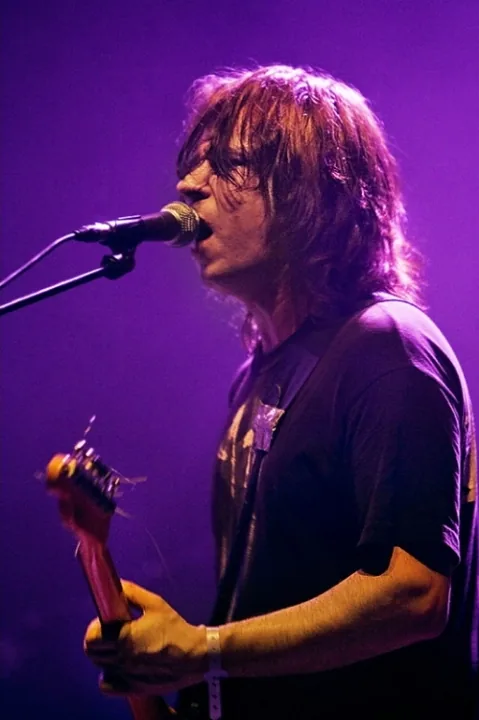
A new Rock in Opposition festival began in southern France in 2007, the event pictured above. It connected musicians from the historical orbit with later experimental groups, but it was not a simple continuation of the original cooperative. The reused name now functioned primarily as a curatorial signal.
That afterlife is legitimate as long as the chronology remains visible. “RIO” can identify a historical network, an influence or a modern festival context; those meanings should not be silently collapsed into one another.
The RetroForge Route
The Map Refuses the Territory approaches this border through unstable forms and ensemble friction. A System Without Voices removes the narrator and lets recurring instrumental systems contest control.
Neither album is presented as an original RIO document. They are contemporary RetroForge works connected by a narrower question: what happens when progressive music challenges not only the market, but its own comfortable formal habits?
Sources and Further Reading
This article uses contemporary documents and academic research for the 1978 concert, the cooperative’s aims and duration, Henry Cow’s political working methods and the later shift from organisational name to genre-like label. Album descriptions and listening comparisons are editorial interpretations.
- Sound International, August 1978 — Chris Cutler’s contemporary account of Rock in Opposition
- Squidco / ReR — text from the programme distributed at the first RIO concert
- Jacopo Costa — “Rock In Opposition: a case of methodological intermixing”
- British Academy / Oxford Academic — Chris Cutler and Benjamin Piekut on the politics of Henry Cow
- Duke University Press — Benjamin Piekut, Henry Cow: The World Is a Problem