Exposed Counterpoint
Each line remains audible, so tension is created through relationship.

Progressive Rock Family
Progressive scale achieved through small-ensemble detail: counterpoint, acoustic colour, tension and the drama of players occupying the same room.
The Sound
Chamber prog applies the concentration of chamber music to progressive composition. Instead of simulating an orchestra through massed keyboards, it often gives a small group of distinct voices—strings, winds, piano, percussion, guitar or harmonium—independent lines that interlock.
The result can be delicate, severe or unsettling. Counterpoint creates density without sheer volume, while pauses and exposed acoustic timbres make every entrance matter. Rock instrumentation may remain present, but it behaves as part of the ensemble rather than automatically occupying the centre. Written material and improvisation can coexist as long as the players respond with close attention.
The label overlaps with avant-prog and the darker end of Rock in Opposition, yet chamber prog does not require dissonance. Pastoral melody and lyrical restraint fit just as naturally. What matters is scale: music that feels architecturally ambitious while retaining the intimacy and audible detail of a room-sized ensemble.
What You’ll Hear
How It Works
Chamber prog transfers progressive ambition into the scale and precision of a small acoustic ensemble. Strings, reeds, piano, harmonium and tuned percussion can replace the conventional guitar-keyboard wall, exposing every line and making silence part of the arrangement.
The intensity comes from interaction rather than amplification. Independent voices cross, separate and return; a repeated figure gains weight as another instrument changes its angle; a restrained passage can feel more unstable than a loud climax because there is nowhere for imprecision to hide.
Useful distinction: Boundary line: chamber instrumentation alone is not enough. The progressive element lies in development, contrast and the way the ensemble behaves as a single evolving architecture.
Each line remains audible, so tension is created through relationship.
Bowed attack, breath and resonance supply physical force without distortion.
Gaps clarify structure and make each return more consequential.
A compact ensemble can still sustain album-scale development.
Historical Development
Chamber prog developed where progressive-rock structure met the precision and exposed timbre of a small acoustic ensemble. The roots run through Henry Cow and Rock in Opposition, but Univers Zero and Art Zoyd made strings, reeds, piano and harmonium central rather than ornamental.
Without a conventional wall of guitar and keyboards, every entrance carries weight. Counterpoint remains audible, silence becomes structural and the physical attack of bow, breath or piano hammer can provide more tension than distortion. Some groups add rock drums and electric bass; others move close to contemporary chamber music.
The style continued beyond its 1970s European foundations through Present, Julverne, later Belgian ensembles and groups such as Aranis. Its identity lies less in a fixed line-up than in scale: a few highly independent voices create an architecture larger than the room they occupy.
The Real-World Foundations
Not a ranking: six useful doors into the style.
The central dark-chamber landmark: severe, patient and almost physically close.
Violin, brass and amplified tension give the French-Belgian frontier an early form.
Interlocking written parts place rock instrumentation inside a chamber discipline.
Compact pieces prove that chamber prog does not require side-long duration.
Piano, guitar and repetition turn a small ensemble into a pressure system.
A later acoustic ensemble demonstrates the durability of the chamber-prog approach.
Closest RetroForge Route
Adjacent Theatrical Route
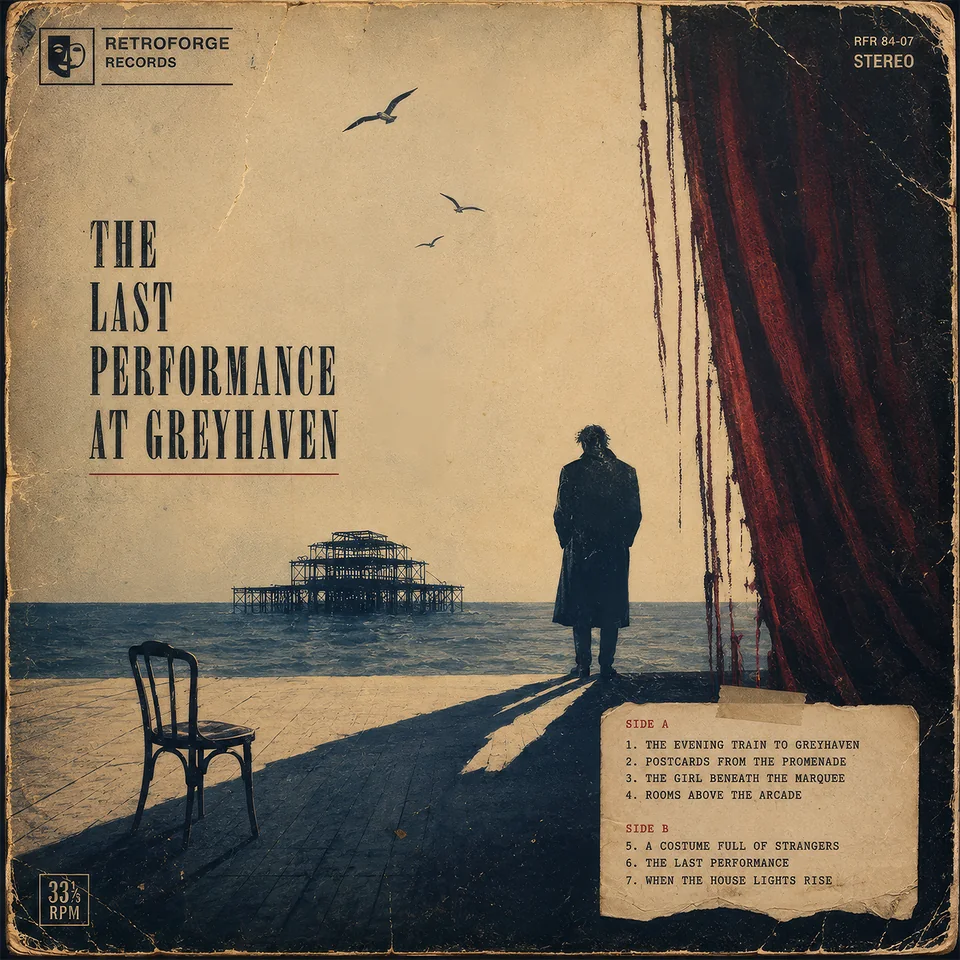
Its intimate performance setting and dramatic ensemble focus offer the nearest current route; it is not presented as a pure chamber-prog album.
Open the liner notes →Questions from the Record Room
Usually they are important, but the defining feature is exposed small-ensemble writing and progressive development.
No. The best-known branch is austere, yet acoustic counterpoint can also be playful, lyrical or pastoral.
Symphonic prog enlarges the rock band; chamber prog reduces the ensemble and makes each independent line more exposed.
Research Trail
Related Styles
Deeper Discovery
Start with The River Beneath the World as a RetroForge companion, then return through Progressive Rock to place it inside the wider family.
Curated paths into the people, records, events and ideas that give this subject its wider musical context.