
Then there are the tiny things: amplifier hiss before a chord, tape noise between sections, a piano that is not clinically isolated from the air around it, a Mellotron note that wavers just enough to feel alive. People often bundle all of this into one convenient explanation: it was analog. That is true, but incomplete. A 1970s record was shaped by far more than the fact that tape happened to be involved. It was the product of rooms, microphones, musicians playing together, finite track counts, physical effects, imperfect instruments, vinyl mastering and a working culture in which many decisions had to be made before anyone knew whether they were the right ones. That entire chain left fingerprints on the sound.
Start With the Room
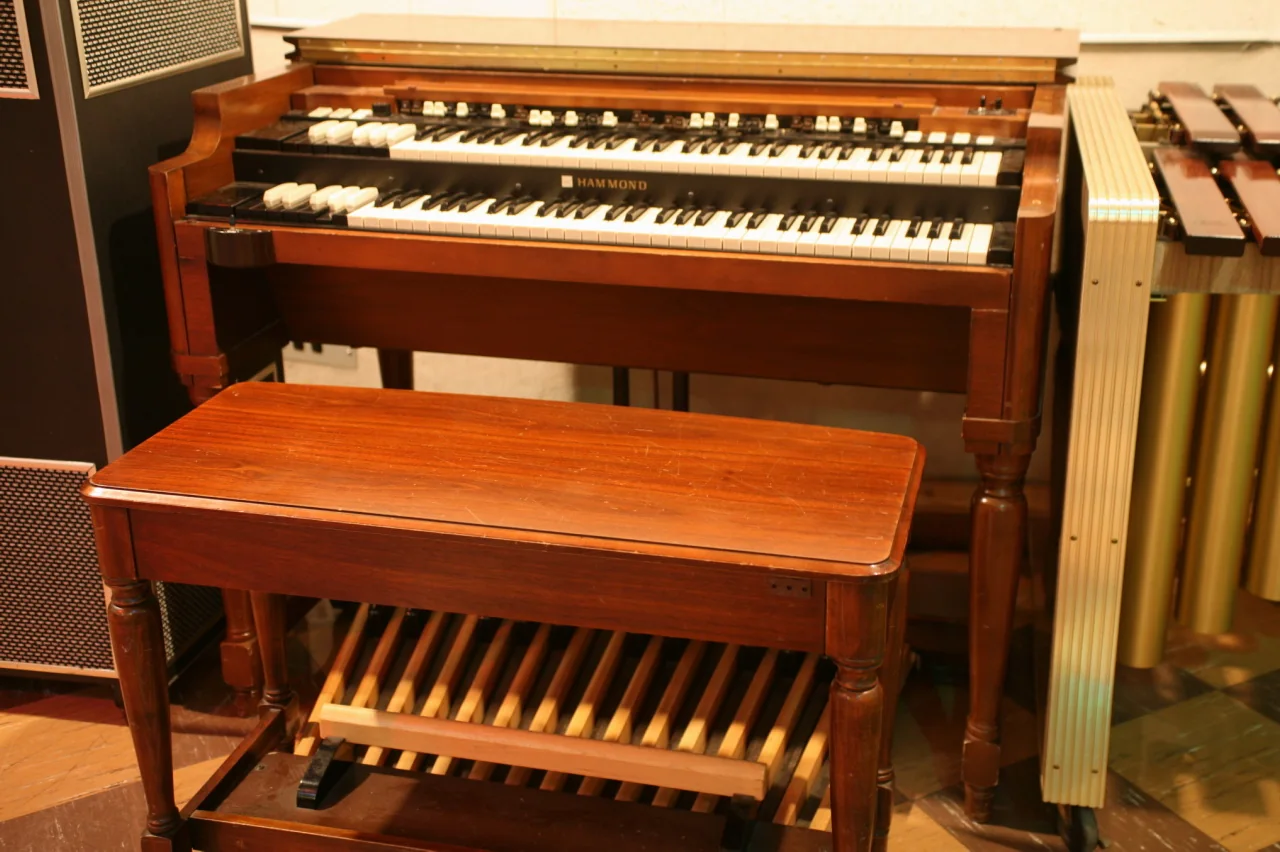
Before tape, before EQ, before compression, there was air. A drum kit excited the walls and ceiling of a studio. A guitar cabinet pushed sound across the floor. A Hammond organ often reached the microphones through a Leslie speaker, whose rotating horn and drum physically threw sound around the room. A grand piano did not produce a neat stereo file. It filled a space.
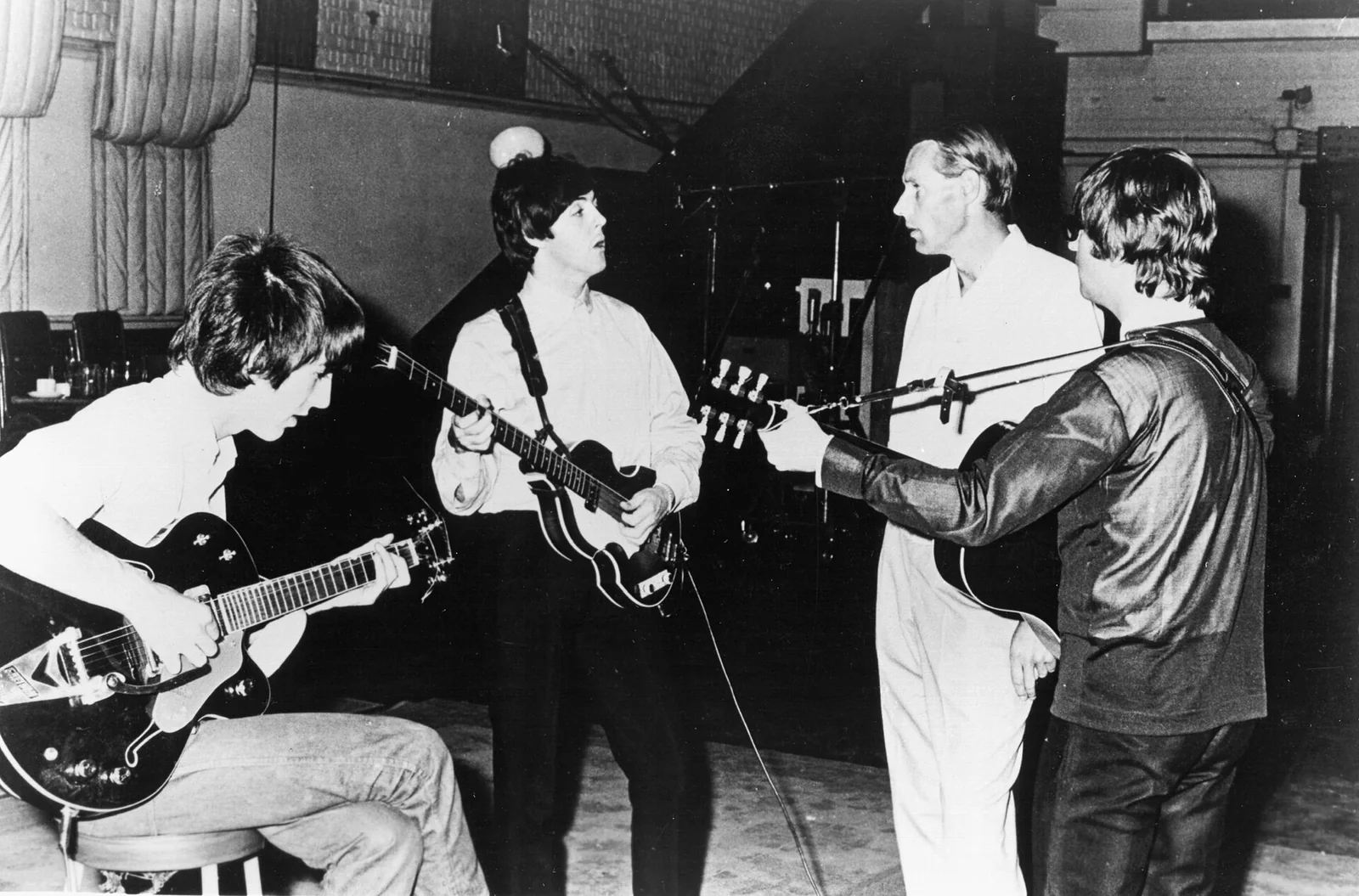
That made the studio itself part of the arrangement. Move a drum kit into a brighter room and the cymbals change. Pull a guitar microphone back from the cabinet and the walls begin to enter the sound. Put two musicians close enough together and one microphone may capture traces of the other. Today, "bleed" is often something to remove. In many older recordings, some of that overlap helps explain why the band feels like one event instead of six immaculate recordings stacked on top of one another.
Not every 1970s session was live. Overdubbing was already central to modern record-making. But even an overdub usually entered a physical environment before it reached tape. The room was not a plug-in choice made after the performance; it was where the performance happened.
Tape Did More Than Store the Music
Professional studios of the period recorded to magnetic tape, and tape has a complicated relationship with sound. At conservative levels it can be remarkably clean. Push it harder and its behaviour changes. Peaks begin to compress. Harmonic distortion increases. Transients soften. Low frequencies may feel thicker. High frequencies can lose a little edge. The exact result depends on the tape formulation, machine, speed, alignment and how hard the signal hits the tape.
This is where modern nostalgia sometimes becomes cartoonish. Engineers were not standing around in 1973 shouting, "More saturation! Make it vintage!" They were trying to make excellent records. Tape colour was frequently a consequence of the process rather than a fetish. And the process could repeat. A sound might be recorded to multitrack tape, copied during a bounce, sent through more electronics, mixed to stereo tape and then prepared for vinyl. Every generation had the potential to alter it slightly. Digital copying gives you another identical file, while every tape generation is a slightly altered descendant of the one before it.
Fewer Tracks Meant Different Arrangements
Modern sessions can contain hundreds of tracks without anyone becoming especially worried. A 1970s studio offered something much more finite. Depending on the year, budget and facility, a band might work with 8, 16 or 24 tracks. Earlier and smaller studios could offer fewer. Once the machine was full, the machine was full. That changed the psychology of recording.
Imagine you have several drum tracks, bass, piano, Hammond, two guitars, lead vocal, backing vocals and percussion. You decide halfway through the album that the final section needs three Mellotrons, handclaps, another guitar and a choir. Today, create more tracks. Then, perhaps, bounce. Four backing vocals could be combined onto one track to free the others. But after that bounce, their relative balance was largely committed.
The restriction was annoying. It was also useful. It forced bands to ask whether a part deserved space. It encouraged sounds to be shaped before recording. It made arrangement a practical necessity rather than something that could be endlessly postponed until the mix. A lot of classic records sound spacious not because the engineers lacked ambition, but because space itself was expensive.
Listen to the Instruments, Not Just the Recording Medium
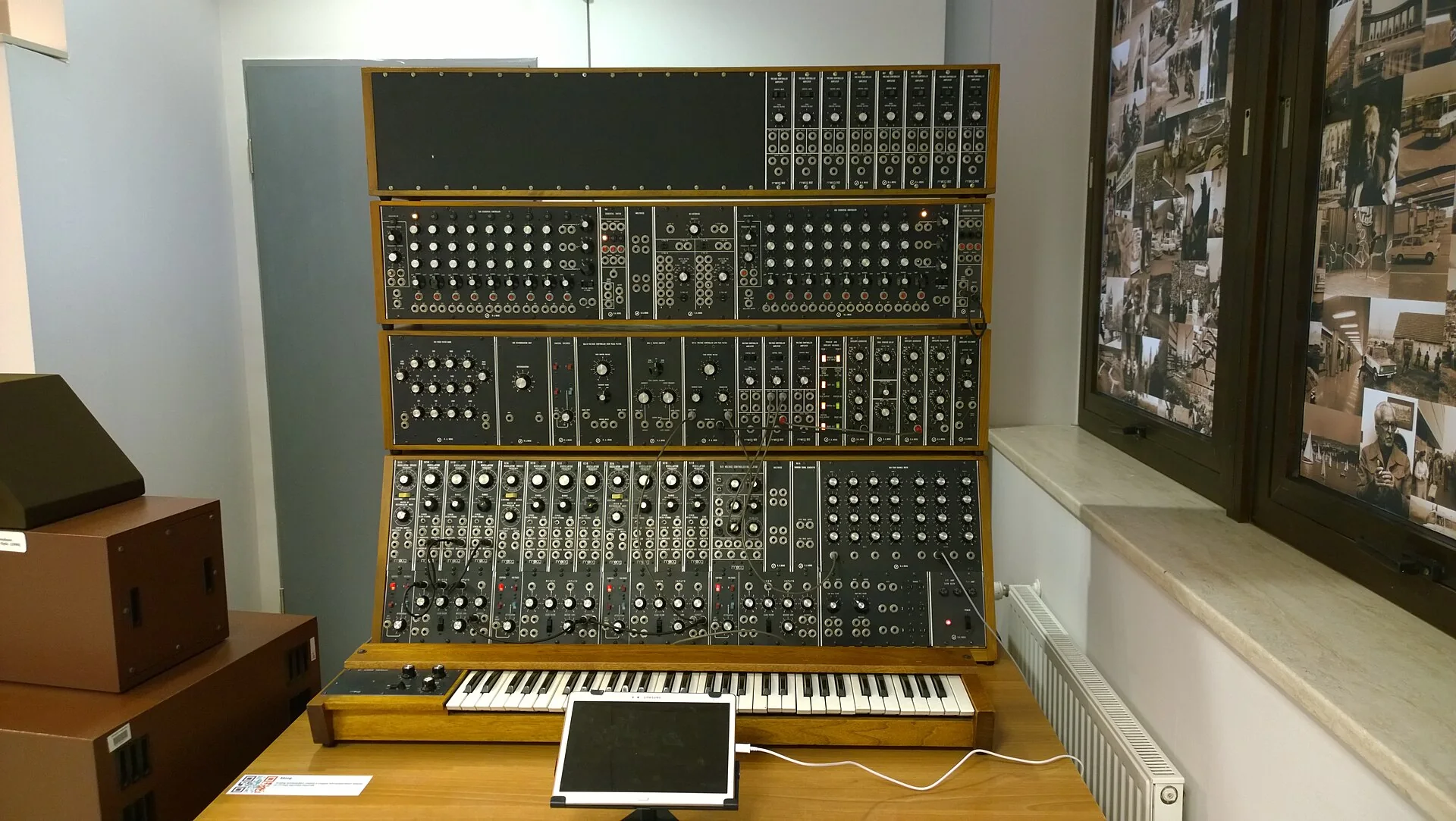
The equipment being recorded also behaved differently. A Hammond organ generated tone electromechanically. A Leslie speaker moved air through rotating components. A Mellotron played strips of prerecorded tape beneath its keys. Early Moog and ARP synthesizers relied on analog circuitry that could drift and respond unpredictably. Rhodes and Wurlitzer electric pianos produced sound through physical mechanisms. Guitarists drove tube amplifiers, fuzz boxes, wah pedals, spring reverbs and tape echoes.
These instruments contained movement before an engineer touched the mix. A vintage synthesizer oscillator does not need a chorus plug-in to become slightly unstable. A tape echo does not repeat a guitar with mathematical precision. A Leslie speaker does not "simulate" motion: the source is physically moving relative to the microphones. And a Mellotron is gloriously absurd. Press a key and a strip of magnetic tape begins moving across a playback head. Hold it too long and eventually the tape runs out.
That mechanical fragility is part of why it still sounds unlike a clean orchestral sample. For a deeper look at the instrument, see What Is a Mellotron?.
Why the Drums Feel Different
If there is one element that instantly dates a production, it is often the drums. Modern rock drums can be enormous at every moment: close-miked, edited, reinforced, sample-layered, transient-shaped and heavily controlled. Many 1970s recordings are enormous in another way. The kit is allowed to be a kit. You may hear fewer microphones. You may hear more room. Toms can ring into the next beat. Cymbals spill across the overheads. The kick drum often has less sub-bass than a modern production but more audible body in the range where the rest of the band lives.
Just as importantly, drummers were not routinely snapped to a grid. Tempo could move. A chorus might pull forward by a hair. A transition might relax. A fill might land with the tiny irregularity of a human being moving four limbs at once. Those movements can be almost impossible to notice consciously. Remove them and you notice their absence.
Compression Had a Different Job
Compression was not new in the 1970s. Studios already relied on compressors and limiters for vocals, bass, drums, broadcast control and countless other tasks. The difference is partly what came later. Modern commercial masters often exist in a world shaped by decades of competitive loudness, digital limiting and playback on small devices. A 1970s LP did not have to fight a 2026 streaming playlist on equal terms.
That left more room for contrast. Listen to classic progressive rock and notice how shamelessly quiet some passages become. Acoustic guitar can shrink the room. A vocal may suddenly sit almost alone. Then the full band returns and feels colossal because the record has somewhere to go. Loud sections feel loud partly because quiet sections were allowed to remain quiet. Dynamic range was not merely a technical property; it was part of the drama.
Reverb Still Had Weight
Open a modern DAW and you can place a virtual cathedral on a snare drum before lunch. In a classic studio, reverberation often came from something much more inconvenient. A plate reverb used a large suspended sheet of metal. A transducer vibrated the plate; pickups captured the result. A spring reverb sent audio through springs.
A dedicated echo chamber was exactly what the name suggests: a reverberant physical room, with a speaker playing sound into it and microphones recording the reflections. Each method imposed a character that could not be redesigned endlessly. That metallic plate around a vocal was a thing. That spring behind a guitar was a thing. That chamber was somewhere in the building. Effects had mass.
Tape Echo Turned Repetition Into Decay
A clean digital delay can send back an almost perfect copy of the original signal. Tape echo is less obedient. The sound is recorded onto moving tape and replayed by one or more heads. Repeats lose high-frequency information, distort, wobble and gradually become less like the sound that created them. That deterioration became a compositional tool in psychedelic rock, dub, progressive rock and early electronic music.
A phrase could repeat until it stopped functioning as a phrase and became atmosphere. That is why a good tape echo rarely feels like a sound followed by copies. It feels like the sound is leaving the room.
Stereo Was Still New Enough to Be Fun
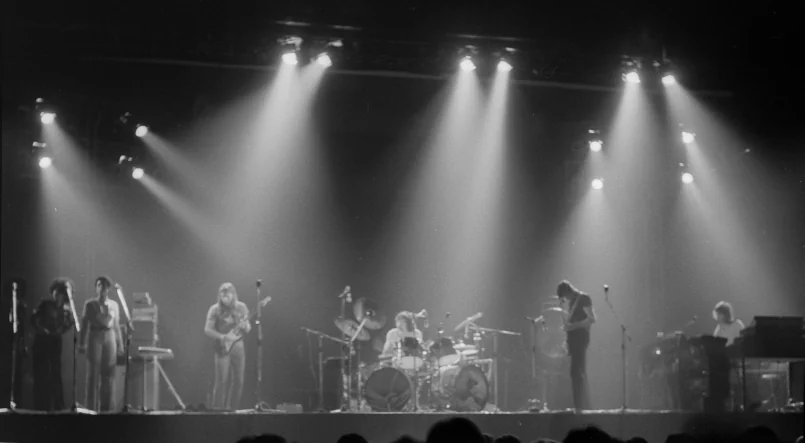
By the 1970s, stereo rock was established, but engineers were still remarkably willing to let you hear the format itself. Some mixes are aggressively wide. Keyboards may live mostly on one side. A guitar can answer from the other. Effects sweep across the speakers. Double-tracked parts are separated almost to the walls. Modern mixing often strives for a robust centre that translates everywhere.
Older mixes sometimes treat left and right as two separate stages. This can sound eccentric on headphones. It can also be thrilling. You are hearing people discover that the space between two loudspeakers could become part of the composition.
Vinyl Was the Last Editor
The LP imposed decisions right up to the end. A vinyl groove has physical limitations. Very deep bass, extreme stereo low-frequency information, cutting level and side length all interact. Longer sides generally make mastering more difficult because more music has to fit into the available surface. So a forty-minute album was not merely an abstract duration.
It had to become two physical sides. That shaped sequencing. It created mid-album pauses. It encouraged bands to think in arcs: how side one opens, where it ends, what deserves the inner-groove cliffhanger, how side two reintroduces the listener. Progressive rock exploited this brilliantly. For more on that architecture, see The Art of the Album Side.
The Most Important Piece of Vintage Equipment Was the Band
Gear collectors may dislike this part. A huge amount of "the 1970s sound" came from people who had played the material repeatedly before the red light came on. Bands rehearsed long pieces until transitions lived in muscle memory. Musicians learned how their parts interlocked. A bassist knew when the guitarist was about to leave a hole. A drummer could sense the keyboard player's phrasing. A singer knew where the arrangement would make room.
That allowed a basic track to contain interaction rather than just simultaneity. It also meant that when small imperfections survived, they belonged to a performance that already worked. A tiny timing error inside a great take was not necessarily a problem to solve. Sometimes it was simply Tuesday.
Was the Old Way Better?
No. It was slower, more expensive and frequently infuriating. Tape hiss accumulated. Equipment broke. A synthesizer patch could disappear forever. Editing required blades. Sessions burned money while machines were being aligned. A Mellotron on tour could behave like a wardrobe full of angry cassette players. Digital technology solved real problems. But tools do not merely change sound. They change behaviour.
Infinite tracks encourage one kind of decision-making. Finite tracks encourage another. Perfect recall changes the way you experiment. Non-destructive editing changes how willing you are to try something. A physical effect responds differently from a menu of ten thousand presets because the physical effect refuses to become anything you ask. The point is not that limitation automatically creates art. Limitations create consequences, and those consequences shape style.
A Five-Minute Listening Test
Next time you play a 1970s record, ignore the song for one pass and listen only for these five things:
- The room. Can you hear where the drums exist?
- The edges. Are attacks razor-sharp or slightly softened?
- The overlap. Do instruments feel isolated, or do they share air?
- The movement. Does tempo, pitch or stereo position shift subtly?
- The silence. Is it actually silent?
Then play a modern production you know well. Not to decide which is better. To hear that a recording is never just the performance. It is the technology, the room, the format and the habits of the people making it. That is why the 1970s do not sound like a preset. They sound like a working method.