Änglagård emerged when symphonic progressive rock had little commercial visibility, yet the music is more than a reconstruction. Mellotron, flute and vintage keyboards meet abrupt dynamics, folk-shaped melody and an unusually physical rhythm section. Long instrumental sections are tightly composed, while their emotional temperature can change from pastoral calm to near-violent density in seconds.
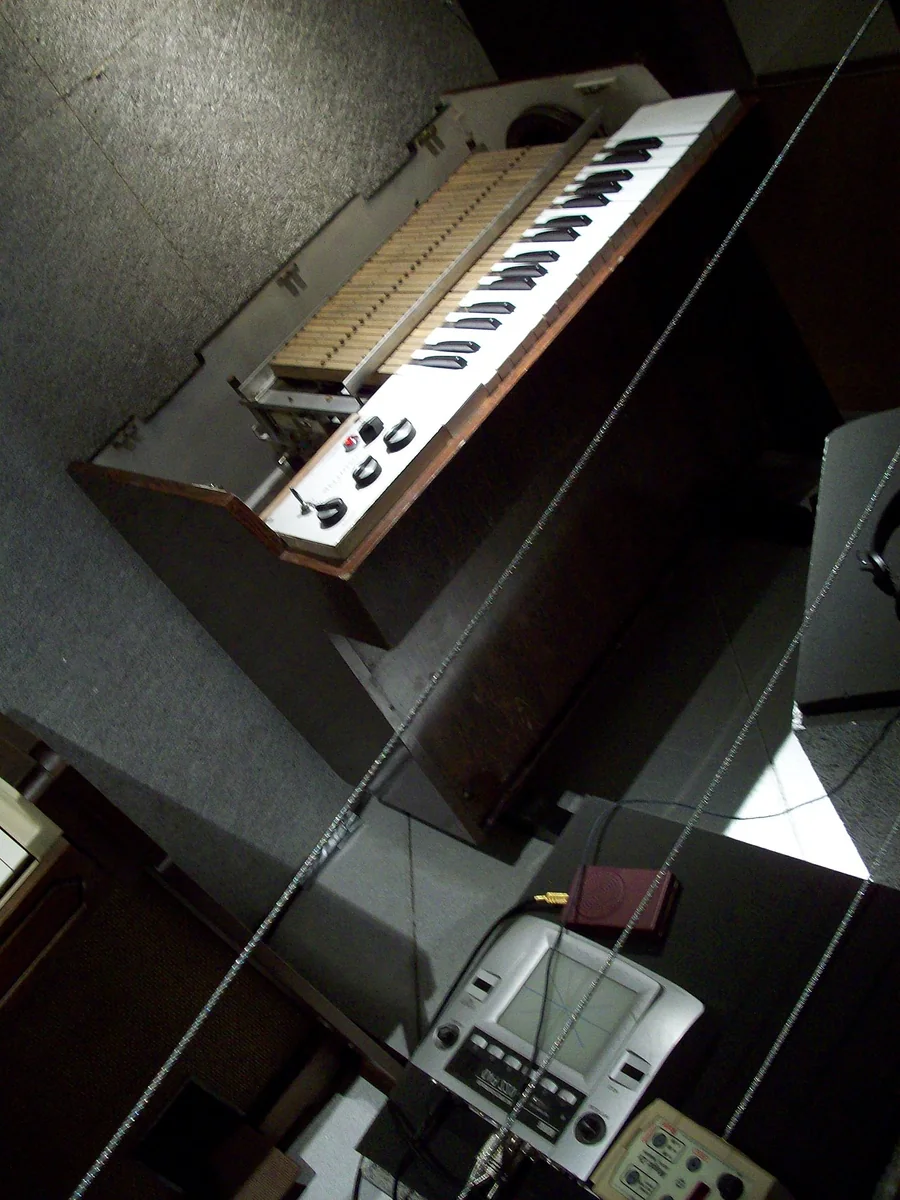
A 1972 Mellotron M400, the tape-replay keyboard central to Änglagård’s symphonic palette.Photo: andrew garton from Melbourne, Australia / Wikimedia Commons · Licensed under CC BY-SA 2.0. Converted to WebP for this page.
Formation & History
The classic early lineup included Tord Lindman, Anna Holmgren, Thomas Johnson, Jonas Engdegård, Johan Högberg and Mattias Olsson.
The group formed in Stockholm in 1991 around Tord Lindman and Johan Högberg, soon joined by Anna Holmgren, Thomas Johnson, Jonas Engdegård and Mattias Olsson. The independently made Hybris followed in 1992; Epilog, an entirely instrumental and darker second album, arrived in 1994. Änglagård then split, briefly reconvened in 2002–2003 and reunited again in 2009. The third studio album, Viljans öga, appeared in 2012 with a changed lineup, eighteen years after Epilog.
Sound & Style
Dense compositions move between pastoral quiet and abrupt ensemble force, marked by Swedish folk colour and minor-key atmosphere.
Mellotron is important, but the rhythm section defines the tension. Olsson's percussion and Högberg's bass make asymmetric passages surge and recoil; Holmgren's flute can carry folk-like melody or sharpen dense counterpoint. Guitar and keyboards rarely settle into accompaniment. Themes are passed between instruments, interrupted and reintroduced in different registers, rewarding attention to structure rather than isolated solos.
Essential Albums
1992
Hybris
Mellotronen · Original 1992 release
Hybris announces Änglagård with four long compositions and almost no wasted motion. “Jordrök” moves from an immediately recognisable keyboard figure through flute, guitar and rhythm changes that continually reframe it. “Vandringar i Vilsenhet” gives pastoral melody room before the ensemble closes in, while “Kung Bore” ends the album with wintry scale. Swedish vocals appear sparingly; instrumental development carries most of the argument. Vintage timbres invite comparisons with the 1970s, but the sharp dynamic editing and restless bass make the record unmistakably its own.
Key tracks: Jordrök · Vandringar i Vilsenhet · Kung Bore
Epilog removes vocals and darkens the band's palette. The compositions breathe more slowly than Hybris, allowing cello, flute, Mellotron and percussion to establish a chamber-like gravity before full-band eruptions. “Höstsejd” is less immediately declarative than “Jordrök,” but its recurring motifs reveal a more patient architecture. Acoustic interludes are not decorative pauses; they alter the scale and prepare the return of amplified weight. The album rewards listeners who want Änglagård's ensemble detail without a conventional frontman.
Viljans öga arrived eighteen years after Epilog and avoids the easy option of imitating the debut's surface. Four extended instrumental pieces retain the band's sudden dynamics, flute, Mellotron and complex rhythm, but the writing is denser and the recording separates details more clearly. “Ur Vilande” and “Sorgmantel” unfold as linked environments rather than verse-based tracks. New personnel contribute without erasing the group's identity; the demanding compositional method still sounds purposeful after the long studio silence.
After Hybris, vintage symphonic tools could signify renewal rather than retreat.
Änglagård demonstrated that a progressive band could be historically informed and still sound urgent. The three studio albums document distinct stages: the concentrated debut, the darker instrumental successor and a late return with altered personnel. The small catalogue and long silences only sharpen the identity of each record.
RetroForge Records publishes original music and independent editorial guides. This historical band guide is not affiliated with the artist, labels or rights holders. No unlicensed album artwork is reproduced.