Pastoral to Monumental
Acoustic detail and open space establish proportion before organ, drums and Mellotron enlarge the frame.

RetroForge Genre Guide
Mellotron choirs, Hammond weight and rock albums built with the memory and scale of a symphony.
The Sound
Symphonic progressive rock does not simply place strings behind a rock song. It borrows the orchestra’s sense of scale: themes can be introduced quietly, transformed over several movements and brought back at the end with a different emotional meaning. The band remains the engine, but it thinks beyond verse, chorus and solo.
At RetroForge, that vocabulary usually begins with Hammond organ, Mellotron, grand piano, analogue synthesizers, melodic bass and acoustic drums. The keyboards can suggest an orchestra without imitating one literally. Mellotron adds fragile strings and choirs; Hammond provides physical force; piano gives complicated passages a human centre.
The word symphonic can suggest grandeur, yet the best records need contrast. A vast climax carries more weight after a lone voice, an acoustic guitar or a nearly empty room. Long tracks earn their duration by changing perspective, not by stacking unrelated sections. Recurring motifs make the whole album feel remembered rather than merely repeated.
RetroForge archive years describe a musical language, not a claim that these are historical recordings. These are contemporary concept albums built in the spirit of the keyboard-led, album-oriented 1970s tradition.
What You’ll Hear
How to Listen
Begin with the keyboards, but do not stop there. Listen to how the bass carries melodies beneath them and how the drums signal a change of room, scale or point of view. A quiet figure introduced on piano may later return through organ and Mellotron; the notes are familiar, but their meaning has changed.
Symphonic prog is most rewarding when heard in sequence. The transitions matter, as do the pauses before the largest sections. If a piece seems complicated, follow one recurring melody rather than attempting to count every change. That melody is often the thread the album expects you to hold.
Not the same as orchestral rock: added strings can colour any song. Symphonic prog uses long-range development and thematic return as part of the composition itself.
Acoustic detail and open space establish proportion before organ, drums and Mellotron enlarge the frame.
Voices often describe cities, machines or inner worlds, but the arrangement carries as much of the story as the words.
Counterpoint, overture-like openings and multi-part development appear as tools, not as rules or museum pieces.
Electric bass, drums and amplified keyboards keep the music physical even at its most elaborate.
Historical Development
Symphonic prog took shape when late-1960s rock groups began treating the album side as a compositional space rather than a container for separate songs. The Moody Blues demonstrated how orchestral colour and recurring ideas could bind a record together, while Procol Harum, The Nice and early King Crimson brought organ, classical references and large dynamic contrasts into amplified music.
The style reached its clearest early-1970s form through Yes, Genesis and Emerson, Lake & Palmer. Their methods were not identical: Yes built music from interlocking melodic lines, Genesis joined ensemble writing to narrative theatre, and ELP placed keyboard virtuosity at the centre. Italian groups including PFM, Banco del Mutuo Soccorso and Le Orme then developed a related language with their own vocal, melodic and operatic character.
The Mellotron became a signature because its tape-recorded strings and choirs sounded both orchestral and visibly imperfect. Yet symphonic prog is not defined by one keyboard. Its deeper principle is long-range memory: themes return, sections change proportion and an ending can answer something introduced twenty minutes earlier.
The Real-World Foundations
Not a ranking: six useful doors into the style.
Three linked movements make thematic return feel inevitable rather than academic.
Pastoral detail, theatrical narrative and ensemble precision coexist without losing warmth.
Keyboard-led scale and the extended Karn Evil 9 push the trio format toward spectacle.
Italian melody, forceful vocals and elaborate keyboards form a distinct symphonic language.
Piano, acoustic texture and orchestral arrangement support a genuinely extended design.
An instrumental concept demonstrates that symphonic continuity does not require a narrator.
Research Trail
Start Here
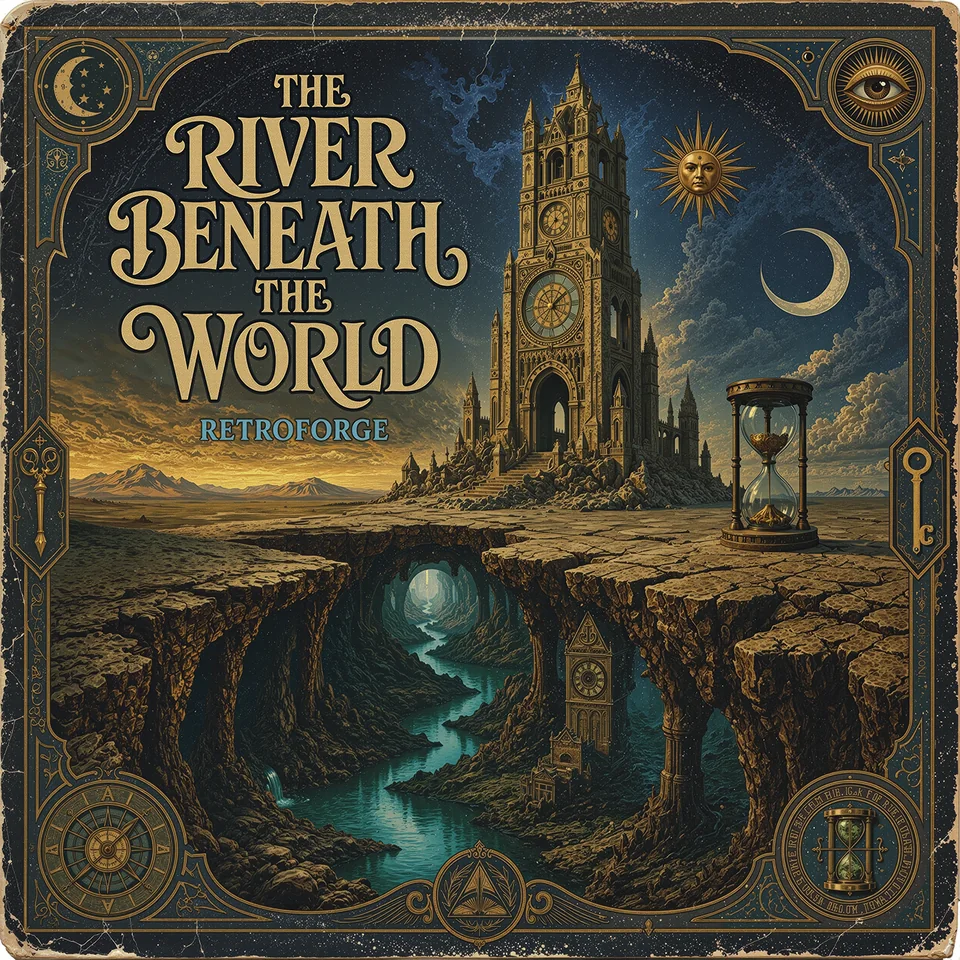
1974 · Symphonic Progressive Rock
Hammond, Moog, grand piano and theatrical vocals build the clearest full-scale example of RetroForge symphonic prog.
Open the liner notes →Three Different Routes
For the full catalogue, use Discography.
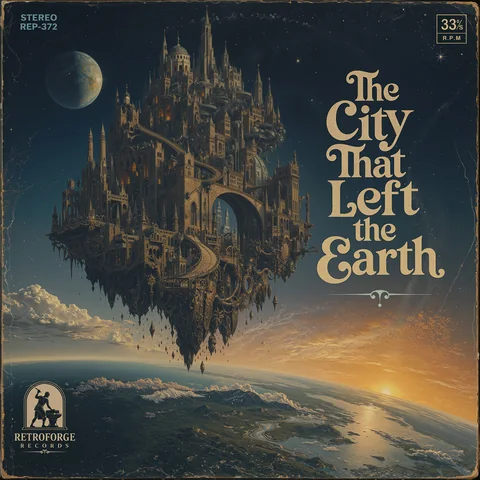
Choose this for science-fiction scale, signal motifs and machinery gathering toward departure.
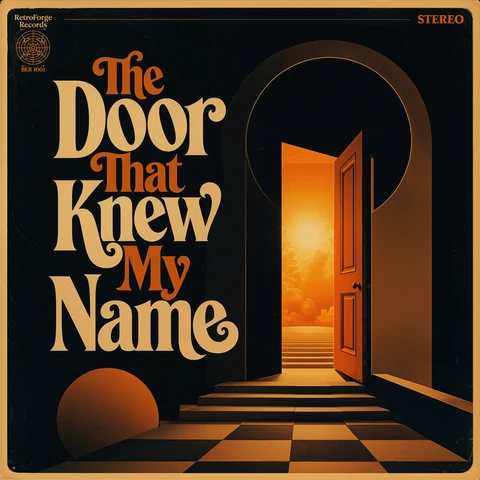
Choose this for a darker, inward journey through rooms, corridors and unstable memory.
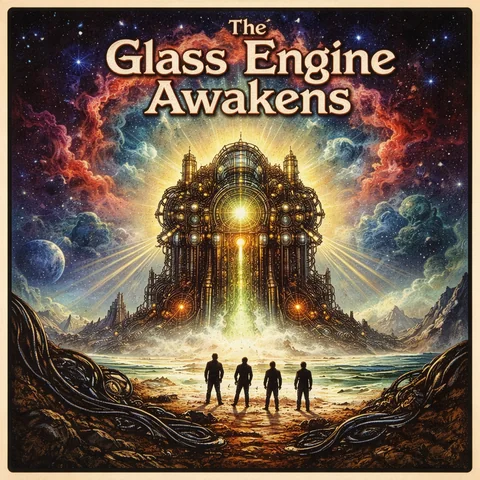
Choose this for a shorter mechanical journey driven by Hammond, Mellotron and Moog.
Questions from the Record Room
No. Hammond organ, Mellotron, piano, synthesizer, guitar, bass and drums can create symphonic scale through arrangement and thematic development.
No. Length alone says nothing about method. Symphonic prog depends on connected themes, large dynamic design and sections that develop one another.
Close to the Edge is the clearest historical landmark; The River Beneath the World is the most direct RetroForge route into the same musical vocabulary.
Go Deeper
Keep Exploring
Deeper Discovery
Start with The Glass Engine Becomes as a RetroForge companion, then return through Progressive Rock to place it inside the wider family.
Curated paths into the people, records, events and ideas that give this subject its wider musical context.