Spock’s Beard formed in Los Angeles in 1992 around brothers Neal and Alan Morse. The 1995 debut The Light gave the decade's progressive-rock revival a new American catalogue rather than a repertory band: long pieces, vocal counterpoint, Hammond and Mellotron colours, melodic bass and abrupt changes of tone were joined to choruses that remained central to the arrangements.
The catalogue now spans three principal lead-vocal periods. Neal Morse led the first six studio albums through Snow; drummer Nick D'Virgilio fronted the band from Feel Euphoria through X; Ted Leonard joined in 2011 and remains the singer. Alan Morse, Dave Meros and Ryo Okumoto connect the present group to the earlier records, while drummer Nick Potters joined the lineup heard on 2025's The Archaeoptimist.
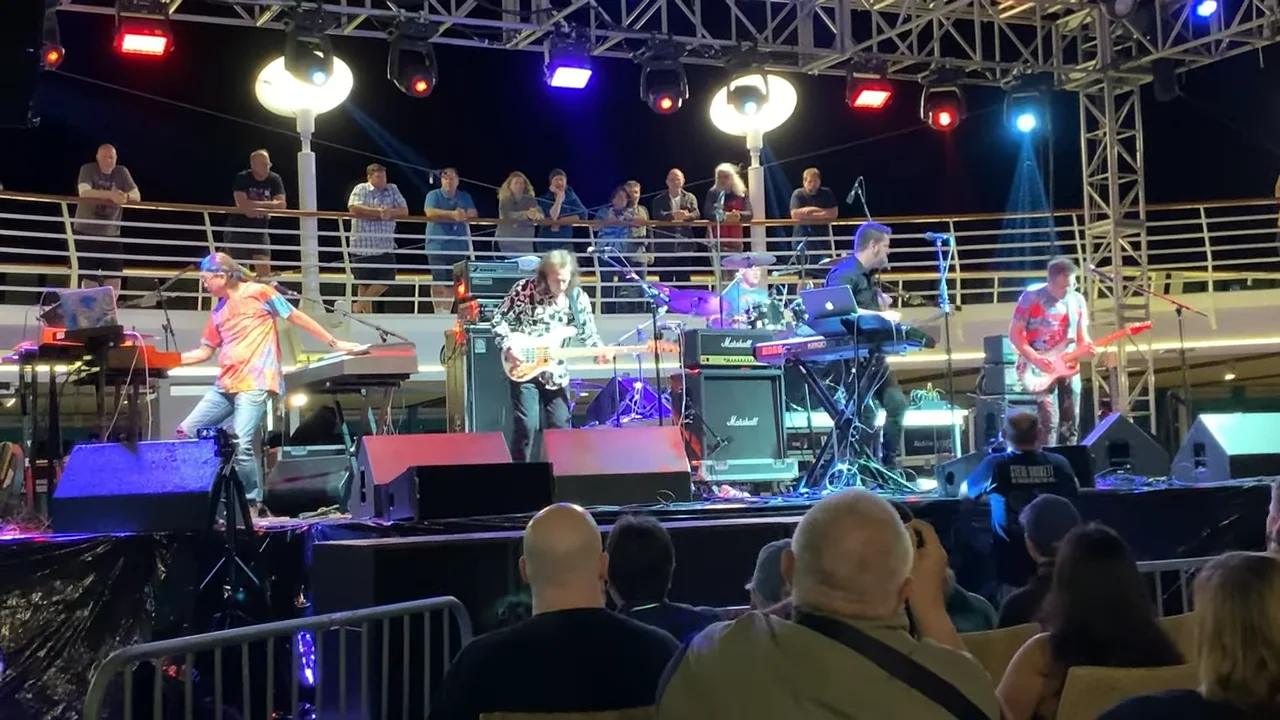
Spock's Beard in 2019.Photo: Stéphane Peter / Wikimedia Commons · Licensed under CC BY 3.0. Converted to WebP for this page.
Formation & History
The Morse brothers founded Spock’s Beard in 1992. Nick D’Virgilio joined in 1994, Dave Meros played bass on the independently made debut, and Ryo Okumoto became part of the early live and recording lineup. The Light appeared in 1995; five further studio albums followed during Neal Morse's tenure, culminating in the double concept album Snow in 2002.
After Neal Morse left, D'Virgilio combined lead vocals with his established role as drummer on Feel Euphoria, Octane, the self-titled 2006 album and X. Jimmy Keegan began as touring drummer in 2003 and became a full member in 2011. D'Virgilio departed that year and Ted Leonard joined as lead vocalist, guitarist and keyboardist; Keegan left in 2016. The band returned after Noise Floor with Nick Potters on drums for The Archaeoptimist, released by Madfish on 21 November 2025 and produced by Okumoto with the band.
Sound & Style
Hammond, Mellotron, prominent bass, multipart suites and bright vocal harmony define the early sound.
The classic lineup moves quickly between stacked vocal harmony, Hammond organ, bright synthesizer, melodic bass and odd-meter ensemble passages. D'Virgilio's drumming keeps Morse's longest suites conversational rather than monumental, while Alan Morse favours slides, altered guitar timbres and short character parts over a single virtuoso tone. On The Archaeoptimist, Okumoto and co-writer Michael Whiteman supply much of the material; the current band retains multipart writing and vintage keyboards while Potters gives the arrangements a different rhythmic profile.
Essential Albums
1995
The Light
Independent debut · 1995
The Light is an independent debut made with the scale of a career statement. Its title suite moves through family drama, humour, dissonant ensemble writing and bright melodic release without hiding the seams. “The Water” is even more unruly, while “Go the Way You Go” shows Neal Morse's instinct for a chorus inside an extended structure. The recording lacks the polish of later albums, but that urgency is valuable: the players sound surprised by how much territory the material can hold. It remains the best place to hear Spock's Beard invent its vocabulary in real time.
Key tracks: The Light · Go the Way You Go · The Water
V balances the band's two extremes with unusual confidence. “At the End of the Day” and the closing “The Great Nothing” supply long-form architecture, recurring themes and instrumental exchanges; “Revelation” and “All on a Sunday” keep the middle of the record concise. Dave Meros and Nick D'Virgilio make the complex writing feel playful, while Ryo Okumoto's keyboards broaden the symphonic colour. The production is clearer than the debut without becoming sterile. For many listeners this is the most efficient introduction to the Neal Morse era because grandeur, humour, melody and ensemble precision are all proportioned well.
Key tracks: At the End of the Day · Revelation · The Great Nothing
Snow is a two-disc concept album about an albino young man whose healing ability brings belief, exploitation and crisis. Its recurring themes give the large track list continuity, while songs such as “Long Time Suffering,” “Wind at My Back” and the title pieces provide distinct emotional anchors. Gospel harmony is more prominent than on earlier records, placing Neal Morse's spiritual concerns directly inside the band's symphonic language. Because Morse left immediately afterward, the album became an unintended ending to the founding era. Its length requires commitment, but the farewell weight heard in retrospect does not erase the ensemble's warmth.
Key tracks: Made Alive / Overture · Long Time Suffering · Wind at My Back
The six Neal Morse albums established a recognisable 1990s American symphonic-prog language without freezing the group in that decade. The Light documents the raw quartet, V balances two large suites with shorter songs, and Snow closes the period with a two-disc narrative and more explicit gospel harmony.
The records after 2002 are evidence of musical continuity rather than footnotes to a founder's departure. D'Virgilio and then Leonard brought different lead voices; Meros, Alan Morse and Okumoto retained the instrumental and harmonic identity; successive drummers altered how the long forms move. The 2025 album and announced 2026–27 activity make Spock's Beard a current band with a documented multi-era catalogue, not simply a revival-era name.
RetroForge Records publishes original music and independent editorial guides. This historical band guide is not affiliated with the artist, labels or rights holders. No unlicensed album artwork is reproduced.