
History Archive · 1980
Remain in Light and the Reinvention of Art Rock
Remain in Light treated the rock band as a network of repeating parts, then used the studio to decide where the song existed inside them.
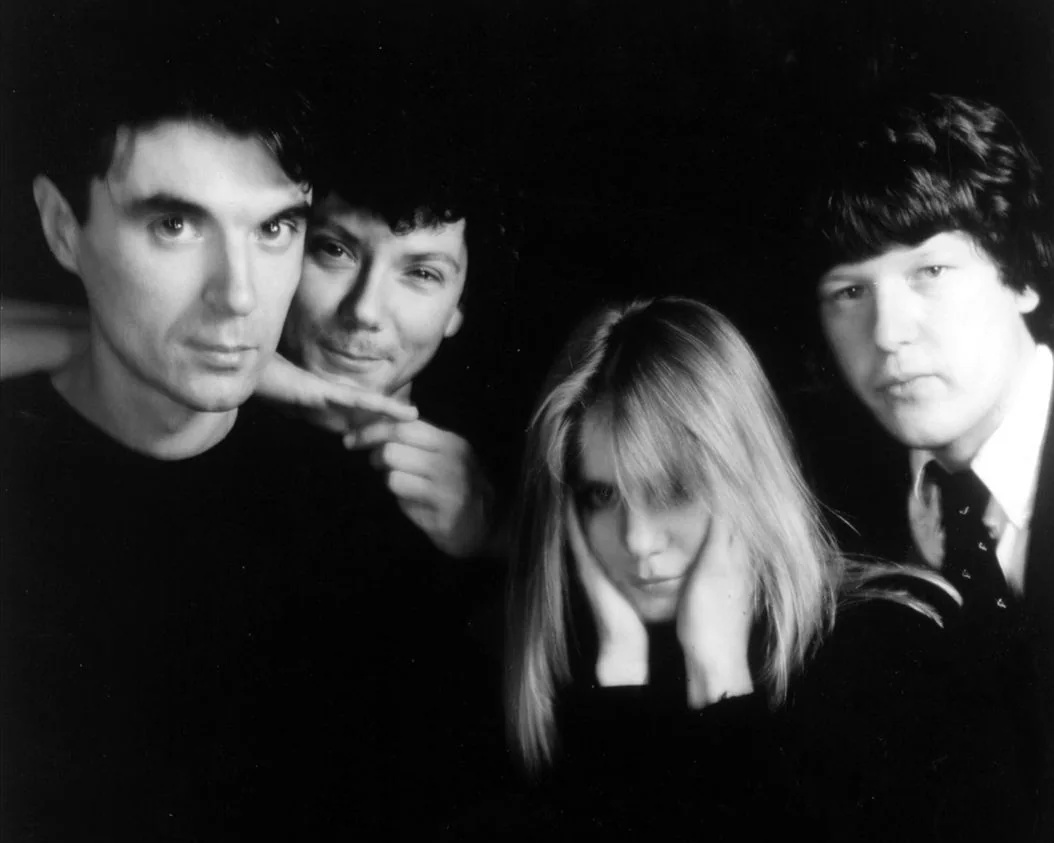
What Happened
Talking Heads worked with Brian Eno on a fourth album that moved away from the model of a complete song performed by four musicians. Instrumental parts were built as repeating cells, layered and edited before vocals and lead lines clarified the final shapes.
The process drew on funk, Afrobeat, electronic repetition and the band’s art-school interest in systems. The expanded touring group acknowledged that the studio constructions required more players on stage.
What the Music Sounded Like
Guitars chatter like percussion, bass figures repeat with small changes and several rhythmic centres seem to operate at once. David Byrne’s vocals move from anxious fragments to sermon-like character.
How It Was Made
Basic tracks were recorded at Compass Point in the Bahamas, with further recording and reorganisation at Sigma Sound in New York through overdubbing and editing. Eno and the band used studio repetition as scaffolding, adding voices, keyboards, guitar treatments and guest performances.
The Wider Musical Context
Post-punk musicians were listening beyond rock toward dub, funk, disco and African popular music. The creative exchange was productive but also raised questions about credit, context and how Western bands described their sources.
What Followed
The album shaped alternative rock, dance-rock and experimental pop. “Once in a Lifetime” later became inseparable from its video, anticipating the visual culture about to be accelerated by MTV.
The Band Began with Patterns, Not Finished Songs
Talking Heads entered Remain in Light by loosening the hierarchy of singer, song and accompaniment. Working again with Brian Eno, the group built interlocking instrumental patterns before David Byrne’s lyrics and lead vocals gave them final identities. Short recorded figures could be repeated, combined and rearranged, making the studio process resemble both ensemble playing and the emerging logic of sampling.
This changed the internal balance of the band. Tina Weymouth’s bass, Chris Frantz’s drums and Jerry Harrison’s keyboards and guitar were not a platform waiting for a frontman. They formed a moving system in which no single part explained the groove. Additional musicians, including Adrian Belew and Nona Hendryx, widened the palette. The album sounds crowded, but its clarity comes from each line having a specific rhythmic job.
Influence Required More Than a Convenient Label
The album drew openly on African musical ideas, particularly interlocking rhythm and music Byrne and Eno had encountered through recordings and contemporary artists. It also passed those ideas through New York art rock, funk, studio editing and the particular decisions of an American and British production team. Calling the result simply “African” flattens a continent into one influence and hides the chain of mediation.
A more useful reading listens for what the musicians changed in their own practice. They moved away from rock’s default backbeat and from the assumption that harmony must drive development. Layers enter, repeat and create new accents against one another. The ethical and historical questions around borrowing remain part of the record’s story; they should not be erased by praise, but neither are they answered by pretending the musical encounter did not happen.
Words Became Another Rhythmic Surface
Byrne’s lyrics often sound collected from broadcasts, sermons, advertising and anxious interior monologue. “Once in a Lifetime” turns a preacher-like cadence into a crisis of ownership and identity. “Crosseyed and Painless” treats facts as unstable objects. “Born Under Punches” makes authority bodily and nervous. The voice leads, but it also repeats, stutters and locks into the ensemble.
This is where the album’s experimentation becomes accessible. The listener does not need to understand the studio method before feeling the pull of a phrase. Repetition allows words to change meaning through context: a reassuring statement becomes absurd, then frightening, then communal. Art rock had often signalled seriousness through distance from dance music. Remain in Light made intellectual unease and physical movement depend on each other.
The Studio Puzzle Had to Become a Live Band
The core quartet could not reproduce the record’s layers alone, so Talking Heads expanded its touring ensemble. Belew, Hendryx, Bernie Worrell, Steve Scales, Busta Jones and Dolette McDonald helped turn studio constructions into a large, visible network of rhythm and response. That decision made the music’s collective principle legible onstage rather than hiding it behind tapes.
The album’s long influence reaches indie rock, electronic music, dance-punk, hip-hop and experimental pop. Its deepest lesson is procedural: a song does not always have to begin as chords beneath a lyric. It can emerge from accumulated behaviour. In 1980, that method gave art rock a route out of both progressive grandeur and punk minimalism without simply choosing one side.
Essential Listening
- Talking Heads — Born Under Punches
- Talking Heads — Crosseyed and Painless
- Talking Heads — The Great Curve
- Talking Heads — Once in a Lifetime
- Fela Kuti — Zombie
Related Genres and Guides
Related RetroForge listening
Hear the Archive Connection
Research notes
Sources and Further Reading
- Remain in Light — Talking Heads
- Talking Heads induction essay — Rock & Roll Hall of Fame
- National Recording Registry by chronology — Library of Congress
- Remain in Light registry essay ? Library of Congress
- Remain in Light at 35 ? Rhino