

Overview
The 13th Floor Elevators were among the earliest bands to describe their music as psychedelic rock. Tommy Hall was calling the group’s sound “psychedelic” by late 1965, and the term appeared in the band’s early promotion before their debut album arrived in 1966. Roky Erickson’s urgent voice, Stacy Sutherland’s cutting guitar and Hall’s amplified jug gave the records an identity that remains immediately recognisable.
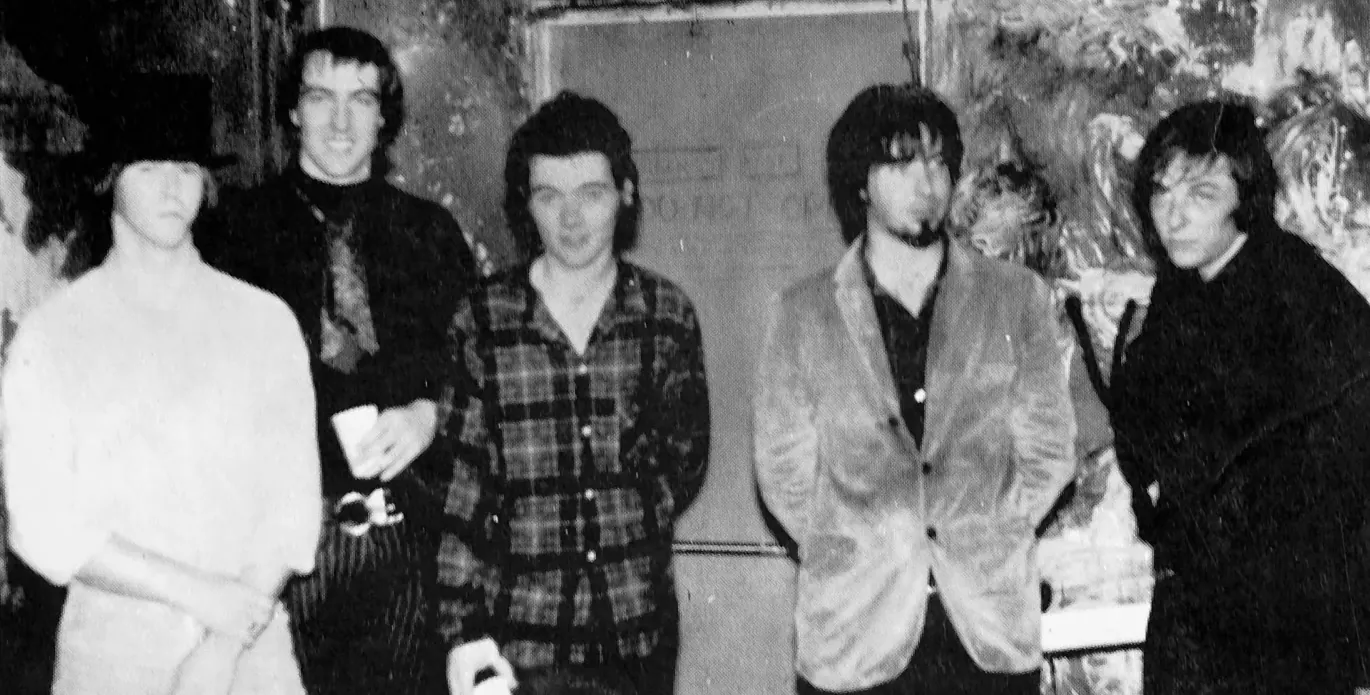
Formation & History
The group took shape in Central Texas in 1965. Tommy Hall joined guitarist Stacy Sutherland, bassist Benny Thurman and drummer John Ike Walton—musicians connected to the Lingsmen—with seventeen-year-old Roky Erickson, then the singer and rhythm guitarist of the Spades. The Elevators first recorded “You’re Gonna Miss Me” and “Tried to Hide” for the small Contact label. International Artists then reissued the single nationally and released The Psychedelic Sounds of the 13th Floor Elevators later in 1966. Bassists Ronnie Leatherman and Dan Galindo and drummer Danny Thomas were among the musicians who entered the changing lineup afterward.
Sound & Style
The Elevators’ music joins Texas garage rock to psychedelic experimentation. Hall blew rhythmic phrases into an amplified jug, creating the pulsing “jug” sound that moves around the beat instead of simply marking it. Sutherland’s sharp, reverb-rich guitar can drive the songs or pull against their momentum, while Erickson’s vocals bring exceptional force to both the direct rockers and the more inward material. On Easter Everywhere, longer forms and denser arrangements gave Hall’s philosophical lyrics more room without smoothing away the band’s attack.
Essential Albums
The debut announces its psychedelic intent in the title, but its impact comes from the playing: the re-recorded You’re Gonna Miss Me hits with garage-rock force, Roller Coaster stretches the form, and Hall’s amplified jug keeps unsettling the pulse. It is the clearest introduction to the original lineup’s attack.
Key tracks: You’re Gonna Miss Me · Fire Engine · Tried to Hide
Open album guide → View on Amazon →Easter Everywhere
1967The second album expands the group’s language. The long opening Slip Inside This House places Hall’s ideas inside a more patient, layered arrangement, while Earthquake and Postures (Leave Your Body Behind) show how the band could move between hard garage-rock attack and inward psychedelic ritual.
Key tracks: Slip Inside This House · Earthquake · Postures (Leave Your Body Behind)
Open album guide → View on Amazon →Affiliate note: Amazon links on this page may earn RetroForge Records a small commission, at no extra cost to you.
Deeper Cuts
Live
1968Despite its title, this is not a concert recording. International Artists assembled studio outtakes and previously issued masters, then overdubbed crowd noise. It remains useful for several alternate or otherwise hard-to-find early performances, but it should be heard as an archival compilation rather than evidence of the band onstage.
Open album guide → View on Amazon →Bull of the Woods
1969The final studio album emerged from a fractured lineup and is largely shaped by Stacy Sutherland’s writing and guitar. Its darker, blues-heavier character makes it a revealing coda, though it does not represent the original five-piece operating at full strength.
Open album guide → View on Amazon →Why They Still Matter
After a 1969 marijuana-possession arrest, Erickson spent years in state hospitals, including Austin State Hospital and Rusk, and received electroconvulsive treatment. He later returned to recording and, after his health improved, played his first full-length concert in two decades at Austin City Limits in 2005. The Elevators’ influence was already visible in the 1990 tribute Where the Pyramid Meets the Eye, which included contributions from artists such as R.E.M., ZZ Top and Primal Scream. Erickson, Hall, Walton and Leatherman reunited for a fiftieth-anniversary performance in 2015.
Connected archive routes
Explore This Band
Continue through the RetroForge knowledge graph
Curated paths into the people, records, events and ideas that give this subject its wider musical context.