

Overview
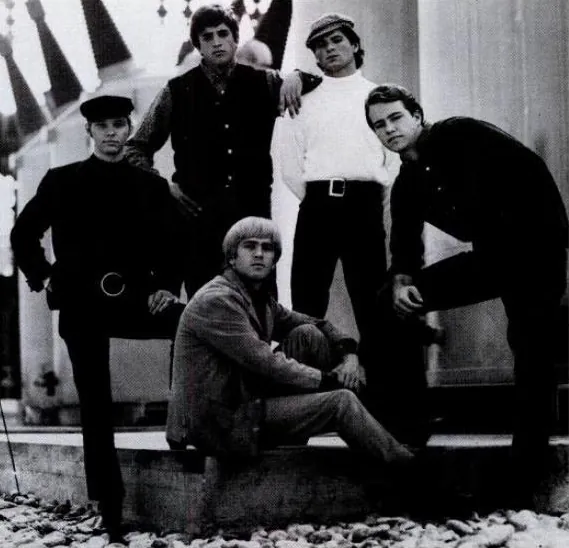
The Electric Prunes developed from the Sanctions, a San Fernando Valley garage group formed in 1965 around singer James Lowe, lead guitarist Ken Williams, bassist-keyboardist Mark Tulin and drummer Michael “Quint” Weakley. Producer Dave Hassinger brought the renamed band to Reprise, and the Tucker-Mantz composition “I Had Too Much to Dream (Last Night)” became a number 11 American single in early 1967.
The catalogue does not represent one stable ensemble. The self-titled debut and Underground document the original group's fuzz, tremolo and increasingly self-written material. Mass in F Minor combines some of those musicians with the Collectors and other outside players in music composed and arranged by David Axelrod. The next two albums carry the Electric Prunes name through entirely different performing identities.
Formation & History
The band name began as a joke that Lowe believed people would remember, not as the product of a dream. After the first Reprise single, “Ain't It Hard,” drummer Preston Ritter and rhythm guitarist James “Weasel” Spagnola joined Lowe, Williams and Tulin for the debut album. Hassinger selected much of its professional songbook, but Williams' oscillating fuzz-and-tremolo guitar and the group's performance made “I Had Too Much to Dream” distinctive. “Get Me to the World on Time” followed it into the American Top 40.
Underground, released in August 1967, gave the musicians substantially more authorship and arrangement control while personnel shifted between Ritter and Weakley on drums and from Spagnola to Mike Gannon on rhythm guitar. For the next project, manager Lenny Poncher and Hassinger brought in composer-arranger David Axelrod. The original group began Mass in F Minor, completing the first three movements as a band before the Collectors and other studio players helped finish the demanding six-part score.
That hybrid album reached number 135 on the Billboard 200, but the original group broke apart during 1968. Release of an Oath contains no original 1967 Prunes: Axelrod wrote and arranged the seven-part work, Richard Whetstone supplied the principal vocal and Los Angeles session musicians formed the instrumental ensemble. Whetstone then fronted a replacement group on Just Good Old Rock and Roll before that version ended around 1970.
Lowe, Tulin, Williams and Weakley reunited in the studio in 1999, leading to Artifact and further releases. Lowe and Tulin remained the central writing partnership on California and Feedback; after Tulin's death in 2011, Lowe completed WaS from their final exchanged ideas and new group material. The official band site announced Lowe's death on 22 May 2025 and now presents the catalogue in his memory.
Sound & Style
The early signature begins with Williams' control of a Bigsby vibrato arm through fuzz and tremolo: the opening of “I Had Too Much to Dream” oscillates before the rhythm section establishes the song. Tulin's bass and keyboards add weight, while Lowe moves between clipped garage-rock attack, harmonica, autoharp and studio effects. Hassinger's production makes distortion and abrupt changes part of concise singles rather than simply documenting a raw live band.
Underground expands that language through group arrangements, organ, unusual character songs and a larger share of Lowe-Tulin writing. Mass in F Minor has a different centre: Axelrod's six-movement score assigns fuzz guitar, organ, choir and orchestral colour to the Mass Ordinary. Because original Prunes, the Collectors and additional players all contribute, its sound should not be attributed either wholly to the touring band or wholly to anonymous session musicians. Release of an Oath and the hard-rocking replacement lineup on Just Good Old Rock and Roll are separate stages again.
Essential Albums
Released in February 1967, the twelve-track debut combines a producer-selected songbook with the quintet's unmistakable recorded attack. Annette Tucker and Nancie Mantz wrote the number 11 title single; Lowe and Tulin contribute only two original compositions, while Dave Hassinger produces and David Botkin supplies arrangements on selected tracks. “Get Me to the World on Time” became the second American Top 40 single.
Key tracks: I Had Too Much to Dream (Last Night) · Get Me to the World on Time · The Toonerville Trolley
Open album guide → View on Amazon →Underground
1967The August 1967 follow-up gives the band writing credits on most of its twelve tracks and an album-level arrangement credit. Lowe and Tulin anchor the material, while Williams, Weakley and other collaborators extend the authorship. Ritter and Weakley divide the drumming, and the change from Spagnola to Gannon is audible evidence of a lineup already moving beneath a more coherent group statement.
Key tracks: The Great Banana Hoax · Dr. Do-Good · Long Day's Flight
Open album guide → View on Amazon →Mass in F Minor
1968Axelrod composes and arranges six movements following the Mass Ordinary; “Kyrie” uses Greek and the remaining texts Latin. The original Prunes completed the first three movements as a band, and Lowe, Tulin and Weakley contribute across the project, but the Collectors and other studio musicians help finish the score. Its composite personnel and number 135 chart peak make it both an Electric Prunes album and the point where control shifts away from the original ensemble.
Key tracks: Kyrie Eleison · Sanctus · Agnus Dei
Open album guide → View on Amazon →Affiliate note: Amazon links on this page may earn RetroForge Records a small commission, at no extra cost to you.
Deeper Cuts
Release of an Oath
1968A seven-part Axelrod composition built around the Kol Nidre and related sacred language. No original 1967 Prunes member performs: Richard Whetstone is the sole documented participant from the contemporary touring group, joined by studio musicians including Carol Kaye, Earl Palmer, Don Randi, Howard Roberts and Lou Morrell. The Electric Prunes credit is a name-continuity fact, not a personnel description.
Open album guide → View on Amazon →The “New Improved” sleeve describes a replacement band, not the return of the original Prunes. Richard Whetstone, Mark Kincaid and Brett Wade form the core, Ron Morgan joins on guitar and departing John Herron retains an organ credit. Dave Hassinger produces eleven tracks of hard rock, organ, flute and vocal harmony with no performer from the 1967 lineup.
Open album guide → View on Amazon →Why They Still Matter
“I Had Too Much to Dream (Last Night)” opens the original 1972 Nuggets compilation, placing the Prunes at the front of the later garage-rock canon rather than leaving them as a two-single period curiosity. Its number 11 chart run and the Top 40 follow-up “Get Me to the World on Time” also show that this was experimental pop with a national audience.
The wider catalogue matters for a different reason: it makes authorship and attribution audible. Underground captures the early group gaining control; Mass in F Minor documents a difficult collaboration with Axelrod and outside players; Release of an Oath turns the band name into a studio-project credit; and Just Good Old Rock and Roll gives that name to a replacement performing group. The later reunion records return Lowe, Tulin and, at points, Williams and Weakley to the centre without pretending those 1968–69 identities were interchangeable.
Connected archive routes
Explore This Band
Sources & Further Reading
The Electric Prunes — official site — James Lowe memorial notice and the band's current archive.
Rhino — “I Had Too Much to Dream” history — formation, original quintet, Reprise single and number 11 chart record.
Rhino — Underground — August 1967 release, twelve-track programme and increased band authorship.
Rhino — Mass in F Minor — Axelrod's role, the Collectors, chart result and original-lineup rupture.
Cherry Red / Morello — Mass in F Minor and Release of an Oath — original-band participation, sacred programmes and studio personnel context.
The Electric Prunes — WaS — Lowe's account of his final exchanged material with Mark Tulin and the album's completion.
Continue through the RetroForge knowledge graph
Curated paths into the people, records, events and ideas that give this subject its wider musical context.