The Beat Refuses Drama
Steady motion replaces the push-and-release of a conventional backbeat.

Krautrock & Electronic Family
A steady forward pulse that turns repetition into travel, leaving guitar, bass and electronics free to change around the road.
The Sound
Motorik describes a rhythmic approach rather than the whole of krautrock. Its familiar form is a firm, even 4/4 pulse with little swing and no theatrical backbeat. The beat refuses to announce each new section; it keeps the music moving while change happens elsewhere.
That constancy is not mechanical emptiness. Small shifts in bass, harmony, timbre and density become unusually powerful because the ground remains stable. The listener measures development as distance travelled rather than a sequence of dramatic turns.
Transitnacht / Westlicht is RetroForge’s clearest compact route into motorik discipline. Der Eiserne Traum uses the same forward rhythmic logic inside a heavier German-language concept album, where marching patterns, factory pulse and collective vocals repeatedly push against the steady beat. Neither connection suggests that every krautrock recording is motorik, because much of the historical field was not.
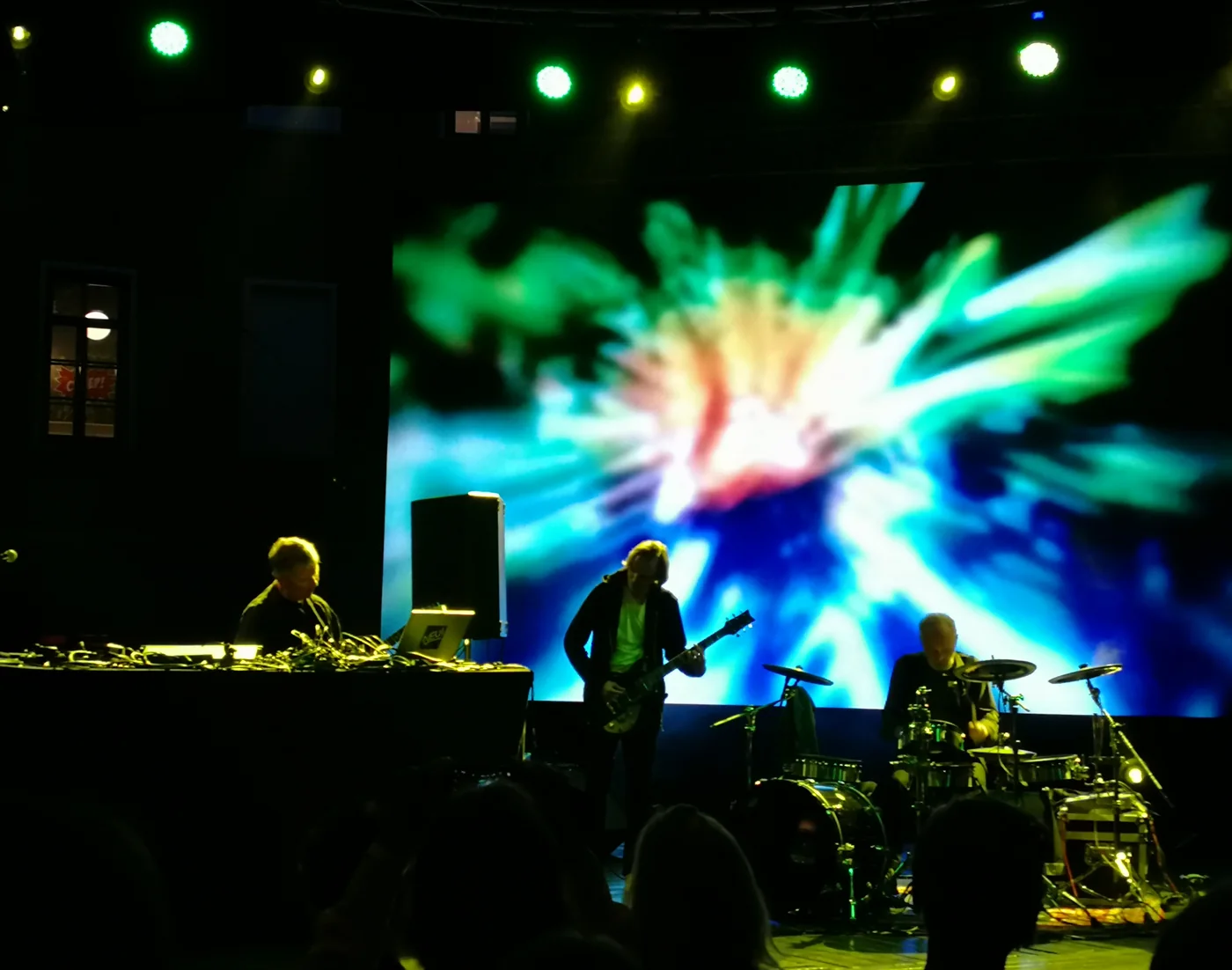
What You’ll Hear
How It Works
Motorik rock is organised around a steady, propulsive drum feel that avoids the familiar backbeat emphasis of much Anglo-American rock. The pulse creates a road beneath the ensemble, allowing bass, guitar, keyboards and noise to change while direction remains constant.
Its apparent simplicity is deceptive. Listen to micro-variation: cymbal placement, bass pressure, guitar texture and harmonic colour continually adjust the sensation of speed. The groove works because discipline creates freedom around it.
Useful distinction: Boundary line: any straight beat is not motorik. The characteristic effect comes from sustained forward balance, minimal theatrical accent and the ensemble built around that motion.
Steady motion replaces the push-and-release of a conventional backbeat.
The listener measures change against an unusually stable road.
Guitar and keyboards can drift because the direction remains secure.
Minimal rhythmic variation becomes perceptible across long spans.
Historical Development
Motorik rock centres on a continuous 4/4 propulsion associated above all with Neu! drummer Klaus Dinger and with related West German recordings of the early 1970s. The beat is often misdescribed as mechanical. Its power comes from human steadiness: kick, snare and hi-hat refuse conventional swing or dramatic fill, allowing small changes elsewhere to feel enormous.
The method turns repetition into travel. Neu! placed guitar, studio processing and melodic fragments over an unwavering road; Kraftwerk used related motion to depict the Autobahn; Harmonia and Michael Rother softened the pulse without losing direction. Can sometimes reached a comparable continuity through Jaki Liebezeit's own distinct rhythmic logic.
Motorik is a technique and listening route, not a complete synonym for krautrock. Many German experimental groups never used it, and later post-punk, indie and electronic artists adopted the beat far outside its original scene. A useful motorik arrangement does not merely loop: it manages energy without breaking forward motion.
The Real-World Foundations
Not a ranking: six useful doors into the style.
Hallogallo supplies the clearest foundation: constant propulsion with texture changing overhead.
Jaki Liebezeit's fluid repetition demonstrates a different route to continuous motion.
Travel becomes form as rhythm and electronics reproduce the experience of sustained movement.
Drums, guitars and electronics make motorik motion warm, melodic and communal.
Klaus Dinger carries the pulse toward anthem, city light and proto-post-punk directness.
Melodic guitar floats over immaculate forward rhythm without sacrificing intimacy.
Start Here
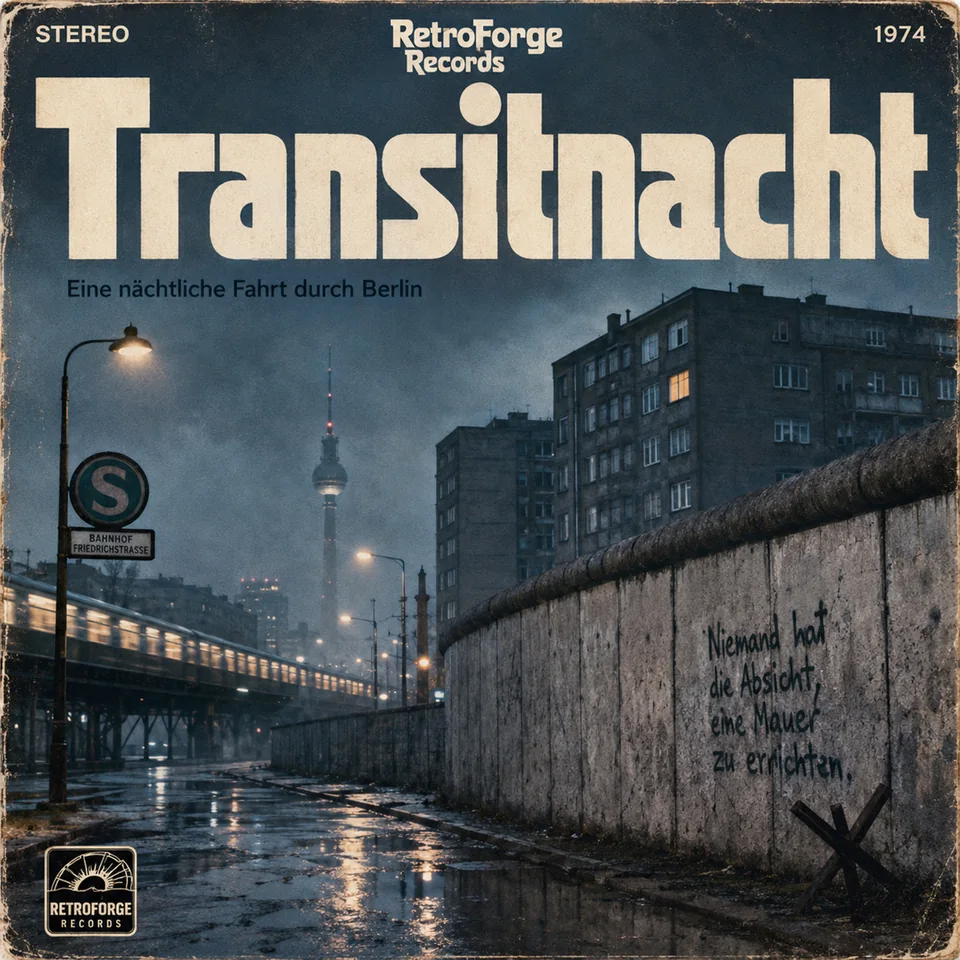
1974 · German Krautrock
A compact double route through repetition, nocturnal motion and analogue texture.
Open the liner notes →RetroForge Connection
A full-length German-language route into the darker, industrial edge of the krautrock archive.
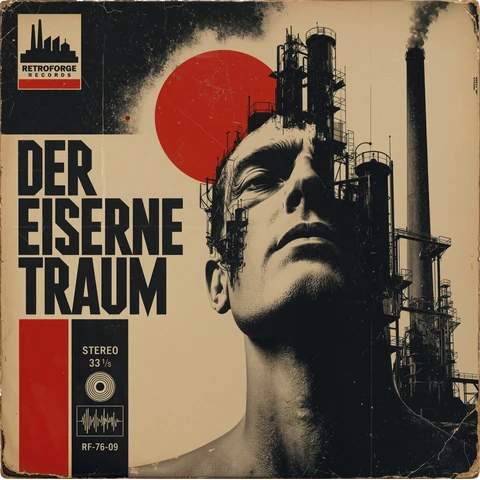
Motorik drums, fuzz bass, overloaded organs, metallic percussion and German vocals drive a factory narrative from mechanisation toward collective resistance.
Questions from the Record Room
It is a steady, forward-driving 4/4 approach associated with several West German musicians, especially Klaus Dinger, with minimal fills and strong continuity.
No. The term is most useful when the beat creates sustained travel and the arrangement develops around its refusal to stop.
No. It is one influential method within a scene that also included free improvisation, electronic abstraction, heavy rock and acoustic experiment.
Research Trail
Deeper Discovery
Start with Amt für Stille as a RetroForge companion, then return through Krautrock to place it inside the wider family.
Curated paths into the people, records, events and ideas that give this subject its wider musical context.