The Ensemble Can Be a Laboratory
Players discover structure through collective action.

Krautrock & Electronic Family
The broad German laboratory where improvisation, tape, repetition and new technology mattered more than preserving inherited rock form.
The Sound
Krautrock was never one sound, and its experimental edge makes that especially clear. Free improvisation, minimal repetition, electronic noise, collage and austere rhythm could appear in radically different proportions from one group to another.
The useful connection is method. Musicians treated the studio and ensemble as systems for discovery rather than machines for reproducing familiar Anglo-American rock. A groove could be edited into a new structure; an improvised texture could become the composition; an accidental sound could be allowed to redirect the piece.
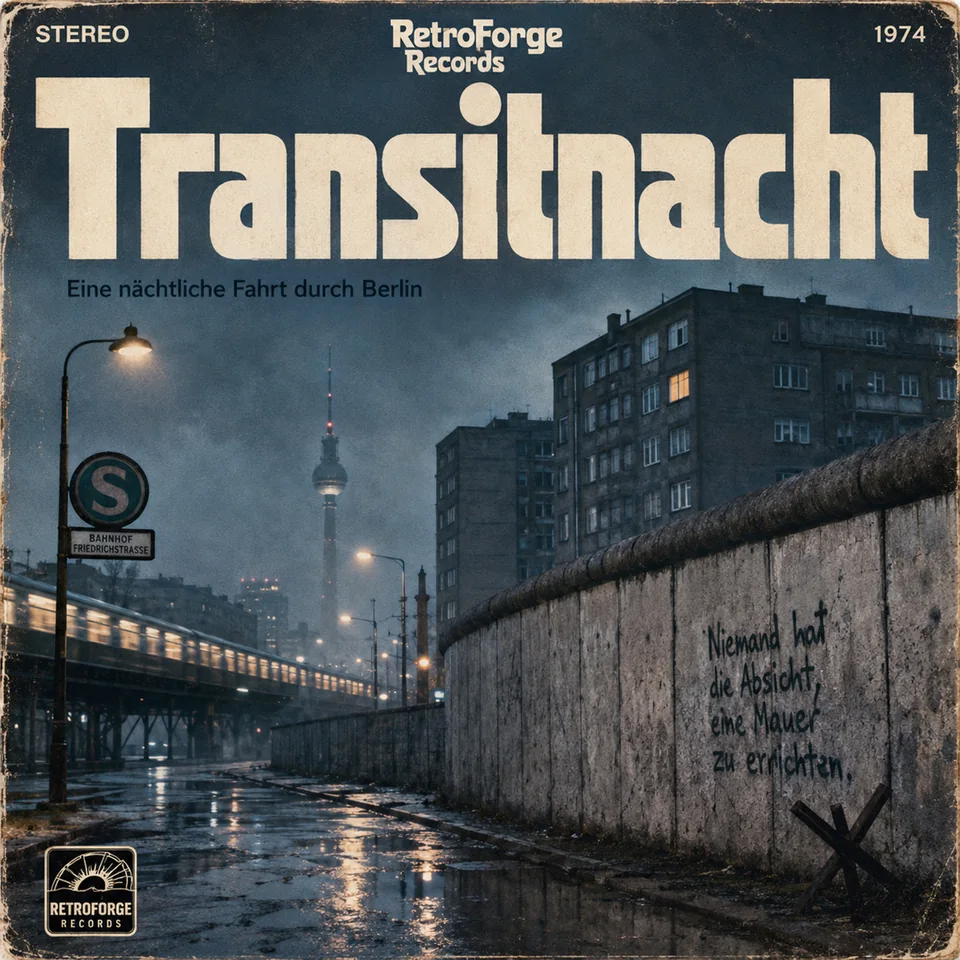
RetroForge now has two different experimental krautrock routes. Transitnacht / Westlicht focuses on motion and analogue repetition, while Der Eiserne Traum adds tape process, metallic sound, overloaded organ and a narrative about workers absorbed into an autonomous factory. Together they show contrasting methods rather than claiming to cover every branch described here.
What You’ll Hear
How It Works
Experimental krautrock names the branch least contained by motorik pulse or electronic minimalism. Free improvisation, collage, noise, folk fragments, repetition and studio manipulation can coexist because the central attitude is one of rebuilding rock from first principles.
Listen for systems forming and dissolving. A collective improvisation may suddenly reveal a repeated centre; a tape fragment may become rhythm; a conventional instrument may be used for texture rather than its expected role. The music tests what a band can be.
Useful distinction: Boundary line: krautrock is a broad historical field, not a synonym for any experimental rock made in Germany. Context and musical lineage still matter.
Players discover structure through collective action.
Guitar, bass and drums need not perform their inherited jobs.
Editing places unrelated events inside one new continuity.
A temporary pattern can organise chaos without becoming permanent.
Historical Development
Experimental krautrock refers to the most process-driven edge of the West German underground: music in which tape editing, collective improvisation, electronics and chance could matter more than inherited rock form. The category is broad because the original scene was broad. Can's disciplined group improvisation, Faust's collage, Cluster's electronics and Amon Düül II's communal psychedelia do not resolve into one style.
Studios functioned as instruments. Holger Czukay edited long Can performances into pieces with a logic that no single live take contained; Faust cut abrupt juxtapositions into the fabric of an album; Conrad Plank helped artists obtain clarity without sanding away strangeness. Repetition might coexist with rupture, humour or apparent accident.
What connects these records is refusal. Blues convention, virtuoso display and British symphonic models were available, but the musicians sought different relationships between body, machine and collective decision. Their experiments later became practical resources for post-punk, industrial music, ambient, electronic dance music and post-rock.
The Real-World Foundations
Not a ranking: six useful doors into the style.
Composed psychedelic rock and large-scale communal improvisation occupy a volatile double album.
A power trio pushes distortion and free improvisation past ordinary heavy rock.
Groove, editing and studio transformation remake the possibilities of a rock group.
Radical continuity, environmental sound and studio play share a deceptively simple frame.
Electronics behave as unstable matter rather than polished futuristic display.
Collage, fragments and abrupt transitions turn the album into an exposed editing process.
Start Here
A Compact Krautrock Entry
The catalogue’s current German experimental route, focused on motion and analogue repetition.
Open the liner notes →RetroForge Connection
A full-length German-language route into the darker, industrial edge of the krautrock archive.
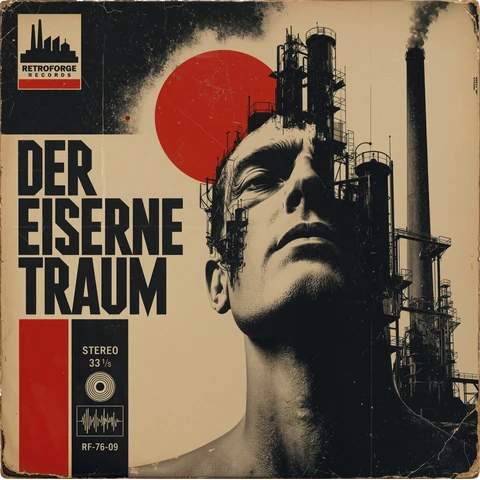
Motorik drums, fuzz bass, overloaded organs, metallic percussion and German vocals drive a factory narrative from mechanisation toward collective resistance.
Questions from the Record Room
The label identifies a historical West German field more reliably than a single sound; experimental krautrock foregrounds its most process-led work.
Often both. Long improvisations could be edited into precise recorded forms, while written material remained open to studio transformation.
Tago Mago offers the strongest bridge from rock rhythm; The Faust Tapes is the more radical entry into collage.
Research Trail
Deeper Discovery
Start with Amt für Stille as a RetroForge companion, then return through Krautrock to place it inside the wider family.
Curated paths into the people, records, events and ideas that give this subject its wider musical context.