

Edition timeline
A local charity idea
Clacton Round Table conceives a far smaller fundraiser for local and national causes.
The Isle of Wight gap opens
Advance demand passes 100,000 as festivalgoers seek a Bank Holiday destination.
Music barely stops
The planned running order continues from midnight through mornings with changeovers as the main pauses.
Memory replaces institution
No annual series follows, but participants preserve a remarkably dense independent archive.
Why this event matters
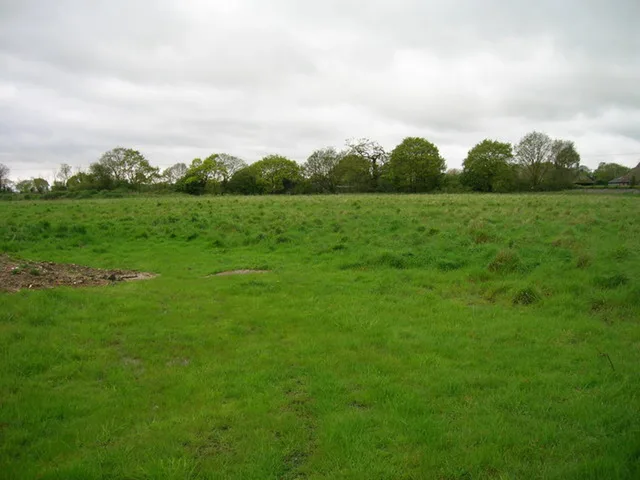
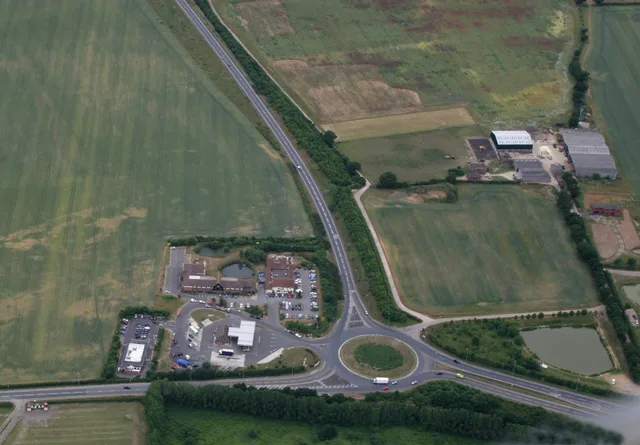
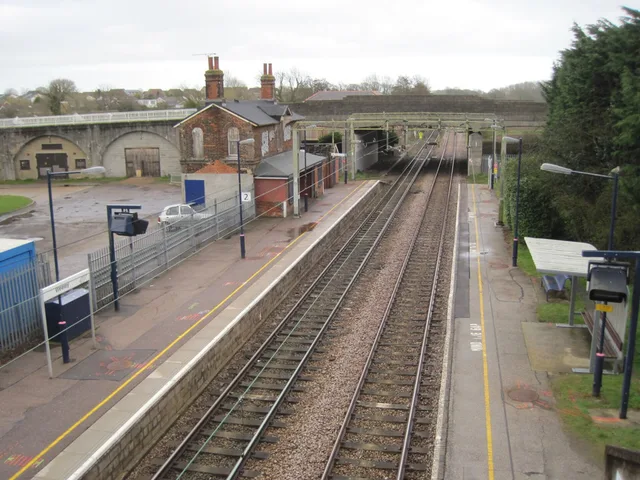
Weeley is a case study in accidental scale. A local service organisation planned a charitable event, Britain’s festival calendar shifted around it and a national crowd arrived in numbers far beyond the assumptions built into the site. The mismatch appears everywhere: duplicated tickets, rudimentary toilets, makeshift food fires and continuous music. Yet most of the programme was delivered. That combination of rough infrastructure and working stage makes Weeley more complex than either triumph or fiasco. Clacton Round Table organised the event as an alternative to conventional local fundraising. The surviving programme names Vic Speck and Peter Gibbs among the promoters and says proceeds were intended for causes including Bangladesh relief, Shelter and Release. Its organiser message already worries that site damage could consume money meant for charity. That anxiety is important: the festival’s financial risk was tied not to private profit alone but to whether promised public benefit would survive the weekend. There was no Isle of Wight Festival in 1971, leaving thousands of habitual August Bank Holiday festivalgoers without the destination they expected. Weeley was not formally appointed as a replacement, but market and cultural attention flowed toward it. Advance sales reportedly passed 100,000. A plan built for a modest fundraiser suddenly occupied the same national scale as Britain’s famous festival institutions without equivalent years of production experience. Weeley was a rural Essex community of roughly a thousand people. The arriving audience created a temporary population more than a hundred times larger, with farmland rapidly adapted for camping, traffic and performance. Modern images here show the surrounding roads, station and fields, not the historical site itself. Their contrast with six-figure estimates helps explain why access and services failed: the landscape was never designed to process a national youth migration.

The musical programme
Progressive rock came through King Crimson, Curved Air and Barclay James Harvest; the Groundhogs, Rory Gallagher and Status Quo represented harder blues-derived music; Edgar Broughton connected the underground circuit; acoustic performers filled spaces between electric changeovers; T. Rex and Faces-related appearances brought major pop-rock demand. The original timetable is unusually strong evidence, but even a printed programme requires checking against reviews and participant records for what actually reached the stage. The programme began at midnight and scheduled acts through small hours, mornings and afternoons until Monday dawn. Acoustic or lower-infrastructure performances reduced dead space while crews changed electric equipment. For the audience, “day” stopped being a useful unit: people slept through bands, woke to another set and navigated fatigue without a clean reset. For crews, every delay propagated into an already relentless sequence. The strange timetable was both Weeley’s attraction and one of its heaviest operational burdens. Tickets were easy to copy or counterfeit, weakening gate revenue at an event whose charitable outcome depended on it. Toilets were primitive and food-preparation infrastructure insufficient, encouraging improvised fires. Contemporary and participant accounts describe conflict involving biker or security elements and traders, but the more colourful stories vary and remain attributed. These failures belong together because they show national scale overwhelming systems designed by local volunteers, not because disorder was the audience’s only experience. No stable Weeley series followed. A charity experiment had briefly entered the same scale class as Isle of Wight and Bath, then disappeared rather than institutionalising itself. The outcome should not be read solely as failure: organisers delivered a huge programme under conditions they never expected, and many attendees remembered the weekend warmly. What could not be sustained was the financial and infrastructural model required to do it again responsibly.
.jpg)
Films, recordings and surviving documents
Weeley’s archive is participant-built. The original five-pence programme, underground and national press, audience tapes, diaries, privately held photographs and later local television work collectively reconstruct the weekend. Ownership remains with individual photographers and publishers unless a licence says otherwise. The page therefore uses licensed contextual views and artist material. It also preserves a specific correction: no Weeley footage is connected to the film Bread, an association rejected by the research master. Demand expanded faster than design. The same openness that made a charity festival attractive—low institutional distance, adventurous booking and informal camping—left little reserve when attendance reached six figures. Weeley demonstrates that scale is not just more people. It changes ticket security, sanitation, fire risk, traffic, crew fatigue and the moral stakes of financial loss. The organisers’ original charitable purpose makes every mismatch more visible. Weeley follows the early Isle of Wight experiments and links directly to Bickershaw in 1972. Band routes connect it to King Crimson, Curved Air and the British progressive underground, while its all-night format belongs to a looser counterculture tradition than later commercial festivals. The “Wally” chant appears in participant memory but is traced back to Isle of Wight 1970 rather than claimed as a Weeley invention. Weeley’s strongest legacy is not a brand or surviving organisation. It is proof of Britain’s enormous appetite for multi-day festival culture by 1971 and the independent archive that kept the event from disappearing. Participant memory preserves ordinary conditions as well as famous acts, making the weekend unusually valuable for social history. Its lesson is stark: a local idea can become nationally important before its organisers have time to redesign what that importance demands.
.jpg)


Follow the festival beyond the field
Timeline
Related genres
Related band guides
Explore by sound
Essential listening
Sources and further reading
- Weeley Festival archiveUK Rock Festivals · accessed 23 July 2026
- Original programme and running orderUK Rock Festivals · accessed 23 July 2026
- Participant recollectionsUK Rock Festivals · accessed 23 July 2026
- Weeley Pop Festival 1971Clacton & District Local History Society · accessed 23 July 2026
- The Great British Woodstock research bookletLocal archive publication · accessed 23 July 2026
Image credits5 licensed images
A modern view of farmland near Weeley. It documents the rural setting, not the 1971 festival field itself — JThomas — Wikimedia Commons — CC BY-SA 2.0 · source record · CC BY-SA 2.0
Converted to WebP and resized; no generative or compositional alterations.
A later view of the road environment near Weeley, useful for understanding access to a site never designed for a national crowd — terry joyce — Wikimedia Commons — CC BY-SA 2.0 · source record · CC BY-SA 2.0
Converted to WebP and resized; no generative or compositional alterations.
Weeley railway station in a modern photograph, included as transport context rather than festival documentation — Nigel Thompson — Wikimedia Commons — CC BY-SA 2.0 · source record · CC BY-SA 2.0
Converted to WebP and resized; no generative or compositional alterations.
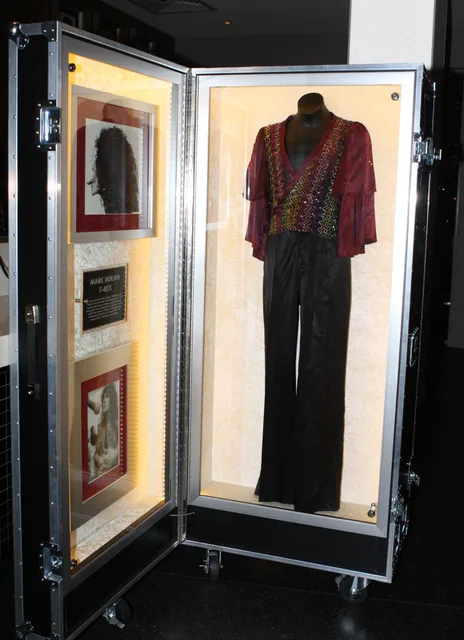
Marc Bolan of T. Rex in a reusable artist photograph. It is not a photograph of the group’s Weeley appearance — Eva Rinaldi — Wikimedia Commons — CC BY-SA 2.0 · source record · CC BY-SA 2.0
Converted to WebP and resized; no generative or compositional alterations.
Reusable artwork associated with T. Rex’s 1971 hit “Hot Love,” providing musical context for Weeley’s headline attraction — Franzbehrmann — Wikimedia Commons — CC BY-SA 4.0 · source record · CC BY-SA 4.0
Converted to WebP and resized; no generative or compositional alterations.