Countermelody Everywhere
Secondary lines keep the harmony in continuous motion.

Psychedelic Rock Family
Psychedelic songcraft dressed in chamber colour: harpsichord-like detail, strings, counter-melody and arrangements that feel ornate without standing still.
The Sound
Baroque psychedelia occupies the ornate end of late-1960s experimentation. Instead of relying mainly on fuzz and improvisation, it transforms concise songs through chamber instrumentation, descending lines, formal contrast and carefully placed melodic detail.
The word baroque describes the effect more than strict historical technique. Harpsichord, strings, brass, woodwind and vocal counterpoint can make the studio feel like a miniature theatre whose walls keep changing.
No current RetroForge album carries this exact label. The Soft Geometry of Dreams is offered as the gentlest adjacent route for its melodic, dreamlike construction, not as a false baroque-psych classification.
What You’ll Hear
How It Works
Baroque psychedelia joins ornate arrangement to the perceptual uncertainty of psychedelic production. Strings, harpsichord-like keyboards, brass and carefully layered voices can suggest formal elegance while phasing, tape movement or unusual harmony quietly undermines the frame.
Listen beyond the surface beauty. Countermelodies may pull a chorus in several directions, a stately rhythm can conceal harmonic unease and a polished vocal arrangement may make the lyric feel less—not more—certain. The tension between control and dream is the style’s real engine.
Useful distinction: Boundary line: orchestration alone does not make baroque psychedelia. The arrangement must alter perspective as well as add decoration.
Secondary lines keep the harmony in continuous motion.
Strings and keyboard timbres suggest order, ceremony and inherited design.
Phasing, echo and tape effects prevent elegance from settling.
Melodic beauty becomes more vivid when unease remains underneath.
Historical Development
Baroque psychedelia occupies the overlap between ornate mid-1960s pop and altered studio imagination. Harpsichord, strings, brass, contrapuntal vocal writing and descending minor-key harmony supplied a sense of old-world drama, while tape effects, unusual form and surreal lyric moved that drama into psychedelia.
The Left Banke helped define baroque pop, but records by Love, the Zombies, Nirvana and the Millennium made the boundary with psychedelia increasingly permeable. The arrangement may be meticulously written rather than improvised; the strangeness comes from harmonic suspension, instrumental colour and the feeling that a compact song contains a larger theatrical space.
The label is best used carefully. Not every pop record with strings is baroque, and not every baroque-pop song is psychedelic. The intersection becomes meaningful when ornament changes perception—when elegance creates ambiguity, unease or dream logic instead of merely making a production sound expensive.
The Real-World Foundations
Not a ranking: six useful doors into the style.
Chamber arrangement and melancholy establish the baroque-pop foundation.
Strings and brass intensify paranoia, tenderness and sudden structural turns.
Keyboard counterpoint and choral precision make intimate songs feel temporally displaced.
A British studio project joins orchestral pop to one of rock's earliest narrative concepts.
Layered harmony and microscopic studio detail push ornament into psychedelia.
Melodrama, orchestration and stylistic range stretch baroque pop across a double album.
Closest RetroForge Route
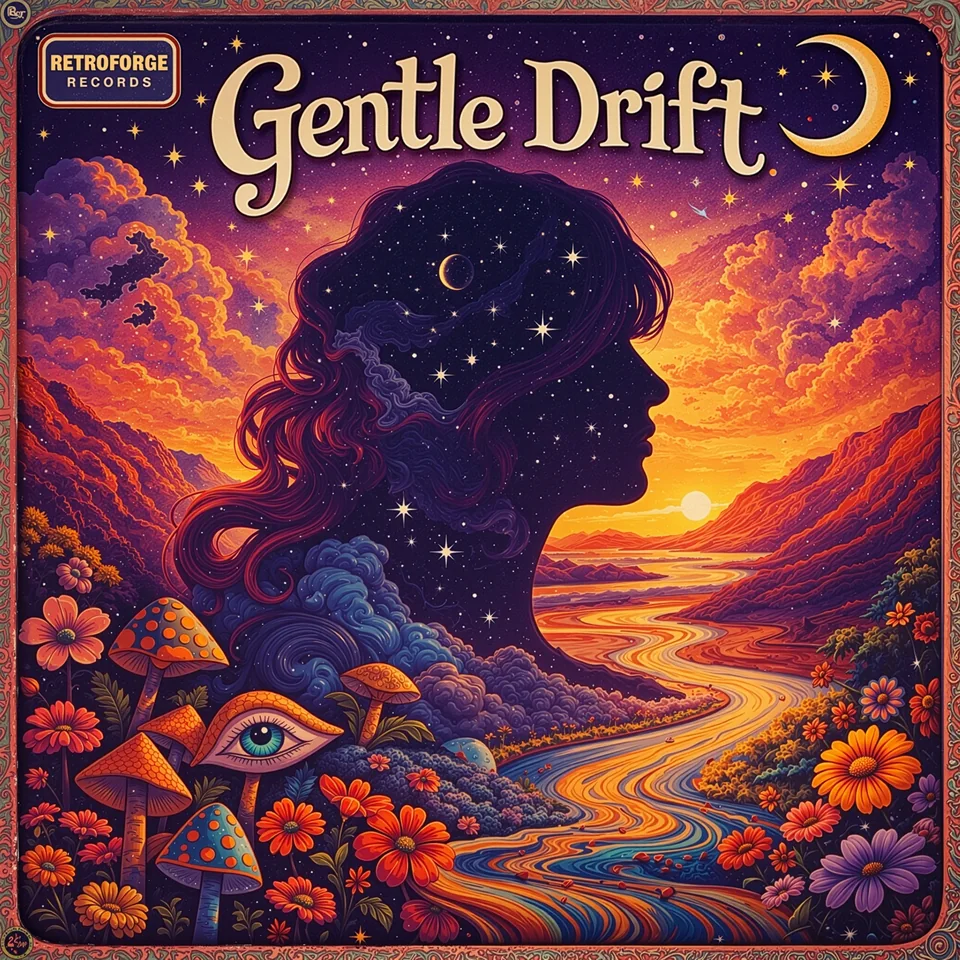
Adjacent: Dreamy Psychedelic Rock
A melodic neighbouring route while the catalogue waits for a dedicated baroque-psych release.
Open the liner notes →Questions from the Record Room
Not in a strict sense. It is a useful modern category for records where baroque-pop arrangement and psychedelic perception genuinely intersect.
No. Strings, brass, piano, vocal counterpoint and harmonic design can create the same chamber-like effect.
Baroque psychedelia usually works through concise pop songs and chamber detail; symphonic prog more often uses long-range thematic development.
Research Trail
Deeper Discovery
Start with The Purple Sun Is Watching as a RetroForge companion, then return through Psychedelic Rock to place it inside the wider family.
Curated paths into the people, records, events and ideas that give this subject its wider musical context.