The Voice Leads Drama
Vocal phrasing can determine the shape and intensity of a section.

RetroForge Genre Guide
A distinctive 1970s tradition of theatrical singing, symphonic keyboards, Mediterranean melody and sudden dramatic contrast.
The Sound
Italian progressive rock developed alongside the better-known British scene but formed its own identity. Hammond organ, Mellotron, synthesizer, piano and classically influenced structure are important, yet the vocal language, melodic shape and theatrical intensity give the music a character that cannot be reduced to an imitation of English prog.
Many records move rapidly between intimate acoustic passages and full symphonic force. Folk colour, operatic delivery, jazz rhythm and harder electric sections can coexist inside one piece. The Italian language is not an obstacle to the music’s emotional directness; voice often functions as melody and drama before every word is understood.
The scene is broad rather than uniform. Some bands favour concise, highly arranged pieces; others build side-long suites or darker experimental forms. The useful entry point is contrast: beauty and abrasion, precision and instability, ancient imagery and modern electronics occupying the same album.
What You’ll Hear
How It Works
Italian progressive rock developed no single formula. Symphonic writing, Mediterranean melody, hard-rock force, electronic experiment and theatrical voice all appear, often with a stronger emphasis on vocal drama and rapidly changing emotional temperature than the British models usually associated with prog.
Listen for contrast that feels sung as much as composed. A delicate acoustic passage may turn suddenly toward organ and percussion; lyrical melody can remain central inside a complex arrangement; classical influence may appear as colour, counterpoint or dramatic architecture rather than imitation.
Useful distinction: Boundary line: the scene is connected by place and period, not one sound. Treat Italian prog as a network of approaches rather than a uniform subgenre.
Vocal phrasing can determine the shape and intensity of a section.
Intricate writing rarely requires abandoning memorable themes.
Folk-like intimacy and amplified force can change places without warning.
Language and melodic character prevent the scene from becoming a copy.
Begin with the vocal line and the keyboard arrangement around it. Even when the words are unfamiliar, phrasing reveals the scene’s unusual combination of theatre and precision. Then listen for how abruptly the music changes scale.
Catalogue status: RetroForge does not yet have an album specifically written as Italian progressive rock. This page is an editorial route, not a disguised discography category.
Historical Development
Italian progressive rock became a major national movement in the early 1970s rather than a minor copy of British prog. Domestic beat, pop and classical traditions met the new album-oriented possibilities of rock, while Italian-language vocals gave the music a cadence and dramatic weight that English models could not supply.
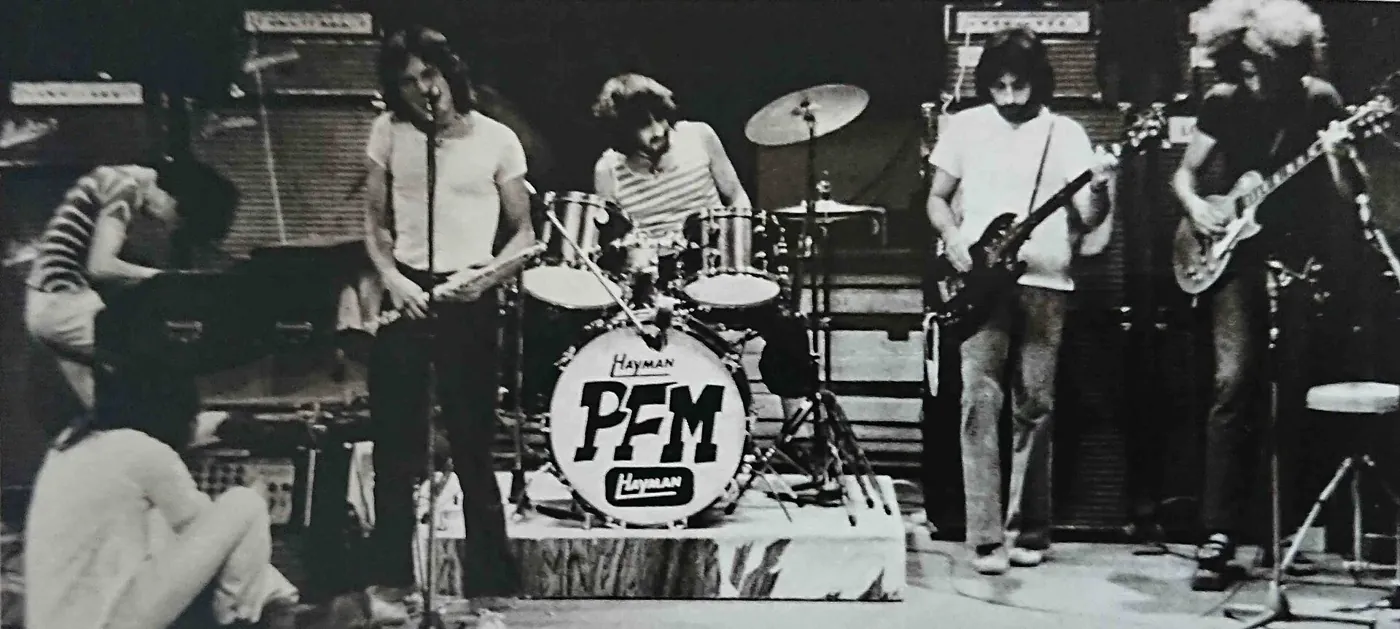
PFM built fluid ensemble music from violin, flute, keyboards and agile rhythm. Banco del Mutuo Soccorso paired dense keyboard writing with Francesco Di Giacomo's commanding voice. Le Orme developed a leaner trio language, while Area, Museo Rosenbach, Il Balletto di Bronzo, Osanna and Goblin proved that the scene also contained jazz, hard rock, political experiment and film music.
Several groups recorded English-language versions or worked with international labels, but the scene's identity is clearest when heard on its own terms. Melody and theatre are central, yet the best records continually change scale—from intimate acoustic passages to organ-driven climaxes and tightly composed instrumental turns.
The Real-World Foundations
Not a ranking: six useful doors into the style.
A remarkably fluent debut in which folk colour and symphonic ensemble writing share one motion.
Evolution becomes a dramatic framework for keyboards, voice and abrupt changes of scale.
A compact cosmic concept built through melodic keyboards and sharply contrasted worlds.
Heavy guitar, Mellotron and a side-long title suite give the scene a darker edge.
Jazz, electronics, Mediterranean sources and political intensity resist easy classification.
This instrumental 1976 non-soundtrack album uses cinematic texture to show the scene beyond its symphonic centre.
Where to Begin
A melodic and highly arranged entry point, balancing instrumental fluency with memorable themes.
Keyboard-rich, theatrical and vocally commanding, with a distinctly Italian dramatic centre.
A leaner keyboard-led route whose clarity makes the scene’s melodic strengths easy to hear.
The wider scene becomes stranger, heavier and more experimental once these foundations are familiar.
Questions from the Record Room
No. Symphonic writing is important, but the scene also includes jazz-rock, hard prog, experimental music and soundtrack work.
No, although translations add context. Voice, phrasing and arrangement communicate much of the drama directly.
PFM, Banco del Mutuo Soccorso and Le Orme reveal three different centres of the classic scene.
Research Trail
Related RetroForge Reading
Deeper Discovery
Start with The River Beneath the World as a RetroForge companion, then return through Progressive Rock to place it inside the wider family.
Curated paths into the people, records, events and ideas that give this subject its wider musical context.