Bass Defines Mass
Low frequencies establish the apparent size of the imagined environment.

Krautrock & Electronic Family
Electronic sound used to imagine astronomical scale, deep time and environments that cannot exist inside an ordinary room.
The Sound
Cosmic electronic music is a broad listening route rather than one tightly policed scene. It connects synthesizer-led works that use long duration, spectral colour and electronic motion to place the listener against something vastly larger than everyday scale.
Unlike kosmische Musik, the term need not imply a specific German historical context. Unlike space electronic, it need not preserve a clear journey. A piece may orbit, drift, remain suspended or simply reveal a changing celestial field.
Oxygen Cathedral is RetroForge’s strongest adjacent connection. It is officially framed as cosmic psychedelic progressive rock, so this guide treats it as a bridge rather than relabelling it as pure electronic music.
What You’ll Hear
How It Works
Cosmic electronic music uses synthesis, sustained fields and spatial production to suggest distances beyond the ordinary room. Its sense of scale can be serene or threatening, but it depends on the feeling that sound is arriving from, or travelling toward, somewhere beyond immediate human proportion.
Avoid reducing the style to science-fiction effects. Listen instead to how depth is composed: pulses placed like remote signals, bass tones that imply enormous mass and high frequencies that function as light across a dark harmonic field.
Useful distinction: Boundary line: cosmic imagery is optional. The genre’s identity is created by electronic scale, spatial design and long-range motion.
Low frequencies establish the apparent size of the imagined environment.
Sparse pulses create orientation inside an otherwise open field.
Bright detail reveals edges without filling the space.
Return and gradual change replace linear song progression.
Historical Development
Cosmic electronic music is a broad listening route through electronically made sound that evokes deep space, expanded scale and time beyond ordinary song form. It includes parts of kosmische, Berlin School, progressive electronic, ambient and space music, but should not erase their histories. The category describes a shared imaginative result rather than one scene or technique.
In the 1970s, Tangerine Dream and Klaus Schulze made duration itself feel astronomical. Vangelis and Jean-Michel Jarre brought stronger melody and studio clarity, while Ashra showed how guitar could remain inside an electronic world. Later ambient composers such as Michael Stearns and Steve Roach extended cosmic scale beyond the rock-derived album.
The most convincing work builds space acoustically. Low registers establish mass, high sustained tones imply distance, reverberation creates an environment and repeating patterns make travel perceptible. Titles and artwork can guide interpretation, but the music must still generate scale when heard with closed eyes.
The Real-World Foundations
Not a ranking: six useful doors into the style.
Sequencer instability and atmosphere make electronic space dynamic rather than decorative.
Long harmonic arcs and pulse give cosmic duration a disciplined architecture.
Scientific imagery and expressive electronic performance create a vivid physical cosmos.
Layered synthesis turns scale and air into memorable electronic melody.
A gentle route joins cosmic electronics to human touch and guitar.
Slowly breathing harmonies carry cosmic electronic music into modern ambient practice.
Closest RetroForge Route
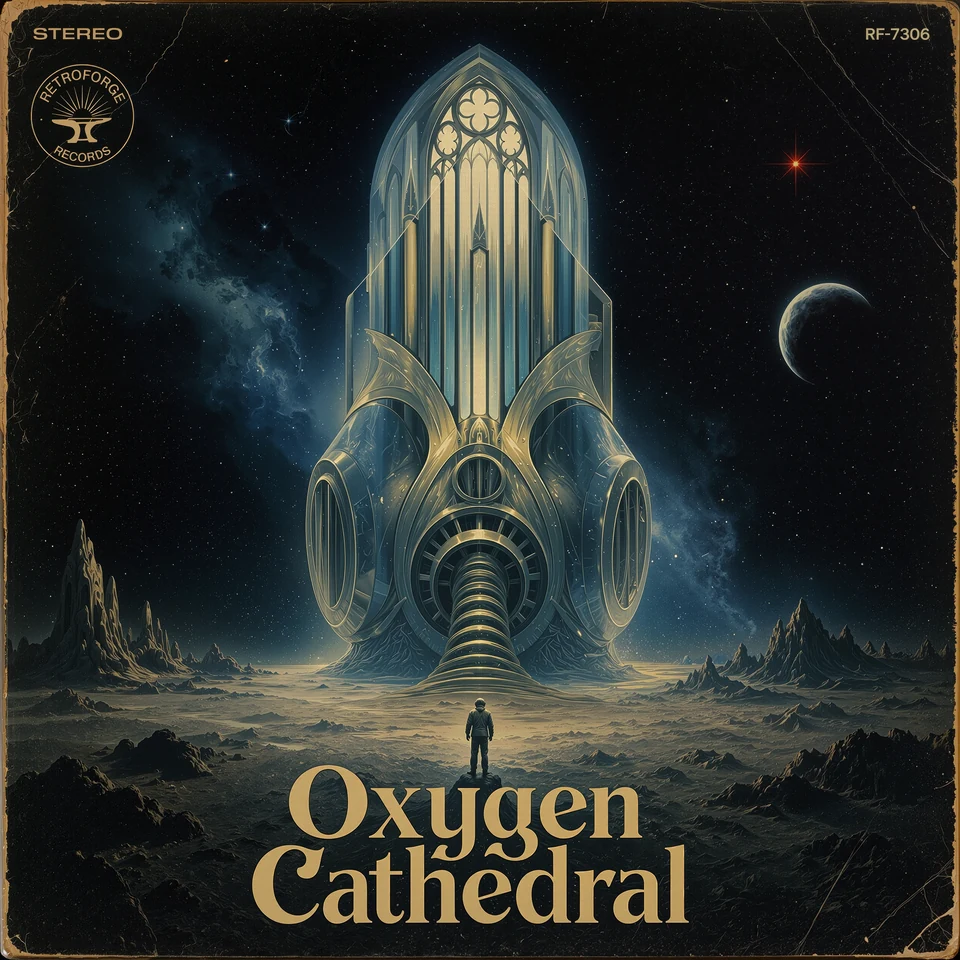
Adjacent: Cosmic Psychedelic Progressive Rock
Signals, planetary memory and analogue keyboards forming the catalogue’s clearest cosmic bridge.
Open the liner notes →Questions from the Record Room
No. It is an umbrella listening route connecting several electronic traditions through their treatment of space, scale and deep time.
No. The musical construction must evoke expanded distance or duration; titles alone do not establish the category.
Cosmic electronic music gives synthesis and studio systems primary structural control, while cosmic psychedelia retains stronger rock or improvisational roots.
Research Trail
Deeper Discovery
Start with A System Without Voices as a RetroForge companion, then return through Progressive Electronic to place it inside the wider family.
Curated paths into the people, records, events and ideas that give this subject its wider musical context.