
History Archive · 1973
The Dark Side of the Moon and the Global Prog Album
The Dark Side of the Moon made progressive scale feel immediate by connecting studio experiment to subjects almost anyone could recognise.
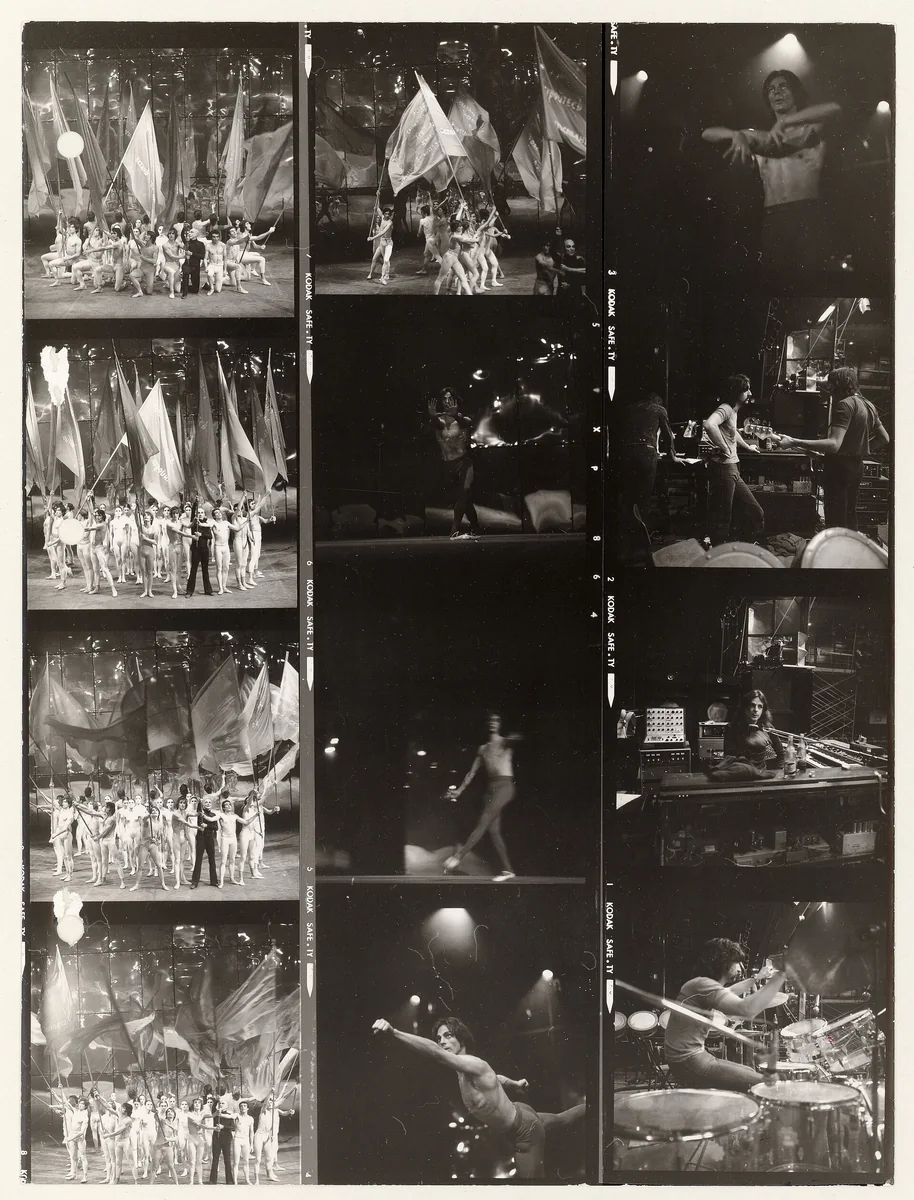
What Happened
Pink Floyd began performing an early version of the work in January 1972, refining it before and during recording at Abbey Road. The finished album arrived in March 1973 with ten credited tracks connected into a continuous sequence and a visual identity built around Hipgnosis and George Hardie’s prism design.
Its subjects were direct: work, money, time, death, conflict and mental strain. The group’s long development in psychedelic venues and extended live performance was compressed into an album that could travel far beyond the existing progressive audience.
What the Music Sounded Like
Heartbeat, clocks, cash registers, interview fragments and EMS synthesisers join guitar, organ, piano, saxophone and carefully layered voices. Transitions make separate tracks feel like rooms in one structure.
How It Was Made
Pink Floyd produced the album with engineer Alan Parsons at Abbey Road between May 1972 and February 1973. Tape loops were assembled physically; “On the Run” used an EMS Synthi AKS sequence; clocks for “Time” had been recorded separately before becoming part of the album.
The Wider Musical Context
Symphonic prog was near a commercial peak, while glam rock, heavy rock, fusion and electronic music were expanding the album market. Pink Floyd occupied a distinctive middle ground: less visibly virtuosic than Yes or ELP, but intensely focused on sound, sequence and live presentation.
What Followed
The album changed the scale of Pink Floyd’s audience and made its follow-up unusually difficult. Wish You Were Here responded by turning toward absence, industry pressure and the memory of Syd Barrett.
The Album Was Tested Before It Was Finished
Pink Floyd developed the work in concert under the provisional title Eclipse, performing versions of the sequence for roughly a year before completing the studio album. That process gave the band something increasingly rare in progressive rock: audience-tested continuity. Transitions, pacing and thematic links could be judged across an entire performance rather than assembled only after individual songs were complete.
When recording began at EMI Studios, the group was therefore refining a known structure rather than searching blindly for one. Abbey Road documents place the main sessions between 30 May 1972 and 9 February 1973. Live development and studio precision strengthened one another. The sequence retains the breath of a performance while allowing details no concert technology of the period could have delivered with the same control.
Technology Given a Human Subject
The album’s clocks, cash registers, footsteps, heartbeat and synthesizers are famous, but they are not demonstrations detached from meaning. Each sound is tied to a pressure of ordinary life: time passing, money circulating, travel, labour, mortality and mental strain. The EMS synthesizers on “On the Run” create motion without a conventional rock-band arrangement, turning a short harmonic sequence into a machine journey filled with anxiety.
Engineer Alan Parsons helped realise the record’s clarity, while tape loops and carefully controlled multitracking made recurring sounds behave like characters. Yet the most affecting moments remain physically human. Clare Torry’s improvised vocal on “The Great Gig in the Sky” gives mortality a wordless voice. David Gilmour’s guitar and vocals, Richard Wright’s harmonic colour, Roger Waters’s conceptual focus and Nick Mason’s unhurried drumming keep the technology connected to bodies and breath.
Questions Asked in the Corridors
Waters prepared questions that were put to people around Abbey Road, including staff and visitors. Fragments of their answers appear throughout the album, creating a chorus of laughter, confession and observation. These speakers are not presented as experts. Their ordinary voices prevent the themes from becoming abstract philosophy delivered only by rock stars.
The technique also unifies songs without requiring a plot. A remark heard in one place changes how the next piece is understood. Speech crosses musical boundaries just as the heartbeat opens and closes the record. The album behaves less like a concept story than an inquiry: several pressures are examined, but no narrator provides a final solution. Even the concluding observation about the moon refuses the neat certainty its fame can make us expect.
Mass Success Without Musical Simplification
The prism sleeve by Hipgnosis and George Hardie turns complex music into one immediately legible image: light enters, separates and continues. It is scientific, mysterious and free of a band portrait. The design helped the LP become a cultural object, but the extraordinary sales cannot be explained by packaging alone. The record’s sound is detailed enough for repeated headphone listening and direct enough to communicate through radio, domestic stereos and record shops.
The Dark Side of the Moon changed expectations because it made continuity accessible without making it shallow. Its songs can stand individually, yet the transitions make separation feel incomplete. Progressive rock had often asked the audience to admire difficulty. Pink Floyd built an album whose sophistication operates almost invisibly. That balance between theme, technology and emotional directness is why its commercial scale did not reduce its status as an album-length work.
Essential Listening
- Pink Floyd — Speak to Me / Breathe
- Pink Floyd — Time
- Pink Floyd — Money
- Pink Floyd — Us and Them
- Pink Floyd — Brain Damage / Eclipse
Related Genres and Guides
Related RetroForge listening
Hear the Archive Connection
Research notes
Sources and Further Reading
- The Dark Side of the Moon — Pink Floyd
- Pink Floyd biography — Pink Floyd
- The Dark Side of the Moon studio documents — Abbey Road Studios
- Pink Floyd timeline: 1972 — Pink Floyd — Official Archive
- The Genius of Alan Parsons — Abbey Road Studios