
Timeline Archive · 1972
Close to the Edge
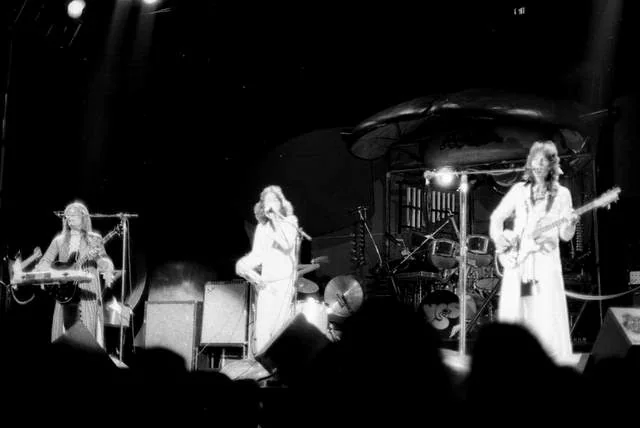
Close to the Edge condenses the sound of five distinctive players into three large-scale pieces whose complexity always serves momentum, colour and return.
The Record in Context
Close to the Edge opens with environmental sound and a slow fade into a performance already at full velocity. Guitar, bass, drums and keyboards appear to collide before the title theme emerges. The entrance announces the album’s ambition, but its lasting strength comes from control. Across three tracks, Yes uses contrast and recurrence to make extended forms feel navigable: dense ensemble passages lead to open vocal space, acoustic beginnings expand into Mellotron-backed scale, and motifs return with altered weight.
The album documents Jon Anderson, Steve Howe, Chris Squire, Rick Wakeman and Bill Bruford at the end of their only two-album studio run together. Fragile had established this lineup and brought the group international success. Close to the Edge asked the same five musicians to work at a larger scale, with producer and engineer Eddy Offord helping turn densely arranged performances into a coherent record.
Historical Context
Yes returned from extensive touring in early 1972 with Roundabout receiving strong American radio play. Anderson and Howe brought fragments developed in hotels, dressing rooms and soundchecks into rehearsals at the Una Billings School of Dance in Shepherd’s Bush. The official Yes history describes the group consciously planning a long-form piece that would occupy one side of an LP, extending the approach already heard in Heart of the Sunrise.
Recording took place at Advision Studios in London in mid-1972. The band and Offord co-produced. The process was painstaking: sections were developed, recorded and connected while the group searched for transitions capable of making separate ideas sound inevitable. Wakeman’s experience as an arranger and session musician was particularly useful when harmonic movement had to bridge material conceived in different places.
The finished album contained only three tracks. The title suite filled side one; And You and I and Siberian Khatru occupied side two. It was released in September and became Yes’s highest-charting album to that point. Commercial success did not require the band to reduce its scale. Listeners followed a record whose shortest piece ran close to nine minutes.
Sound and Production
The title track is divided into four named sections, but the music behaves less like four separate songs than a chain of transformations. Bruford and Squire keep the opening agile while Howe’s guitar alternates between jagged chord figures and melodic lines. Anderson’s vocal provides continuity above the shifting foundation. In the central I Get Up I Get Down passage, layered voices, organ and sparse guitar suspend the forward rush before Wakeman’s pipe organ drives the return.
And You and I begins with the audible preparation of a twelve-string guitar, placing the listener close to the instrument before the arrangement expands. Steel guitar, bass, drums, Mellotron and vocal harmony gradually enlarge the acoustic theme. The piece repeatedly rises toward a broad symphonic statement, falls back into intimate detail and returns with greater force.
Siberian Khatru is the most compact and physically direct track. Howe’s opening figure, Squire’s bass and Bruford’s shifting accents create propulsion without settling into a simple hard-rock pattern. Wakeman moves among organ, Mellotron and harpsichord colour. The arrangement is ornate, but each instrument retains a separate contour in Offord’s mix, which is crucial in music where several active lines often occupy the same moment.
Key Tracks
- Close to the EdgeAn eighteen-minute suite that moves from frantic ensemble writing through suspended vocal space and back to a transformed main theme.
- And You and ITwelve-string intimacy expands into Mellotron, steel guitar and one of the album’s broadest recurring themes.
- Siberian KhatruA driving final piece built from interlocking rhythmic parts, bright keyboard colours and compact ensemble precision.
Artwork and Visual Identity
Roger Dean’s outer sleeve is unusually restrained: a gradient from deep green to near-black, the band’s newly established logo and the album title. The landscape is hidden inside the gatefold. Opening the package reveals islands, water and impossible geology extending across the full interior.
Dean has explained that the imagery grew from real landscapes in the Scottish Highlands and Lake District, reshaped into a miniature but credible world. The division between minimal exterior and expansive interior mirrors the album’s listening experience. A simple surface opens into a place whose scale is difficult to judge.
Legacy and Influence
The album became a benchmark for progressive musicians interested in long-form writing, ensemble virtuosity and symphonic scale. Its influence is not limited to bands that use Mellotron or imitate the Yes vocal sound. More fundamentally, it demonstrates how recurring material can orient a listener inside a structure that changes metre, texture and intensity repeatedly.
Close to the Edge also captures the productive strain inside a virtuoso group. The playing sounds unified, but the painstaking work required to build it contributed to Bruford’s frustration; he left after recording to join King Crimson. The record’s polish should not be mistaken for ease. Its coherence was achieved through argument, arrangement and detailed studio construction.
What Came Next
Alan White replaced Bruford and learned the group’s concert repertoire in three days before the tour. The new lineup recorded the live album Yessongs and then attempted an even larger studio design on Tales from Topographic Oceans, four side-long pieces spread across a double LP.
Yes would continue to change personnel and musical scale throughout the decade. Relayer brought a harder, jazz-fusion edge with Patrick Moraz; Going for the One returned Wakeman and shortened most of the forms. Close to the Edge remained the point where the Fragile lineup’s individual languages were most completely integrated.
Success Creates Permission for Scale
Yes entered 1972 with the momentum of The Yes Album and Fragile, records that had taken intricate music into the British and American charts. “Roundabout” had shown that complexity could generate a recognisable hit rather than block one. That success created unusual freedom. Instead of simplifying, the band and engineer-producer Eddie Offord attempted an album of only three compositions, with the title piece occupying an entire side.
The decision was commercially bold but artistically logical. Earlier Yes records had already joined sections into long sequences. Close to the Edge treats the LP side itself as a compositional space. The music can disappear into natural sound, build through apparently unrelated fragments, return to earlier themes and reserve its greatest release for a point far beyond normal single length.
Five Individual Languages Become One Arrangement
Jon Anderson’s voice and imagery provide luminosity without explaining every transition. Steve Howe moves between electric attack, acoustic detail and textures that blur the line between rhythm and lead. Chris Squire’s bass is bright and contrapuntal, frequently carrying melodic motion underneath the vocal. Rick Wakeman’s keyboards range from Hammond weight to church organ and synthesizer colour. Bill Bruford’s drumming gives irregular structures forward movement without making them feel like exercises.
The achievement is integration. None of these parts would sound modest in isolation, yet the title track avoids becoming five virtuosos competing for space. Motifs pass between instruments, density rises and falls, and the arrangement repeatedly changes perspective. Even the famous pipe-organ passage at St Giles-without-Cripplegate works because grandeur arrives after a long withdrawal. Scale is controlled by contrast.
Constructing a Performance from Fragments
The album sounds like a continuous feat, but the title track was assembled through intensive studio work. Sections were recorded and joined, requiring the band to remember a form that did not always exist as one uninterrupted take. Offord’s editing helped transform composition and rehearsal into a convincing journey. Tape allowed Yes to think beyond the physical limits of a single performance while preserving the impression of collective momentum.
This process contributed to tension. Bruford, frustrated by the painstaking construction and eager for a musical change, left after recording to join King Crimson. Alan White learned the concert programme in three days. The personnel change reveals the cost beneath the polished result: the methods that produced Yes’s most integrated studio statement were not equally satisfying to every musician involved.
Progressive Rock at Its Most Persuasive
The album is often treated as the genre’s peak because it combines ambition with emotional clarity. “And You and I” moves through acoustic intimacy, Mellotron-like breadth and steel-guitar lift without losing its central melodic identity. “Siberian Khatru” is compact by comparison but rhythmically dense, ending the record with propulsion rather than solemn resolution. The three works present different solutions to length.
Its influence also created a trap. Later progressive bands could imitate the duration, keyboards and mystical language without reproducing the underlying discipline. Close to the Edge works because its scale is earned through recurrence, pacing and ensemble character. It is not important merely because one track lasts nearly nineteen minutes. It demonstrates that long-form rock can guide attention across that duration and make the return of an earlier idea feel like an emotional event.
Related listening
Hear the RetroForge Echo
The River Beneath the World
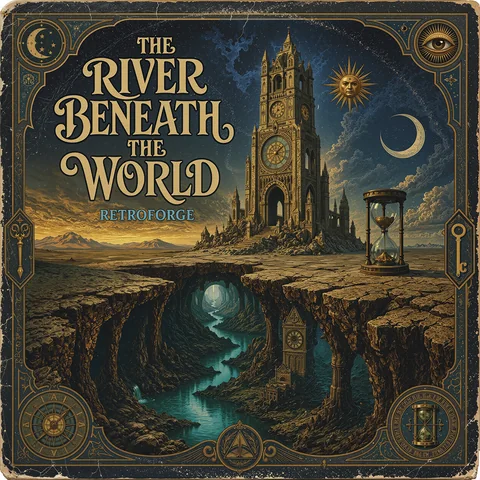
For another keyboard-led album whose long architecture is shaped by recurring themes, symphonic motion and carefully controlled returns.
Open liner notes →
The City That Left the Earth
Its interconnected tracks and recurring signal create a complete narrative-scale progressive structure.
Open liner notes →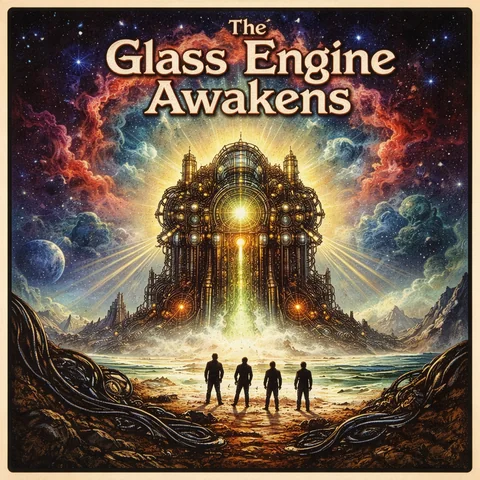
The Glass Engine Awakens
A concise route into shifting metres, dramatic ensemble writing and the mechanical-organic tension of classic progressive rock.
Open liner notes →Research notes
Sources and Further Reading
- Close to the Edge — Yes — Official Website, Sid Smith
- Close to the Edge (Super Deluxe Edition) — Rhino / Warner Music (14 January 2025)
- How Genesis and Yes Changed the Direction of Classic Rock — The Recording Academy, Ernesto Lechner (21 April 2025)
- Yes Induction Essay — Rock & Roll Hall of Fame (2017)
- In a Word: Yes (1969–) — Yes — Official Archive
- Close to the Edge — Original Painting — Roger Dean — Official Website