

Overview
Love formed in Los Angeles in 1965 around singer, songwriter and multi-instrumentalist Arthur Lee. The early group was racially integrated at a time when that remained unusual in American rock, and its music moved quickly from rhythm-and-blues and garage attack toward folk rock, psychedelia and elaborate acoustic arrangement.
The first three Elektra albums capture that development in less than two years: the hard-edged debut Love, the divided experiments of Da Capo, and the acoustic, string-and-horn architecture of Forever Changes. Later lineups changed the instrumental weight, but Lee's elliptical writing and refusal to repeat a successful formula remained central.
Formation & History
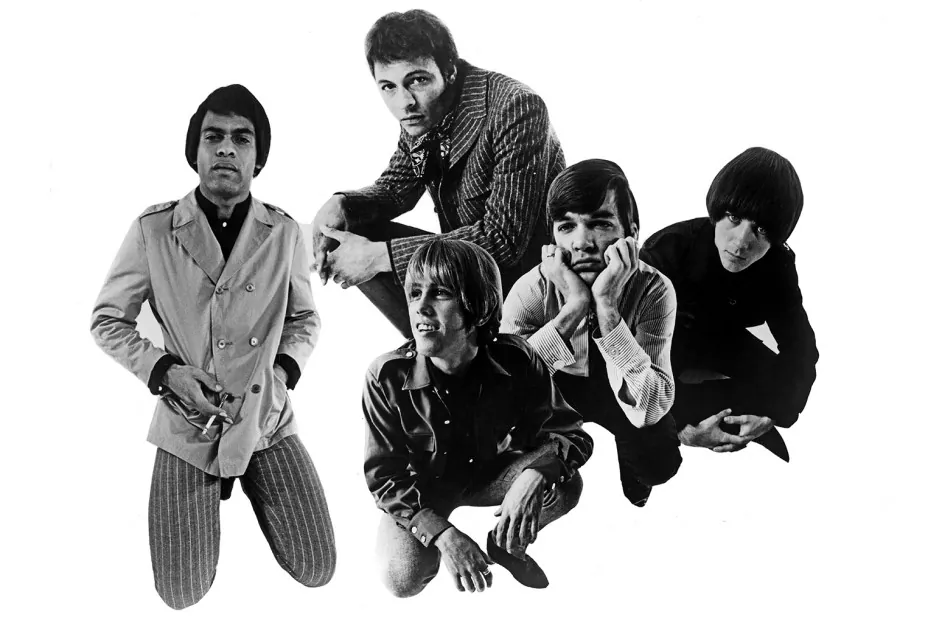
Lee and guitarist Johnny Echols had already worked together before forming the Grass Roots in 1965. Bryan MacLean, a former Byrds roadie and a songwriter in his own right, joined before the group changed its name to Love. Bassist Ken Forssi and drummer Alban “Snoopy” Pfisterer completed the lineup heard on the 1966 debut after Don Conka's departure. Jac Holzman saw the group at Bido Lito's in December 1965 and signed it as Elektra's first rock act.
Love arrived in April 1966, led by the band's sharp reworking of “My Little Red Book.” For Da Capo, released in November 1966, Michael Stuart took over on drums while Pfisterer moved to keyboards and Tjay Cantrelli added saxophone and flute. The album placed the compressed force of the Top 40 single “7 and 7 Is” beside baroque pop, jazz colour and the side-long improvisation “Revelation.”
The five-piece Lee–MacLean–Echols–Forssi–Stuart lineup recorded Forever Changes in 1967 with co-producer and engineer Bruce Botnick, arranger David Angel, and selected session musicians. The original group broke apart soon afterward. Lee assembled a heavier new Love for Four Sail, Out Here and False Start; Jimi Hendrix appears on the last album's opening track, “The Everlasting First.”
Lee later returned to the catalogue with Baby Lemonade as his backing group from 1993 until his death in 2006. Original guitarist Johnny Echols subsequently joined those musicians. Love with Johnny Echols continues to perform songs from the early albums, preserving a direct link to the 1965 group without presenting the current ensemble as the unchanged original lineup.
Sound & Style
The debut depends on electric guitars, compact arrangements and a rhythm-and-blues drive sharpened by folk-rock attack. Lee's vocal phrasing can sound commanding, conversational or deliberately detached within the same song, while Echols supplies lead-guitar bite and MacLean offers a lighter melodic counterweight. Da Capo broadens that palette with harpsichord, flute, saxophone and jazz-derived improvisation.
Forever Changes reverses the balance: acoustic guitars and a restrained rhythm section form the core, with David Angel's strings and horns shaping entrances, countermelodies and sudden changes of scale. MacLean's “Alone Again Or” and “Old Man” provide a distinct songwriting voice, while Lee's songs move between pastoral detail, social observation and foreboding. The later Love turns back toward amplified blues rock, making the catalogue a sequence of transformations rather than one fixed psychedelic style.
Essential Albums
Forever Changes
1967Forever Changes replaces most of the preceding album's electric force with interlocking acoustic guitars, supple bass and drums, and David Angel's string and horn arrangements. “Alone Again Or” opens outward through trumpet and strings; “The Red Telephone” places one of Lee's most unsettling texts inside an almost weightless setting; “You Set the Scene” gathers the album's private and social anxieties into a long final resolution. Session players reinforce the first two recorded tracks, but the core five-piece performs across the album. Its 2011 selection for the U.S. National Recording Registry recognises both the musical design and its lasting cultural importance.
Key tracks: Alone Again Or · The Red Telephone · You Set the Scene
Open album guide → View on Amazon →Da Capo
1966Da Capo is deliberately uneven in method. Its first side compresses Love's expanding range into six songs: “Stephanie Knows Who” joins clipped rhythm to reeds and harpsichord, “Orange Skies” gives MacLean a gentle lead, and “7 and 7 Is” drives toward an explosive ending in barely two and a half minutes. The second side gives the whole span to “Revelation,” a loose blues-based performance featuring instrumental exchanges and extended vocal improvisation. That split between crafted miniatures and a side-long club piece makes the album historically revealing even where it is less disciplined than its successor.
Key tracks: Stephanie Knows Who · Seven & Seven Is · Revelation
Open album guide → View on Amazon →Love
1966The debut preserves the urgency that persuaded Elektra to enter rock music. “My Little Red Book” turns a Bacharach-David song into a clipped, pounding band performance; “Can't Explain” and “A Message to Pretty” show Lee moving between garage pressure and melodic folk rock. “Signed D.C.” strips the arrangement down around a stark account of addiction, proving that the group's darker writing preceded its orchestral period. The production is lean and the repertoire still includes several outside songs, but Lee, MacLean, Echols, Forssi and Pfisterer already sound unlike their Sunset Strip neighbours.
Key tracks: My Little Red Book · A Message to Pretty · Signed D.C.
Open album guide → View on Amazon →Affiliate note: Amazon links on this page may earn RetroForge Records a small commission, at no extra cost to you.
Deeper Cuts
Four Sail
1969Four Sail introduces the post-classic lineup of Lee, Jay Donnellan, Frank Fayad and George Suranovich. “August” opens with intertwined electric guitars and a heavier rhythm section, while “I'm with You” retains the melodic delicacy associated with earlier Love. The record is less orchestrated and more guitar-led than Forever Changes, but Lee's compressed structures and sudden changes remain recognisable.
Key tracks: August · I'm with You · Singing Cowboy
Open album guide → View on Amazon →False Start
1970False Start captures a road-tested heavier Love rather than a reunion of the 1967 band. Jimi Hendrix contributes guitar only to the opening “The Everlasting First,” where his exchanges with Lee give the album an immediate headline moment. “Keep On Shining” and “Anytime” then return the focus to the regular lineup's funk, blues-rock and ensemble drive. The guest appearance is important, but it should not obscure the record's broader picture of Lee working through another distinct band.
Key tracks: The Everlasting First · Keep On Shining · Anytime
Open album guide → View on Amazon →Why They Still Matter
Love's first three albums document an unusually rapid expansion of what a Los Angeles rock band could contain: garage rhythm, folk melody, jazz instrumentation, side-long improvisation and orchestral arrangement. The sequence matters because each record changes the method rather than merely enlarging the previous one. Lee's leadership and the distinct writing voice of MacLean sit inside a band identity also shaped by Echols, Forssi, Stuart and the expanded Da Capo personnel.
The Library of Congress added Forever Changes to the National Recording Registry in 2011, identifying its acoustic core, ambitious arrangements and foreboding writing as historically significant. The continuing Love with Johnny Echols performances provide a different kind of legacy: an original guitarist working with musicians who backed Lee for more than a decade, keeping the songs active without erasing the lineups that created them.
Sources & Further Reading
Connected archive routes
Explore This Band
Continue through the RetroForge knowledge graph
Curated paths into the people, records, events and ideas that give this subject its wider musical context.
Artists
- The Jimi Hendrix Experience