

Overview
Popol Vuh was less a fixed rock band than a changing musical project centred on Florian Fricke. Its first two albums explored the Moog synthesiser, percussion, tape processing and church organ. From Hosianna Mantra onward, Fricke redirected the project toward piano, guitar, oboe, tamboura and voice. That change was not a retreat from experiment: it replaced electronic novelty with an equally unusual search for clarity, resonance and spiritual intensity.
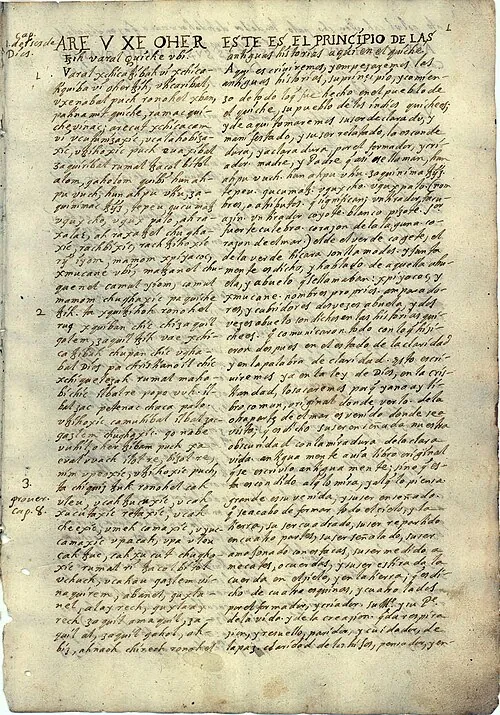
The name came from the K'iche' Maya narrative commonly known as the Popol Vuh. Fricke drew on Christian texts, Asian religious traditions and his own non-denominational idea of music for the heart, while collaborators such as Frank Fiedler, Holger Trülzsch, Conny Veit, Djong Yun and Daniel Fichelscher gave each period a different physical sound. The group belongs in the history of krautrock, but its catalogue also crosses electronic music, progressive folk, sacred composition and film music.
Formation & History
Fricke began working with filmmaker and sound specialist Frank Fiedler in autumn 1969. On Affenstunde, Fricke played Moog, Holger Trülzsch supplied percussion and Fiedler shaped the synthesiser mix. The title track and the linked “Ich mache einen Spiegel” pieces were performed and assembled with a live-process character rather than conventional song structures. In den Gärten Pharaos extended that language in 1971, placing one side of Moog music beside the church-organ work “Vuh”.
For Hosianna Mantra, Fricke turned to an acoustic chamber group with guitarist Conny Veit, oboist Robert Eliscu, tamboura player Klaus Wiese, violinist Fritz Sonnleitner and Korean soprano Djong Yun. Daniel Fichelscher became the other major long-term instrumental voice from Seligpreisung onward, often recording both guitar and percussion. Fricke's work with Werner Herzog began with Aguirre, the Wrath of God; later films used a mixture of specially composed and pre-existing Popol Vuh music. The project continued through changing line-ups and later electronic tools until Fricke's death in 2001.
Sound & Style
The early electronic recordings are not beatless abstractions. Trülzsch's hand percussion, Fricke's sequenced Moog figures and Fiedler's filtering, echo and delay create a moving rhythmic field. “Vuh” changes the scale again through pipe organ and cymbals recorded in a former monastery church. The celebrated Aguirre theme uses a custom “choir organ”, a Mellotron-like device built from parallel tape loops of recorded voices, rather than a standard choral synthesiser preset.
The acoustic period depends on interaction rather than atmosphere alone. Fricke's piano and harpsichord establish repeating harmonic cells; Veit and later Fichelscher answer them with electric and twelve-string guitar; oboe, violin, tamboura, sitar, tabla and flute alter the colour from album to album. Djong Yun sings biblical texts on several key records, while Fichelscher's simultaneous role as guitarist and percussionist gives the mid-1970s work an unusually unified pulse. Later soundtracks and albums reintroduced electronics, samplers and choral textures without erasing that acoustic centre.
Essential Albums
Hosianna Mantra
1972The decisive acoustic transformation. Fricke's piano and harpsichord meet Conny Veit's electric and twelve-string guitars, Robert Eliscu's oboe, Klaus Wiese's tamboura, Fritz Sonnleitner's violin and Djong Yun's soprano. The first side moves from “Ah!” and “Kyrie” into the long title work; the second sets texts after Martin Buber's biblical translation. There is repetition, but no mechanical pulse: breath, resonance and the contrast between voice and plucked strings carry the structure.
Key tracks: Hosianna - Mantra: Ah! · Das V. Buch Mose: Abschied · Das V. Buch Mose: Nicht hoch im Himmel
Open album guide → View on Amazon →Aguirre
1975This is not a complete film soundtrack preserved on LP. The 1975 album combines the “Aguirre” theme and related material with pieces recorded before or after Herzog's 1972 film; “Morgengruß II”, “Agnus Dei” and the long Moog work “Vergegenwärtigung” are not heard in the film. Its defining sound is the choir organ on “Aguirre I”, whose taped voices turn a keyboard chord into something both human and unreal.
Key tracks: Aguirre I · Aguirre II · Vergegenwärtigung
Open album guide → View on Amazon →Affenstunde
1970The electronic debut joins Fricke's Moog to Trülzsch's percussion and Fiedler's filtering and mix work. The three “Dream” sections on side one use sequencer patterns, echo and shifting electronic timbre rather than verse-and-chorus writing. The eighteen-minute title track gives percussion a stronger physical presence. It establishes the project's electronic language without pretending that Popol Vuh invented synthesis or worked without precedents.
Key tracks: Ich mache einen Spiegel: Dream Part 4 / Dream Part 5 / Dream Part 49 · Affenstunde
Open album guide → View on Amazon →Affiliate note: Amazon links on this page may earn RetroForge Records a small commission, at no extra cost to you.
Deeper Cuts
Recorded at Bavaria Tonstudio in May 1974, the album brings Fricke's piano and spinet, Fichelscher's electric and acoustic guitars and percussion, Djong Yun's voice and Olaf Kübler's flute into a compact first side and a nineteen-minute title piece. Fricke described it as the close of one creative cycle; the music also fixes the Fricke–Fichelscher partnership that would drive the next several years.
Open album guide → View on Amazon →Das Hohelied Salomos
1975Fricke arranged texts from the Song of Songs as what he called a “mystic love song”. Recorded in February 1975, it places Djong Yun over piano, Fichelscher's guitars and percussion, Alois Gromer's sitar and Shana Kumar's tabla. Compared with Hosianna Mantra, the ensemble is denser and more rhythmically grounded, especially across the paired “In den Nächten auf den Gassen” and “Du Sohn Davids” pieces.
Open album guide → View on Amazon →Herz aus Glas
1977The 1977 Brain album shares its title with Herzog's film but should not be treated as a scene-by-scene soundtrack: only part of the record appears in the picture, alongside other music. Fichelscher plays all guitars and percussion, Fricke piano, Matthias von Tippelskirch flute and Alois Gromer sitar. “Engel der Gegenwart” opens expansively; the shorter second-side pieces make the album one of the catalogue's most direct guitar-led statements.
Open album guide → View on Amazon →Why They Still Matter
Popol Vuh matters because the catalogue refuses a simple story of technological progress. Fricke first used a large modular synthesiser to search for an organic, voice-like sound, then pursued the same goal with acoustic instruments, singers and resonant rooms. The shift from Affenstunde to Hosianna Mantra is therefore a change of means rather than a rejection of experiment. It offers two durable models: electronic music can breathe, and devotional intensity can exist outside a fixed liturgical tradition.
The Herzog collaboration carried that method into cinema, but the album and film histories must remain distinct. Some cues were composed for particular scenes; elsewhere Herzog selected existing Popol Vuh recordings, and the Aguirre LP itself contains substantial music absent from the film. That porous exchange between record, archive and moving image is more interesting than calling every related album a conventional soundtrack.
Connected archive routes
Explore This Band
Sources and further reading
This guide separates documented credits and release history from editorial interpretation. The principal public sources are:
- Popol Vuh archive profile — the changing project structure, collaborators, later electronic work and Herzog relationship.
- The Cambridge Companion to Krautrock: Popol Vuh — scholarly context for Fricke's spirituality and transition from Moog to organic sound.
- Affenstunde archive — original programme, credits and Fricke's account of the recording process.
- Hosianna Mantra archive — original editions, personnel, programme and interview history.
- Aguirre archive — editions, choir-organ description and Fricke's account of the film commission.
- Popol Vuh film-music research — the documented differences between Herzog's film and the later album.
- Einsjäger & Siebenjäger archive — May 1974 sessions, personnel and Fricke interview.
- Das Hohelied Salomos archive — February 1975 sessions, instruments, texts and track sequence.
- Herz aus Glas archive — 1977 Brain edition, personnel and the album's partial relationship to the film.
Continue through the RetroForge knowledge graph
Curated paths into the people, records, events and ideas that give this subject its wider musical context.
Genres and scenes
- Progressive Folk
Sounds and instruments
- Mellotron