
Timeline Archive · 1969
In the Court of the Crimson King
King Crimson’s debut joined extreme weight, pastoral restraint and Mellotron grandeur in a sequence that gave progressive rock one of its clearest early shapes.
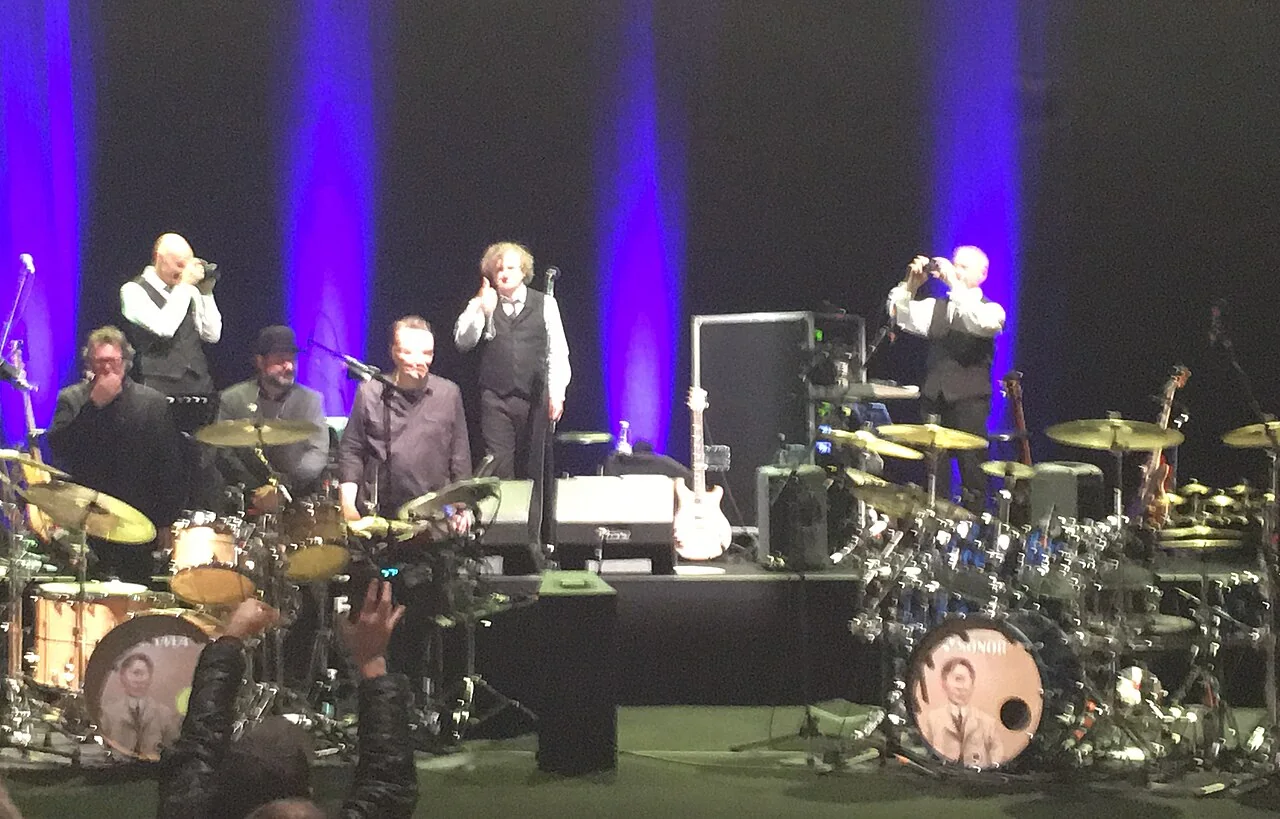
The Record in Context
In the Court of the Crimson King begins as if the listener has entered halfway through an emergency. A distorted ensemble figure, heavily struck drums and Ian McDonald’s reeds drive 21st Century Schizoid Man before the track breaks into tightly controlled unison passages. The violence is not the whole album. Immediately afterward, I Talk to the Wind removes nearly all of that pressure. The contrast establishes the record’s central method: dramatic changes of scale, colour and density arranged as parts of one sustained experience.
The original King Crimson existed for less than a year. Robert Fripp, Michael Giles, Greg Lake, Ian McDonald and lyricist Peter Sinfield began rehearsing in January 1969, developed an unusually disciplined live set, and released one studio album before the lineup fractured. The speed of that rise helps explain the debut’s character. It does not sound like musicians gradually testing a new identity in public; it sounds like a prepared body of work arriving fully staged.
Historical Context
Several members came from Giles, Giles and Fripp, whose eccentric pop and jazz-inflected work had attracted little commercial attention. With Greg Lake on bass and vocals and Peter Sinfield supplying lyrics and visual direction, the new group tightened its rehearsal schedule and built material around controlled dynamics, composed sections and improvisation. Their formal live debut took place at the Speakeasy in April 1969. In July they appeared at the Rolling Stones’ free Hyde Park concert before an enormous audience.
The group first attempted to record with producer Tony Clarke, known for his work with the Moody Blues. Those sessions were abandoned. DGM’s archive states that from 16 July the band produced itself at Wessex Sound Studios, an unusual degree of control for a debut act. Engineer Robin Thompson worked with them as they translated a stage sound built on volume and physical presence into layers of Mellotron, woodwind, voices, guitars and percussion.
The album was released in October 1969. Rock already contained extended improvisation, electronic studio work, jazz harmony, classical borrowing and ambitious suites. King Crimson did not invent those ingredients. What the debut offered was an unusually concentrated arrangement of them, with five pieces forming an arc from mechanical panic through reflection, lament, improvisational suspension and mock-medieval ceremony.
Sound and Production
21st Century Schizoid Man compresses several identities into seven and a half minutes. Lake’s vocal is electronically distorted; McDonald moves between alto saxophone and dense ensemble writing; Giles treats the composed middle section with the precision of a jazz drummer and the weight of a rock player. Fripp’s guitar tone is abrasive without becoming formless. The track’s power comes from the sharp border between written figures and open intensity.
I Talk to the Wind uses flute, soft percussion and close vocal harmony to create a near-total reversal. Epitaph then expands the quiet side of the band into tragedy. Mellotron chords supply orchestral mass, but the arrangement remains anchored by Lake’s clear vocal and Giles’s measured drumming. Moonchild divides into a concise song and a long, sparse improvisation; its near-silence remains one of the album’s most demanding transitions.
The title track closes the record with Mellotron, acoustic guitar, woodwind and layered vocal refrains. Its grandeur is deliberately unstable. Sinfield’s images of courts, bells, jesters and a “crimson king” suggest authority and ritual while the arrangement repeatedly swells beyond the scale of a normal rock ensemble. The hidden fragment after the apparent ending breaks the spell with studio noise and loose playing, a small reminder that the monumental façade was assembled by five people in a room.
Key Tracks
- 21st Century Schizoid ManDistorted voice, saxophone, guitar and tightly scored ensemble passages turn social anxiety into physical sound.
- I Talk to the WindFlute and restrained ensemble playing reveal the pastoral side that makes the album’s heavier moments feel larger.
- EpitaphMellotron, acoustic guitar and a controlled vocal performance create orchestral scale from rock-band resources.
- MoonchildA short nocturnal song opens into an extended improvisation built from space, response and extremely low density.
- The Court of the Crimson KingA ceremonial closing piece whose repeated Mellotron theme gives the album its most recognisable architecture.
Artwork and Visual Identity
Barry Godber painted the cover’s two faces: the exterior’s open-mouthed figure and the interior image of the Crimson King. Godber was a computer programmer and friend of Peter Sinfield rather than an established sleeve artist. The painting became his only album cover; he died in 1970.
The image’s intensity is inseparable from the first seconds of the record. There is no band name or title on the front to mediate the expression. Opening the gatefold reveals a very different face—wide-eyed, smiling and uneasy—which turns the package from a single scream into a confrontation between panic and authority.
Legacy and Influence
The album became a reference point for progressive rock because its ambition is audible in arrangement rather than simply announced by long duration. Later bands borrowed the Mellotron weight, the sudden transitions and the idea of treating a debut as a complete aesthetic statement. Heavy progressive music, symphonic prog and parts of early metal all found useful possibilities in its sound.
Its historical position can invite exaggerated claims that everything began here. A more accurate view recognises a crowded 1969 landscape while still hearing how decisive this particular record was. It brought techniques circulating through jazz, classical music, psychedelic rock and the studio avant-garde into a sequence with a remarkably clear identity.
What Came Next
The original lineup did not survive the year. McDonald and Giles left after the American tour, and Greg Lake soon departed to form Emerson, Lake & Palmer. Fripp and Sinfield continued King Crimson with changing personnel, making instability part of the group’s method rather than an interruption to it.
King Crimson’s later work became harsher, more rhythmically complex and less dependent on Mellotron ceremony. Larks’ Tongues in Aspic, Starless and Bible Black and Red document a different 1970s lineup, while Discipline in 1981 rebuilt the band again around interlocking guitars and cyclical rhythm. The debut remained a foundation, but not a template Fripp was willing to repeat.
A Live Reputation Before the Record
King Crimson’s debut did not arrive from an unknown studio project. The band began rehearsing in January 1969 and developed at unusual speed through club appearances, including a Marquee residency. Their July performance in Hyde Park, on a bill headed by the Rolling Stones, placed unreleased material before an audience DGM’s archive describes as upwards of 500,000. Months before the album appeared, listeners and musicians were already discussing a group that seemed to combine the force of hard rock with a far wider vocabulary.
The live impact matters because the record is often remembered primarily for Mellotron grandeur. Contemporary Crimson could also be frighteningly physical. “21st Century Schizoid Man” joined a distorted vocal, locked ensemble attacks, jazz-informed unison writing and a brutally unstable middle section. It sounded less like blues-rock being decorated with sophistication than several musical systems colliding at full speed.
Five Musicians, Five Different Functions
Robert Fripp’s guitar is central, but the album’s identity depends on an unusually distributed arrangement of roles. Ian McDonald supplies reeds, woodwind, keyboards, vibes and much of the Mellotron colour. Michael Giles drums with the responsiveness of a jazz player rather than simply marking heavy beats. Greg Lake’s voice gives Peter Sinfield’s apocalyptic language clarity and gravity, while his bass often acts as a second melodic instrument. Sinfield’s words and visual direction extend the group beyond the conventional performing lineup.
This is why the quieter tracks are not pauses between the important ones. “I Talk to the Wind” makes delicacy structurally necessary after the opening assault. “Epitaph” turns Mellotron mass into a lament rather than a display of technology. “Moonchild” moves from song into near-silence and free improvisation, demanding a different kind of attention before the title track restores ceremony. The sequence treats contrast as architecture.
Producing Themselves
Early sessions with producer Tony Clarke did not give the band the sound it wanted. From mid-July the musicians took control themselves, an unusual decision for a debut act. The surviving DGM session chronology documents the self-produced Wessex work from 16 July through 13 August. Self-production allowed them to preserve extremes that a more cautious outside producer might have smoothed away: overloaded intensity, extended duration, abrupt dynamic change and sections that refuse pop-song proportion.
The process was not effortless, and the original mix reflects the limitations of the recording circumstances. Yet those limitations contribute to the album’s enclosed, pressurised character. Mellotron, acoustic instruments and distorted electric sound do not occupy a neutral hi-fi space; they seem to push against the walls of the recording. The record feels monumental partly because the technology is audibly being asked to carry more than is comfortable.
Progressive Rock’s Foundation, Not Its Rulebook
In the Court of the Crimson King became a foundation for progressive rock because it demonstrated that a rock album could sustain symphonic scale, jazz-level interaction, literary imagery and long-form sequencing without losing danger. It did not invent each ingredient. The Moody Blues, Procol Harum, the Nice, Soft Machine and others had already crossed important boundaries. Crimson made the combination feel like a new centre of gravity.
The danger of calling it “the first prog album” is that a living network becomes one clean origin story. Its more useful legacy is permission. After October 1969, bands could imagine an album as a complete dramatic system and still sound confrontational rather than respectable. Even King Crimson refused to turn that permission into a formula. The original lineup dissolved after its American tour, and Fripp spent the following decades repeatedly rebuilding the band’s language. The debut opened a door its creators had no intention of standing inside forever.
Related listening
Hear the RetroForge Echo
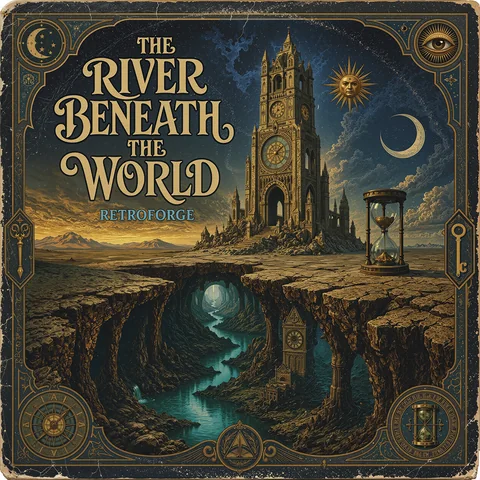
The River Beneath the World
Listeners drawn to Mellotron-like scale, long-form architecture and sudden movement between delicacy and force may begin here.
Open liner notes →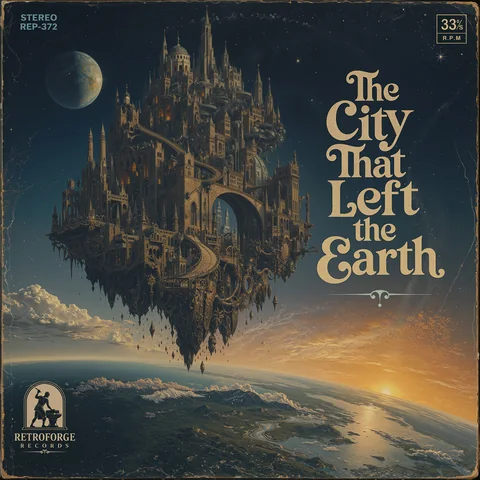
The City That Left the Earth
Its symphonic design and recurring three-note signal build a dramatic album world from connected movements.
Open liner notes →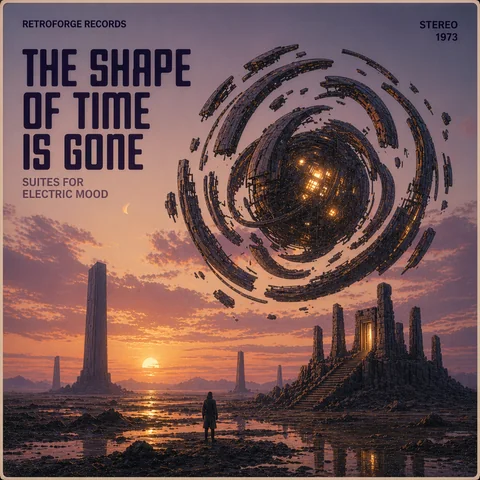
The Shape of Time Is Gone
For another record organised around changing structures, analogue keyboards and tension between order and collapse.
Open liner notes →Research notes
Sources and Further Reading
- In the Court of the Crimson King — The Long View — DGM Live, David Singleton (3 November 2016)
- Wessex Studios: The Court of the Crimson King Stereo Takes and Take 6 — DGM Live
- King Crimson Tour and Special Releases Celebrate Band’s 50th Anniversary — The Recording Academy, Philip Merrill (17 January 2019)
- In the Court — 1969 session chronology — DGM Live, Sid Smith (31 December 2019)
- First King Crimson concerts in 1969 — DGM Live, Sid Smith (23 February 2014)