

Edition timeline
The Byron festival opens
A field beside Middle Georgia Raceway begins filling beyond ticketed capacity.
The gates become free
Organisers open the perimeter when the outside crowd overwhelms the ticket boundary.
Two stages and a temporary city
A free stage, camps, medical teams and the main programme operate across the site.
Hendrix under fireworks
Hendrix plays the national anthem in the wee hours as Independence Day fireworks remain visible.
Why this event matters
Byron was one of the largest American counterculture gatherings after Woodstock and one of the clearest Southern expressions of the festival city. Several hundred thousand people, according to official marker language, occupied a field beside Middle Georgia Raceway. Hendrix drew the largest American audience of his career and the Allman Brothers Band played twice near home. The event fused national scale with a distinctly Georgian musical and political setting. The relative success of Hampton 1969 allowed Alex Cooley to plan a larger sequel with a smaller, more focused team. Organisers chose Byron, south of Macon, where the raceway and adjacent land offered distance from Atlanta and room for camping. They attempted to learn from Woodstock through medical planning, water and stage organisation, yet no practical plan could fully contain the number of people who arrived without tickets. The site grew into a temporary settlement of camps, vendors, roads, stages and improvised social zones. Estimates commonly range from 200,000 to 300,000, while some later claims rise much higher; the Georgia Historical Society cautiously says several hundred thousand. The distinction matters because crowd size shaped everything without being auditable. Heat, traffic and distance made the festival less a concert venue than an unstable city operating for a weekend. The Allman Brothers Band’s two sets located the emerging Southern-rock language inside its home region. Jimi Hendrix, B.B. King, Procol Harum, Jethro Tull, Mountain, Johnny Winter, Ten Years After, Poco, the Chambers Brothers and others connected blues, hard rock, progressive form and hit-making soul. The programme should be read through confirmed performances rather than every poster name, especially because the festival’s open conditions disrupted formal scheduling.

What the audience experienced
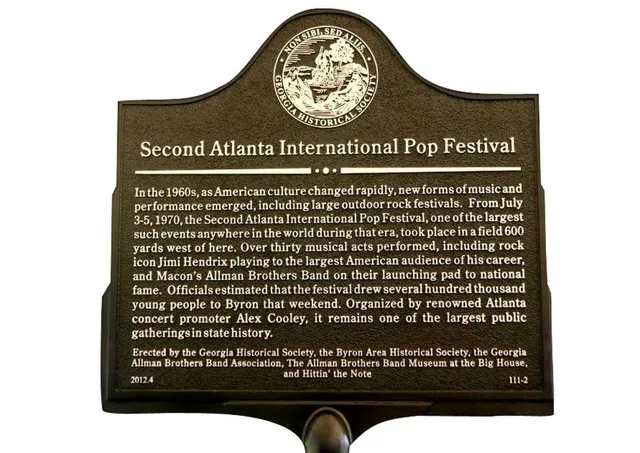
Visitors encountered severe Georgia heat, long approaches, communal camps, nudity, drugs and a degree of freedom that alarmed state authorities. Local residents and medical volunteers supplied water and assistance, complicating any picture of simple hostility between town and crowd. The open gates changed the experience further: a purchased ticket ceased to define belonging, and the site became an experiment in mass access whose costs remained with the organisers. The main programme used experienced production systems, while a smaller free stage gave local and less formal music another centre. Organisers planned medical and sanitation support more deliberately than in 1969, and local cooperation prevented heat from becoming still more dangerous. Yet performance logistics took place inside a settlement larger than many cities. Production success meant keeping music and basic services moving under conditions no conventional venue could fully regulate. Within the festival’s opening phase, people outside demanded free entry and outnumbered the boundary’s security capacity. Organisers opened the gates rather than risk a violent breach. This decision should not be romanticised as costless liberation: it destroyed the ticket model and transferred risk to the promoters. Nor should it be reduced to criminal gatecrashing. It reveals how Woodstock’s free-festival mythology had already changed audience expectations by July 1970. Governor Lester Maddox denounced the gathering and state hearings considered how to prevent another. No third Atlanta International Pop Festival followed. Alex Cooley nevertheless remained a central Southern promoter, while the Allman Brothers moved rapidly toward national prominence. The physical gathering disappeared, but its political after-image and professional networks remained. A marker erected in 2012 eventually converted a once-contested event into officially recognised Georgia history.

Films, recordings and surviving documents
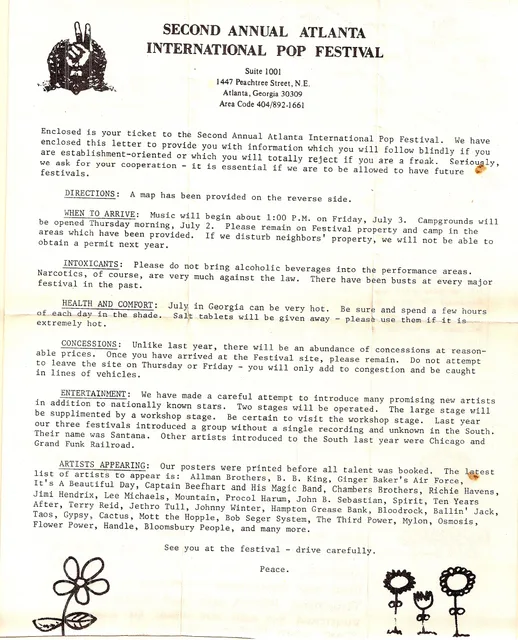
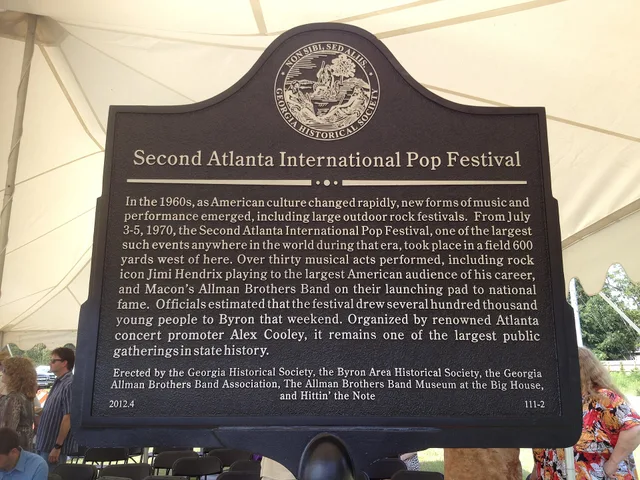
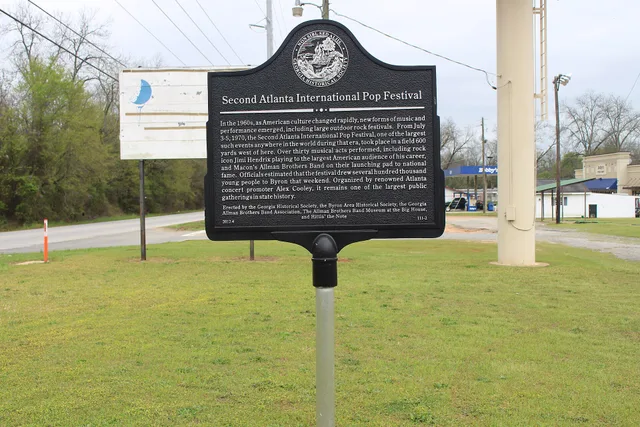
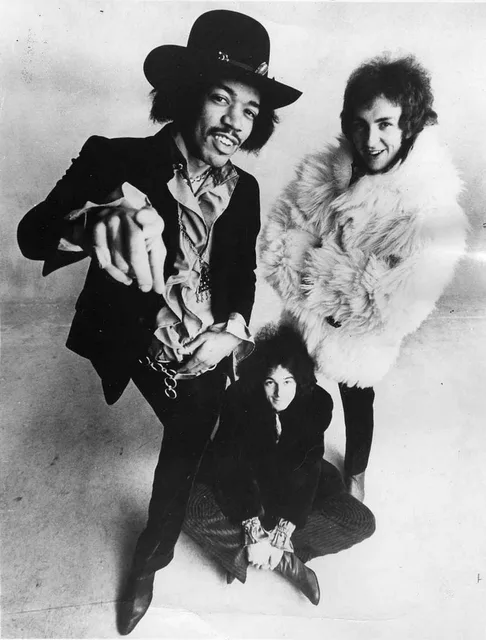
Byron has an unusually strong afterlife in programmes, press, photographs, artist recordings, oral testimony, documentary footage and the official historical marker. The Allman Brothers’ performances and Hendrix material keep circulating, though exact provenance and rights require item-by-item verification. The programme used here is an event document; modern marker photographs show commemoration; the Hendrix portrait is clearly labelled as period context rather than a Byron stage image. Byron was not simply Woodstock repeated in the South. Its heat, regional politics, nearby Macon music network, raceway geography and relations with local residents gave it a different structure. Georgia authorities prepared for drugs and nudity but spent much of their effort managing traffic. The festival made alternative public life visible on a scale that challenged ordinary law and commerce while depending on local labour and emergency cooperation. Hendrix’s performance of the “Star-Spangled Banner” occurred in the wee hours of 5 July with fireworks overhead; reliable sources do not require it to be called a dawn set. The Allman Brothers’ two appearances have a different significance: a regional band used the huge gathering as a launch pad. Placing both stories together keeps the page from becoming a single-star memorial and connects international counterculture to Georgia’s emerging musical identity. The second Atlanta festival remains a landmark of scale, Southern rock history and post-Woodstock free-access culture. Its marker describes one of the largest public gatherings in state history. Its political backlash helps explain why the event did not become an annual institution. Most importantly, Byron shows that a temporary city could be musically productive and socially cooperative for many participants while remaining financially unsustainable and unacceptable to state power.


Follow the festival beyond the field
Timeline
Related genres
Related band guides
Explore by sound
Essential listening
Sources and further reading
- Second Atlanta International Pop Festival markerGeorgia Historical Society · accessed 23 July 2026
- Marker Monday: Second Atlanta FestivalGeorgia Historical Society · accessed 23 July 2026
- Alex CooleyNew Georgia Encyclopedia · accessed 23 July 2026
- Atlanta festival archival collectionUniversity of Georgia Libraries · accessed 23 July 2026
- Jimi Hendrix at Atlanta Pop FestivalThe Official Jimi Hendrix Site · accessed 23 July 2026
Image credits5 licensed images
The surviving 1970 Atlanta International Pop Festival programme, a primary visual record of how the event presented itself — Unknown creator — Wikimedia Commons — Public domain · source record · Public domain
Converted to WebP and resized; no generative or compositional alterations.
A historical marker commemorating the second Atlanta festival and its site in Byron, Georgia — Text and photograph by Bmankin1 — Wikimedia Commons — CC0 · source record · CC0
Converted to WebP and resized; no generative or compositional alterations.
The festival’s historical marker in its modern landscape; this image documents commemoration, not the 1970 crowd — Brendanghs — Wikimedia Commons — CC BY-SA 4.0 · source record · CC BY-SA 4.0
Converted to WebP and resized; no generative or compositional alterations.
The Peach County marker records the festival’s local afterlife and the scale later attributed to the gathering — Michael Rivera — Wikimedia Commons — CC BY-SA 4.0 · source record · CC BY-SA 4.0
Converted to WebP and resized; no generative or compositional alterations.
The Jimi Hendrix Experience in 1968. This public-domain image provides period context for Hendrix’s 1970 Atlanta appearance — Warner/Reprise Records Uploaded by We hope at en.wikipedia — Wikimedia Commons — Public domain · source record · Public domain
Converted to WebP and resized; no generative or compositional alterations.