
Timeline Archive · 1971
Tago Mago
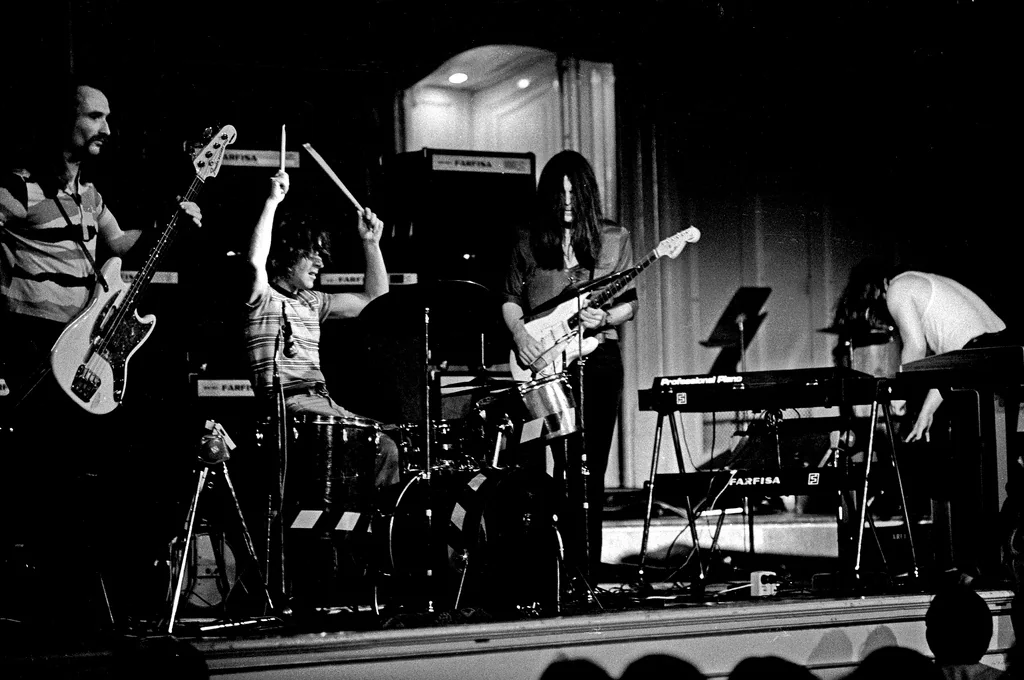
Tago Mago stretches disciplined group improvisation through Holger Czukay’s editing until rhythm, noise and studio space become equal parts of the composition.
The Record in Context
Tago Mago does not reveal its full scale immediately. Paperhouse begins with a recognisable guitar figure, soft keyboard colour and Damo Suzuki’s low vocal. The performance gradually gathers pressure before Jaki Liebezeit’s drums lock it into forward motion. Mushroom and Oh Yeah continue that balance between song and trance. Only after the listener has crossed the first side does the album open into Halleluhwah, Aumgn and Peking O—three pieces that make normal distinctions between jam, edit, song and sound collage increasingly difficult to maintain.
This was Can’s first full studio album with Suzuki after his appearance on parts of Soundtracks. The lineup was Holger Czukay on bass, Michael Karoli on guitar, Liebezeit on drums, Irmin Schmidt on keyboards and Suzuki on vocals. Spoon Records credits the band collectively as writers and producers, with Czukay responsible for engineering and editing. Those credits describe the music accurately: collective performance shaped afterward by a musician who treated tape as a compositional tool.
Historical Context
Can had formed from an unusual mixture of backgrounds. Schmidt and Czukay had studied with Karlheinz Stockhausen; Liebezeit came from free jazz; Karoli brought a younger guitarist’s relationship to rock; and Suzuki developed an improvisational vocal language that could function as phrase, texture or rhythm. The group’s early work also included film music, an activity that encouraged flexible forms and quick responses to atmosphere.
The album was recorded in 1971 at Inner Space, then located at Schloss Nörvenich near Cologne. The space was less a conventional commercial studio than a place where the group could play for long periods and preserve performances on tape. Later in 1971 Can established the better-known Inner Space studio in a former cinema at Weilerswist, but Tago Mago belongs to the earlier location.
The double-album format allowed Can to present both its concentrated rhythmic music and its most abstract studio constructions without forcing one to explain the other. Spoon’s official history identifies 1970–72 as the band’s breakthrough period, with Tago Mago attracting critical attention in Germany, Britain and France.
Sound and Production
Liebezeit’s drumming gives the album its centre. His repeated patterns are exact without sounding metronomic; tiny changes in emphasis allow the group to move while the pulse remains stable. Czukay’s bass often reduces harmony to a physical cycle. Karoli can sit inside that cycle with clipped figures or cut across it with bright, unstable guitar. Schmidt’s keyboards move between organ colour, electronic tone and disruption.
Halleluhwah extends one groove for more than eighteen minutes. Its duration is not an invitation to solo continuously. Instead, voices, violin, guitar and electronic textures enter and leave around a drum-and-bass foundation that keeps redefining the listener’s sense of elapsed time. Repetition becomes active: the ear begins noticing placement, timbre and minute deviations that a faster harmonic sequence would conceal.
Aumgn and Peking O move further from rock ensemble behaviour. Aumgn is built around Irmin Schmidt’s vocal and studio manipulation, developing as a dark electroacoustic space before percussion brings it toward a violent close. Peking O breaks voice, rhythm and electronic sound into abrupt episodes. Czukay’s editing is crucial across the album, but it rarely calls attention to a clean boundary. The cuts preserve the sensation of an event unfolding even when the final shape was created from longer performance material.
Key Tracks
- PaperhouseA gradual transformation from spacious song to rhythmic surge, introducing the band’s ability to change state without a conventional break.
- MushroomCompact and unsettling, with Liebezeit’s drum figure holding together guitar, keyboard and Suzuki’s sharply shaped vocal.
- Oh YeahBackward vocal, organ and circular rhythm produce a track that feels both direct and slightly displaced.
- HalleluhwahAn eighteen-minute study in repetition where every entrance gains force from the stability underneath it.
- AumgnA studio construction that brings voice, tape, electronics and percussion into the album’s most abstract space.
Artwork and Visual Identity
The original German sleeve used a graphic treatment centred on the band name and the album’s palindrome-like title. Later territories received different designs; the 1971 United Kingdom edition used an altered artwork that Mute restored for its fortieth-anniversary release.
That variation is appropriate for a record resistant to one fixed reading. Unlike a sleeve built around a band portrait, Tago Mago’s identity travelled through typography and abstract graphic form. It gave listeners no scene or character with which to explain the sounds inside.
Legacy and Influence
Can’s influence is often mapped through post-punk, experimental rock, electronic music and artists who build songs from loops. Tago Mago is central to that history because its rhythm is neither a backing track nor a decorative groove. It is the environment in which the other instruments make decisions.
The album also offers a model for editing improvisation without neutralising it. Czukay’s tape work finds repeatable structures while retaining roughness, spill and surprise. Producers and bands working with long performances could hear how the studio might compress time without making the result feel assembled from lifeless pieces.
What Came Next
Can followed Tago Mago with Ege Bamyasi in 1972, a shorter and often tighter record that included Spoon, the band’s first German chart success. Future Days in 1973 moved toward a lighter, more fluid sound and became the final Can studio album with Suzuki.
The group continued without a permanent lead vocalist on Soon Over Babaluma, with Michael Karoli and Irmin Schmidt sharing vocals. Later records brought further personnel changes and more direct contact with funk and dance rhythms. The catalogue kept moving, but the balance of discipline and risk on Tago Mago remained a defining reference.
A Collective Without Conventional Hierarchy
Can’s method depended on the musicians behaving less like a singer with backing band than a responsive system. Jaki Liebezeit’s drumming establishes pulse with extraordinary discipline, but it is never a simple click track. Holger Czukay’s bass and tape thinking, Michael Karoli’s guitar, Irmin Schmidt’s keyboards and Damo Suzuki’s voice continually change their relationship to that pulse. No instrument permanently owns the foreground.
Suzuki’s language is especially important. Words arrive as English fragments, invented syllables, cries and rhythmic shapes. Meaning is produced through tone and placement as much as literal statement. This lets the voice participate in improvisation without forcing every passage back into narrative song form. The result can feel spontaneous and exact at once: a group listening closely enough to make collective decisions sound inevitable.
Improvisation Becomes Raw Material
Tago Mago was recorded at Schloss Nörvenich, the castle where the group had established its Inner Space studio. Long performances supplied material that Czukay could edit, combine and reshape on tape. This was not merely shortening a jam after the fact. Editing determined form, allowing the record to preserve the energy of discovery while removing the obligation to present events exactly as they occurred.
That method places Can between rock performance, musique concrète and emerging ideas about sampling. Repetition is captured, inspected and reorganised. A groove may feel endless even when its recorded duration is the result of selection. The studio does not polish improvisation into conventional song; it finds the hidden composition inside hours of group activity.
From “Paperhouse” to the Edge of Form
The first half of the album offers recognisable entrances. “Paperhouse” grows from suspended guitar atmosphere into momentum; “Mushroom” compresses dread into a stark song; “Halleluhwah” sustains one of the defining grooves of experimental rock while detail changes around it. These tracks teach the listener how Can’s time works before the second half removes more of the familiar supports.
“Aumgn” and “Peking O” are not eccentric appendices to an otherwise accessible record. They test how far the group’s method can travel when groove, stable pitch and conventional vocal identity begin to dissolve. The pieces divide listeners because they expose process rather than hiding it. By the time “Bring Me Coffee or Tea” restores a more legible song shape, the idea of what counts as structure has been stretched.
A Different Model of Progressive Music
British progressive rock often announced development through sectional composition, virtuoso display and symphonic reference. Can reached complexity through duration, editing and small changes inside repetition. The players were highly skilled, but the music rarely asks the listener to admire skill as spectacle. It asks for attention to systems: when a pattern shifts, who caused it, and how did the entire group understand the change?
This model travelled widely. Post-punk inherited the disciplined bass-and-drum foundation, electronic musicians recognised a pre-digital form of loop construction, and experimental rock absorbed the idea that the studio edit could be as creative as the original performance. Tago Mago is difficult not because it lacks form. It presents form as something discovered through playing and reconstructed through listening.
Related listening
Hear the RetroForge Echo
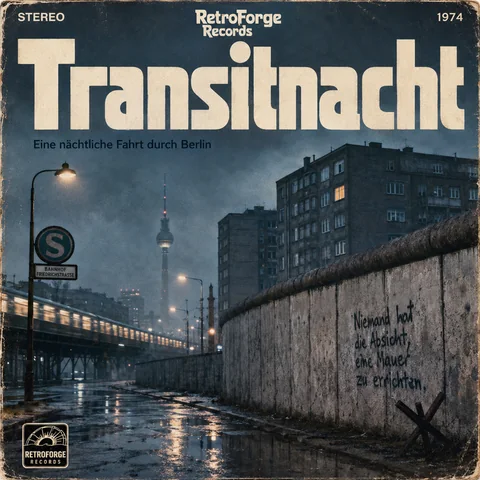
Transitnacht / Westlicht
For a motorik pulse and German experimental vocabulary reduced to focused instrumental movement.
Open liner notes →
The Map Refuses the Territory
Its cyclical structures and refusal of conventional resolution connect with the more exploratory side of Can.
Open liner notes →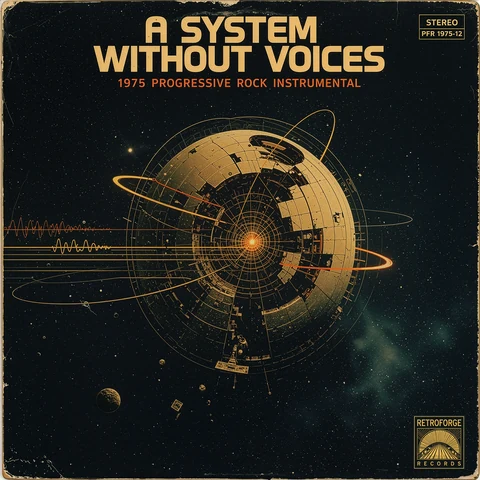
A System Without Voices
A fully instrumental album where repetition, process and shifting density carry the narrative.
Open liner notes →Research notes
Sources and Further Reading
- Tago Mago: Recording, Track and Personnel Credits — Spoon Records / Official Can Archive
- Can History — Spoon Records / Official Can Archive
- Tago Mago (40th Anniversary Edition) — Mute Records (2011)
- The Lost Tapes by Can: An Oral History — The Quietus (13 June 2012)