Studio Expansion
Tape, orchestration and editing enlarge what a rock arrangement can contain.

Progressive Rock Family
The late-1960s threshold where psychedelia, orchestral pop and studio experimentation began turning into progressive rock.
Before the Name
Proto-prog is a retrospective label. The musicians it describes were not trying to satisfy a progressive-rock rulebook because that rulebook did not yet exist. Instead, they were extending psychedelic rock, baroque pop, rhythm and blues, folk and classical borrowing until ordinary single-length structures could no longer contain the result.
Listen for early signs of the later language: organ and orchestral instruments acting as structural voices, linked songs, recurring themes, extended instrumental passages and albums sequenced as unified experiences. Production changed as well. Tape effects, stereo movement and dense arrangement made the studio an active compositional space rather than a neutral room.
Not every ambitious 1967 or 1968 record is proto-prog, and not every artist associated with the term became a progressive band. The label is most useful as a bridge. It explains how the psychedelic underground, concept album and classically coloured rock arrangement prepared listeners for the longer, more formally developed music that followed around the end of the decade.
What You’ll Hear
How It Works
Proto-prog identifies late-sixties rock that developed many progressive habits before progressive rock stabilised as a recognised field. Psychedelic studio work, extended improvisation, classical reference, unusual metres and album continuity appeared in different combinations rather than as one settled sound.
The value of the term is historical, not hierarchical. These records are not unfinished versions of seventies prog. Hear them as musicians testing the limits of contemporary rock technology and form, often without a later genre map telling them what the result should become.
Useful distinction: Boundary line: proto-prog is best used for music made before the mature genre, not as a vague synonym for anything ambitious or psychedelic.
Tape, orchestration and editing enlarge what a rock arrangement can contain.
Songs begin to sustain development beyond the single format.
Jazz, classical music and folk enter rock before firm subgenres exist.
Different experiments point forward without sounding identical.
Historical Development
Proto-prog describes the late-1960s recordings in which progressive rock's later vocabulary was still forming. Psychedelia loosened the ordinary song, orchestral pop expanded colour, concept albums encouraged continuity and improving studio technology made abrupt scale changes possible.
The Moody Blues joined rock band and orchestra across Days of Future Passed. Procol Harum made Hammond organ and Bach-derived movement central to heavy, melancholy songs. The Nice brought classical adaptation onto the stage, while the Beatles, Deep Purple and Family demonstrated different ways of stretching album form.
The label is retrospective: these musicians were not announcing a finished genre. That is precisely why the records matter. They preserve a moment when suite, concept, improvisation, electronics and symphonic arrangement had not yet settled into progressive-rock convention.
The Real-World Foundations
Not a ranking: six useful doors into the style.
Orchestral interludes and recurring time-of-day ideas make the album feel continuous.
The side-long In Held 'Twas in I anticipates progressive scale without losing psychedelic weight.
Classical adaptation and organ-led performance point directly toward keyboard-centred prog.
Unusual instrumentation, abrupt transitions and characterful vocals create a compact experiment.
The second-side medley demonstrates how fragments can become a persuasive album-length arc.
Rock band and orchestra meet as distinct forces rather than simple background and foreground.
Closest RetroForge Route
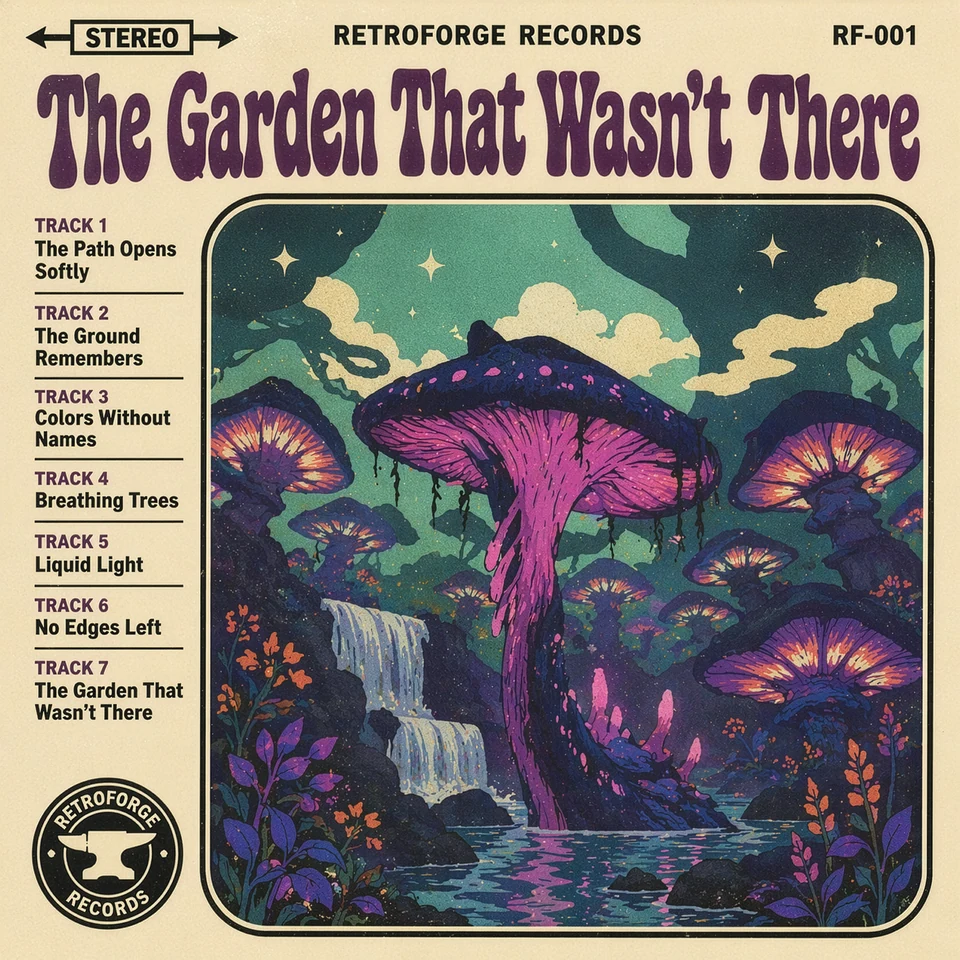
1967 · Psychedelic Rock
Not presented as pure proto-prog, but its 1967 vocabulary shows the psychedelic starting point from which progressive form could emerge.
Open the liner notes →Research Trail
Questions from the Record Room
No. It is a later listening category for records that developed techniques soon associated with progressive rock.
No. The useful distinction is a sustained move toward extended form, thematic continuity or unusually ambitious arrangement.
There is no exact border, but King Crimson's 1969 debut is often treated as the point where the emerging language became unmistakable.
Related Styles
Deeper Discovery
Start with The River Beneath the World as a RetroForge companion, then return through Progressive Rock to place it inside the wider family.
Curated paths into the people, records, events and ideas that give this subject its wider musical context.