Repetition Changes the Room
The riff may stay fixed while echo, organ and dynamics alter everything surrounding it.

RetroForge Genre Guide
The blues pulled into heavier weather: fuzz, tremolo, organ haze and grooves that seem to sink into the floor.
The Sound
Psychedelic blues keeps the physical grammar of the blues—repetition, bent notes, call and response, a rhythm section that feels lived in—then changes the space around it. Tape echo turns a guitar phrase into a trail. Organ hangs above the groove like heat. A familiar progression can become uncanny simply by refusing to resolve when expected.
Acid rock pushes that transformation toward weight and volume. Fuzz becomes a body rather than a decoration; instrumental sections expand; the rhythm may drag behind the beat until every note feels pulled through mud. The two terms overlap without being identical. Psychedelic blues remains visibly rooted in blues phrasing, while acid rock can move further into riff, noise and open-ended improvisation.
RetroForge approaches this corner of 1968 through environment. One record is dry, dusty and private-press in character; another lives among black water, cypress roots and slow nocturnal pressure. Neither is polished into modern symmetry. Loose timing, tape wear and small imperfections help the groove breathe.
These pages describe contemporary recordings in an imagined late-1960s vocabulary. The goal is not to reproduce one historical band, but to understand why a simple riff can become a landscape when tone, repetition and space are allowed to carry meaning.
What You’ll Hear
Three Listening Clues
The riff may stay fixed while echo, organ and dynamics alter everything surrounding it.
Slight drag and human timing create weight that a perfectly aligned rhythm would remove.
Gaps between phrases let insects, tape noise and imagined weather enter the recording.
Dust, water, roots, heat and smoke keep altered perception tied to a tangible world.
Start with the bass and drums. They tell you whether the song is blues transformed by atmosphere or a heavier acid-rock piece using blues as raw material. Then follow the guitar’s relationship with the room: is the echo repeating a phrase, smearing it or answering it? The production is not a layer added afterward; it is one of the players.
Useful distinction: not every psychedelic guitar solo is acid rock. Here the altered tone, expanded structure and bodily weight affect the entire arrangement.
Historical Development
Psychedelic blues and acid rock meet where the blues stops behaving like a fixed twelve-bar form and becomes a launch platform. In the middle of the 1960s, British groups such as Cream and the Jimi Hendrix Experience stretched electric-blues phrasing through feedback, wah-wah, studio manipulation and long improvisation. In the United States, ballroom bands and louder garage groups arrived at a related language through sustained volume and communal live performance.
The two terms overlap without being identical. Psychedelic blues keeps the pull of blues rhythm, vocal inflection and call-and-response close to the surface. Acid rock usually pushes further toward distortion, repetition and open-ended jams, sometimes reducing the original blues framework to a riff or a tonal centre. A record can sit firmly in one camp or move between both within a single side.
What joins the styles is transformation rather than decoration. A bent guitar note can turn into a feedback cloud; a familiar shuffle can lose its bar lines; a compact song can open into an instrumental argument. The strongest records retain physical groove while making scale, texture and time feel unstable.
The Real-World Foundations
Not a ranking: six useful doors into the style.
Blues language, feedback and studio invention become one new electric vocabulary.
Heavy blues improvisers compress colour, riff and pop form into concise psychedelic songs.
Organ, modal repetition and blues tension give Los Angeles psychedelia a darker centre.
Janis Joplin's blues authority meets the raw pressure of San Francisco acid rock.
Extreme volume and overloaded blues riffs point directly toward heavy rock.
A later British route turns blues repetition into fractured, psychologically charged heavy rock.
Start Here
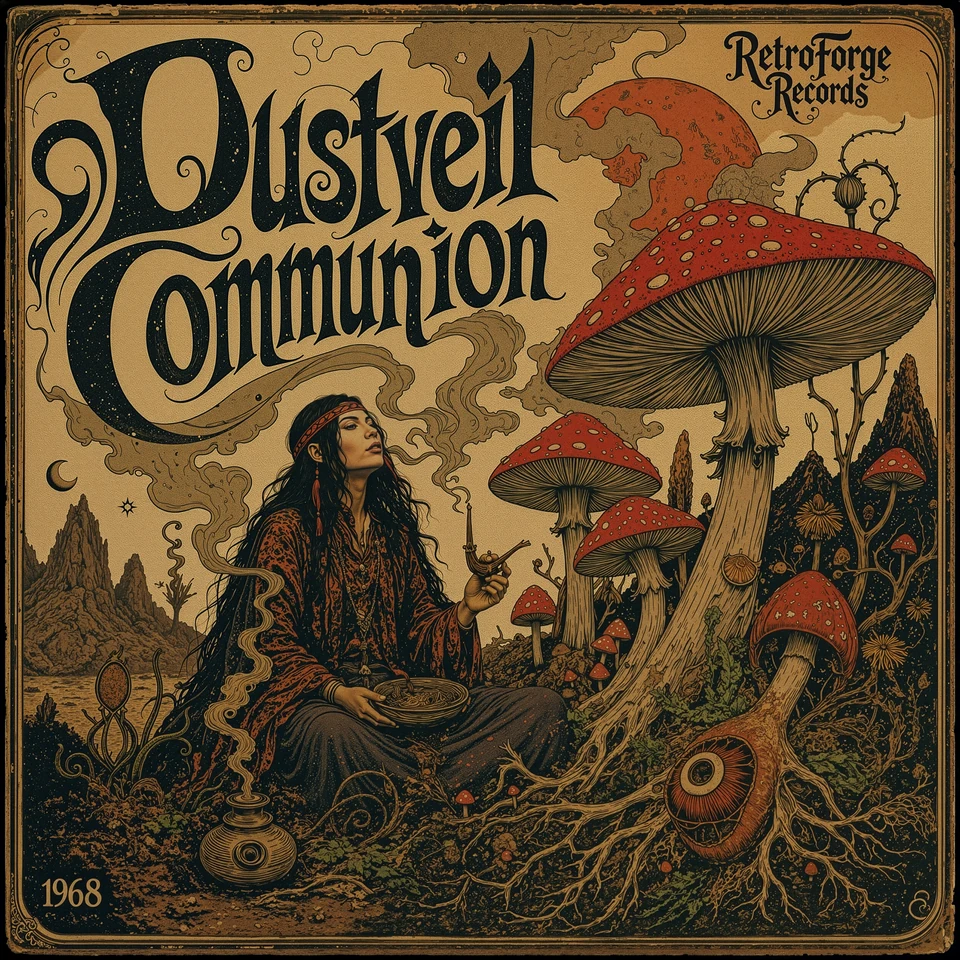
1968 · Psychedelic Blues · Acid Rock
Fuzz guitar, organ haze, loose percussion and dusty private-press atmosphere make the clearest bridge between both sides of this guide.
Open the liner notes →Two Environments
Small by design: these are the exact catalogue matches.
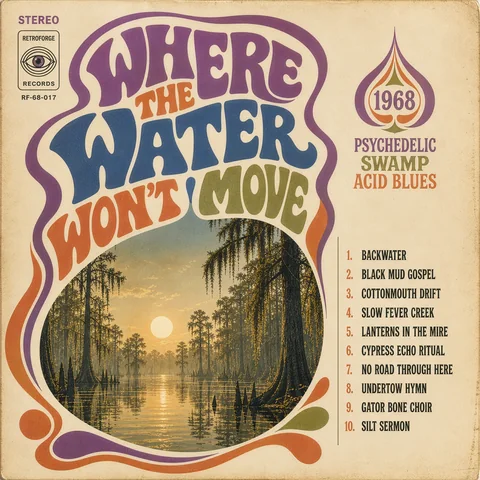
For slow pull, tremolo guitar, black-water imagery and humid analogue decay.
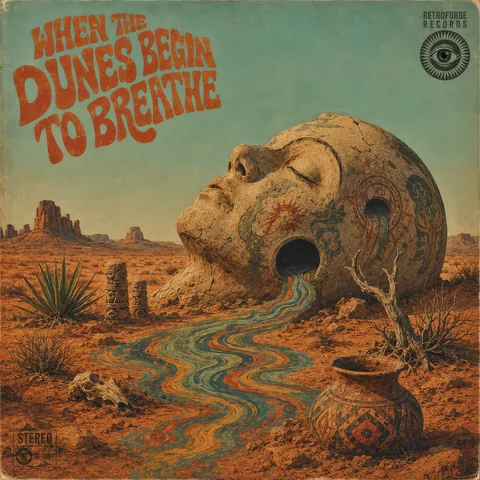
An adjacent, heavier route where acid-blues guitar meets desert-scale psychedelic weight.
Research Trail
Questions from the Record Room
No. They overlap heavily, but psychedelic blues usually keeps blues phrasing and groove clearer while acid rock emphasises volume, distortion and extended improvisation.
No. Many players retain blues tone and phrasing while abandoning the standard harmonic cycle entirely.
Follow the rhythm section. It reveals whether a track is still anchored in blues movement or drifting into the freer, heavier space associated with acid rock.
Go Deeper
Keep Exploring
Deeper Discovery
Start with The Purple Sun Is Watching as a RetroForge companion, then return through Psychedelic Rock to place it inside the wider family.
Curated paths into the people, records, events and ideas that give this subject its wider musical context.