
History Archive · 1976
Punk Versus Prog: What Actually Happened?
The familiar story says punk arrived to destroy prog. The real change involved class, cost, scale, media and a demand for participation as much as song length.
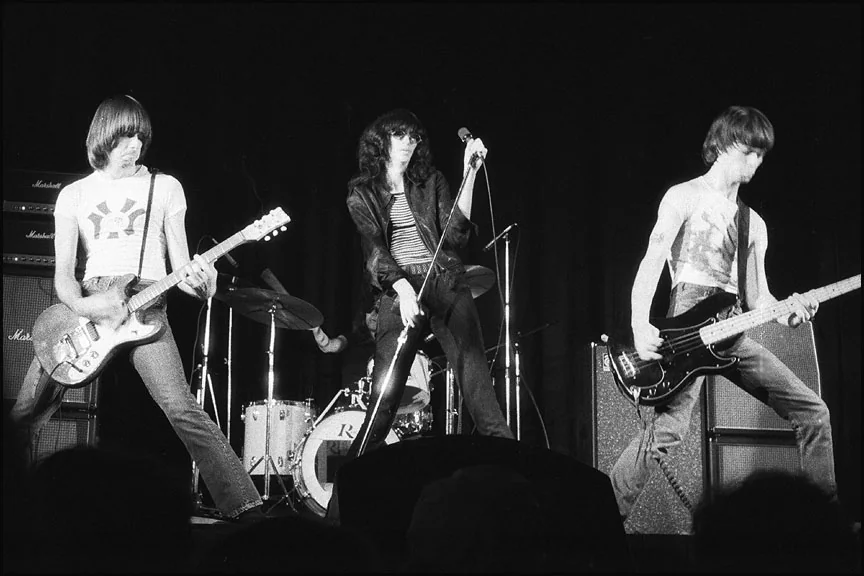
What Happened
The Ramones released a debut built from short songs and minimal studio ornament. In Britain, the Sex Pistols issued “Anarchy in the U.K.” while the Damned released “New Rose”. Small venues, independent shops, fanzines and clothing became parts of a scene that distrusted the distance between superstar bands and audiences.
Progressive rock did not stop. Genesis released A Trick of the Tail, Rush released 2112 and established groups continued touring large venues. The cultural centre, however, was moving.
What the Music Sounded Like
Punk favoured compressed duration, downstrokes, direct vocals and rhythm sections that moved without decorative interruption. Progressive rock continued using long development, keyboards and instrumental contrast. Post-punk soon proved that the two attitudes could overlap.
How It Was Made
Affordable recording, independent labels and self-produced print culture reduced the distance between idea and release. The rough surface was often a choice about urgency, not evidence that nobody cared about sound.
The Wider Musical Context
Reggae, dub, glam and pub rock were equally important to punk’s formation. Electronic experiment and art-school practice entered the scene almost immediately. The opposition to prog was therefore partly rhetoric used to clear cultural space.
What Followed
Post-punk groups adopted synthesisers, studio manipulation, unusual metre and extended form while refusing progressive rock’s presentation. Neo-prog later reassembled parts of the older language for a new decade.
The War Was Easier to Print Than to Hear
The familiar story says punk arrived, declared progressive rock obsolete and cleared the stage in a single violent gesture. It makes a good headline and a poor history. In 1976, punk was still a developing network of small venues, independent managers, clothes shops, fanzines and confrontational performances. Progressive rock was not one sound either. It included stadium acts, Canterbury improvisers, art-school experimenters, electronic groups and younger bands such as Rush that were building new audiences rather than surrendering old ones.
The opposition became useful because it compressed real frustrations into a simple picture. Punk attacked ticket prices, distance from the audience, technical self-importance and a record business that seemed to reward established names automatically. Prog supplied vivid targets: long solos, elaborate sleeves and large stages. Yet many punk musicians were closer to art rock than their public rhetoric admitted, and many progressive musicians understood the need for compression, sharper songwriting and a reset in presentation.
1976 Changed the Scale of Entry
The Sex Pistols, the Clash, the Damned and their peers made starting a band appear possible again without years of preparation or expensive equipment. The 100 Club Punk Special in September placed several emerging groups in one concentrated event; the Pistols’ “Anarchy in the U.K.” followed in November, and their television encounter with Bill Grundy in December pushed the scene into national controversy. Punk’s speed was social as much as musical. Rehearsal rooms, photocopiers and small labels shortened the distance between having an idea and putting it in public.
That urgency answered a Britain marked by inflation, unemployment and institutional distrust. It also changed how audiences read a performance. Imperfection could signal commitment rather than failure. A short set in a cramped room might feel more contemporary than a technically immaculate arena show. Punk did not invent independence, but it made the politics of access visible and gave the next generation a practical method for acting on them.
Progressive Music Did Not Stop Moving
The same year produced Genesis’s A Trick of the Tail, Camel’s Moonmadness, Rush’s 2112 and David Bowie’s Station to Station. These records do not describe one unified genre, but they disprove the idea of a scene waiting passively for removal. Genesis rebuilt itself after Peter Gabriel’s departure; Rush joined a side-long conceptual suite to concise hard-rock songs; Camel pursued melodic flow rather than theatrical excess. Progressive ambition was already changing shape from within.
What weakened was not musical complexity but the assumption that complexity alone guaranteed cultural authority. Some established acts became defensive or overextended. Others absorbed shorter forms, harder surfaces, new rhythms and more economical production. The coming post-punk generation would make the overlap clearer: musicians inspired by punk’s permission would use synthesizers, dub space, unusual meters and studio construction with an experimental appetite prog listeners already recognised.
The Useful Legacy Is Friction
Punk versus prog remains valuable when treated as an argument rather than a knockout. Punk asked who could participate, how quickly culture could move and whether expertise had become a gate. Progressive rock asked how far a composition, an album or a performing ensemble could expand. The strongest later music often kept both questions alive. Wire, Magazine, Public Image Ltd and Talking Heads did not abandon experimentation; they rebuilt it with different economies and gestures.
There was hostility, generational theatre and genuine rejection. There was also continuity hidden beneath new clothes. The lesson of 1976 is not that one genre killed another. It is that rock lost the right to imagine itself as a single forward-moving tradition. From this point, innovation could mean radical reduction, technological expansion, dance-floor rhythm, virtuosity or deliberate amateurism—and those paths would keep crossing.
Essential Listening
- Ramones — Blitzkrieg Bop
- The Damned — New Rose
- Sex Pistols — Anarchy in the U.K.
- Rush — 2112
- Genesis — Dance on a Volcano
Related Genres and Guides
Related RetroForge listening
Hear the Archive Connection
Research notes
Sources and Further Reading
- Punk at 50 — Rock & Roll Hall of Fame
- Punk Rock in the 1970s — Rock & Roll Hall of Fame
- Anarchy in the UK 7-inch (1976) — Sex Pistols
- How London shaped The Clash — London Museum
- From Shakespeare to rock music: the history of the word punk — British Library
- 2112 — Rush