
RetroForge Genre Guide
Proto-Doom
Before doom metal had a name, heavy blues and psychedelia were already slowing down, lowering the lights and discovering how much fear could live inside one riff.
Weight Before the Name
Proto-doom is a listening route through records made before doom metal became a recognised genre. The music still carries the fingerprints of blues rock, acid rock and the late-1960s underground, but its centre of gravity has shifted. Riffs become slower and more repetitive. Silence becomes part of the threat. Lyrics and atmosphere turn toward ruin, ritual, war, paranoia and forces larger than the people describing them.
Black Sabbath are the decisive reference point, but the route does not begin or end with one group. Blue Cheer supplied overwhelming volume; Iron Butterfly found hypnotic weight; Coven brought explicitly occult theatre; Pentagram preserved a raw, riff-led vocabulary outside the mainstream. These records do not all sound alike, and not every one is doom. Together they reveal the ingredients gathering before the category hardened.
RetroForge approaches proto-doom from the progressive and psychedelic side. Long structures, organ, analogue haze and narrative atmosphere remain important, but they are placed under pressure by low guitar, patient tempo and the sense that the music is moving toward something it cannot avoid.
What You’ll Hear
Inside the Sound
How to Listen
Follow the Arrangement
Proto-doom works through proportion. A riff feels heavier when the arrangement refuses to hurry away from it. Drums may leave air around the kick and snare, while bass doubles the guitar closely enough to make the whole band seem like one moving object.
The best examples still contain contrast: acoustic introductions, psychedelic drift, blues-based solos or organ passages that make the return of the riff feel larger. That mixture separates the formative language from later doom styles that begin with an already established metal vocabulary.
RetroForge approach: the archive year describes a musical vocabulary, not a claim that these are historical recordings.
Historical Development
How the Language Took Shape
The late 1960s made extreme volume and extended improvisation normal within parts of psychedelic rock. Blue Cheer turned that volume into physical blur, while darker blues-based bands discovered that slowing the riff could create more force than simply playing faster.
Black Sabbath’s first recordings in 1970 brought those ingredients into unusually concentrated focus: low guitar tuning, tritone tension, stark repetition and subjects shaped by fear and social collapse. The result did not instantly create a tidy genre, but it established a grammar that later musicians could recognise and expand.
During the following decade that grammar survived in heavy underground rock before doom metal became a clearer identity in the 1980s. Proto-doom is therefore best understood as ancestry: a set of audible decisions, not a retrospective label pasted onto every slow 1970s band.
The Real-World Foundations
Six Essential Records
Not a ranking: six useful entrances into the sound.
The clearest early convergence of blues, low riffing, dread and negative space.
Continue exploring →Black SabbathParanoid · 1970Compact songs prove that heaviness can carry memorable structure and social unease.
Continue exploring →Blue CheerVincebus Eruptum · 1968Overload and blues reduction pushed until the recording itself seems strained.
Continue exploring →Iron ButterflyIn-A-Gadda-Da-Vida · 1968Organ, repetition and side-long scale on the border of heavy psychedelia.
Continue exploring →CovenWitchcraft Destroys Minds & Reaps Souls · 1969Occult theatre placed inside heavy psychedelic songcraft.
Continue exploring →PentagramFirst Daze Here · early recordingsRaw 1970s material that later listeners could hear as a direct doom lineage.
Continue exploring →Start Here
First Record on the Turntable
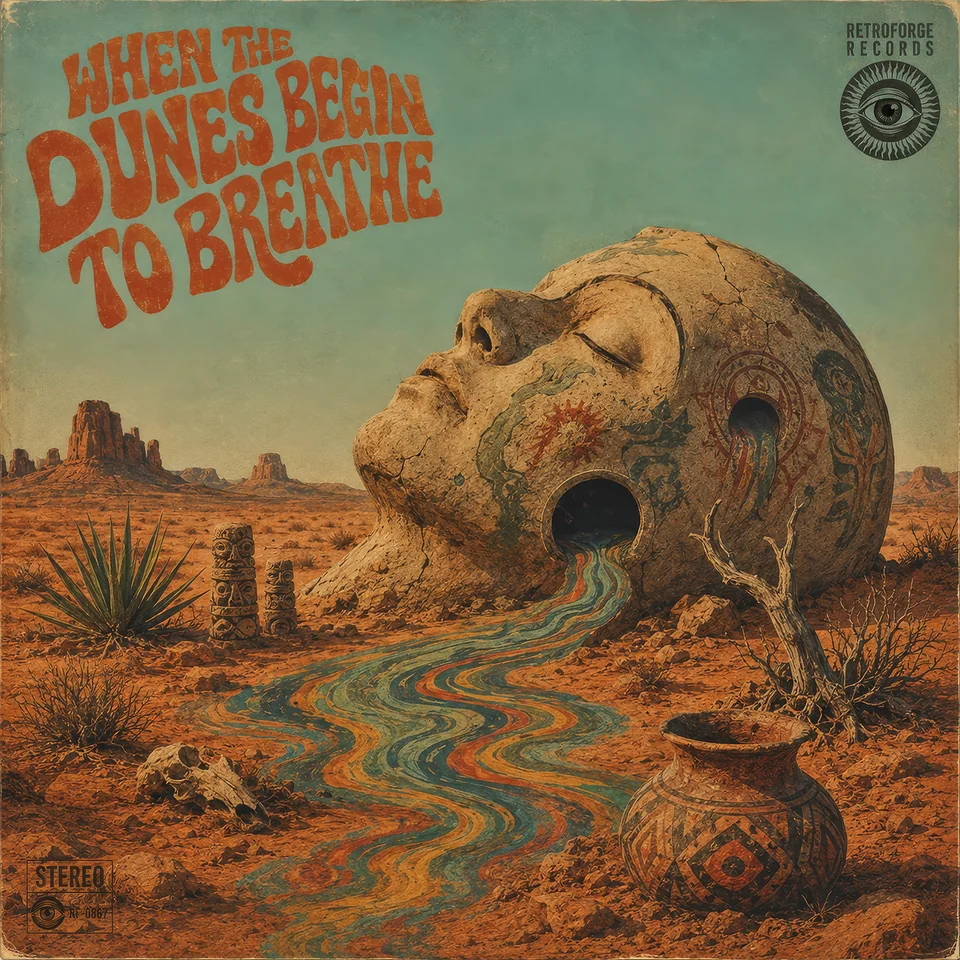
1969 · Heavy Psychedelic Rock
When the Dunes Begin to Breathe
Low riffs, desert space and patient weight gathering across a complete journey.
Open the liner notes →RetroForge Connections
Three More Routes
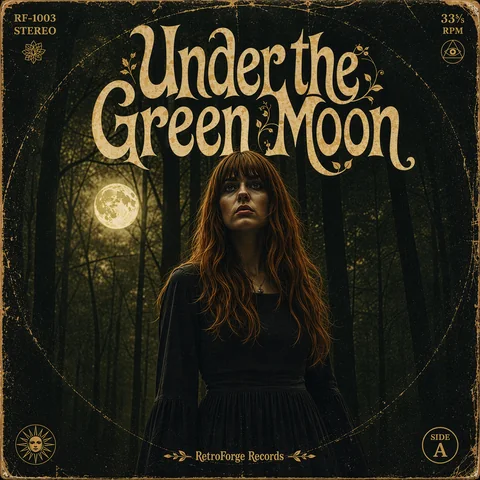
Under the Green Moon
Acoustic ritual and forest atmosphere move through cyclical, nocturnal arrangements.
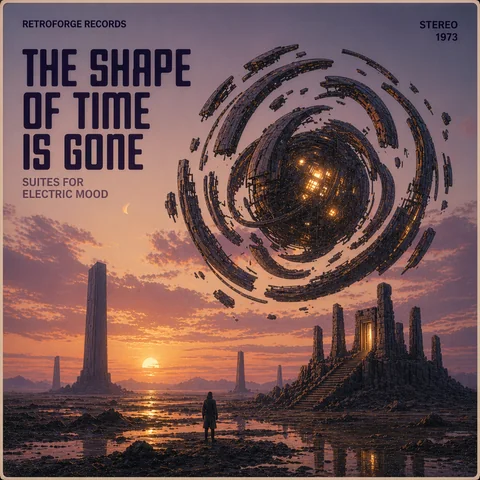
The Shape of Time Is Gone
Circular structures and unstable time rendered through analogue tension.
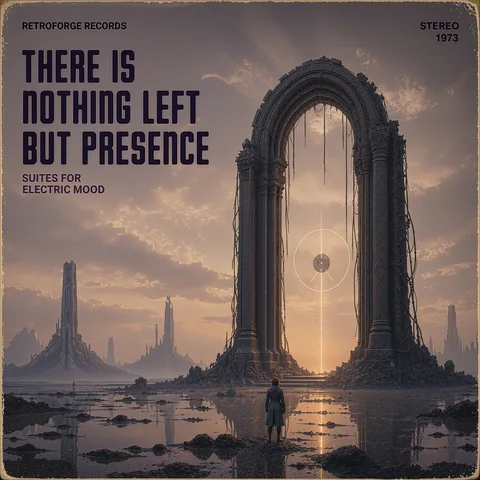
There Is Nothing Left But Presence
Luminous ruins, suspended structures and a world reduced to its final remaining signal.
Sources and Context
Continue the Research
Research Trail
Sources and Further Reading
Keep Exploring
Related Routes
Questions Answered
Frequently Asked Questions
Is proto-doom the same as doom metal?
No. Proto-doom describes formative heavy rock made before doom metal became a stable genre identity.
Did Black Sabbath invent doom?
Black Sabbath supplied the most decisive early grammar, but that grammar drew from blues, heavy psychedelia and other late-1960s experiments.
Does proto-doom have to be slow?
Not every passage is slow. The important quality is how riffs, repetition and atmosphere create weight.
Which RetroForge album is the best starting point?
When the Dunes Begin to Breathe is the clearest route into heavy, patient and desolate RetroForge material.
Deeper Discovery
Continue Through the Archive
Start with The Purple Sun Is Watching as a RetroForge companion, then return through Psychedelic Rock to place it inside the wider family.
More RetroForge Records
Classic Album Comparisons
Continue through the RetroForge knowledge graph
Curated paths into the people, records, events and ideas that give this subject its wider musical context.
Artists
- Iron Butterfly
- The Pretty Things