

Overview
The Pretty Things formed in 1963 around singer Phil May and guitarist Dick Taylor, who had played in an early Rolling Stones lineup. Their career did not follow a single style: the abrasive R&B of “Rosalyn” and “Don't Bring Me Down” led to original beat material, psychedelic studio work, hard rock and late acoustic recordings. S.F. Sorrow is widely treated as an early rock opera, while Parachute showed how far their writing and ensemble sound had developed beyond their first singles.
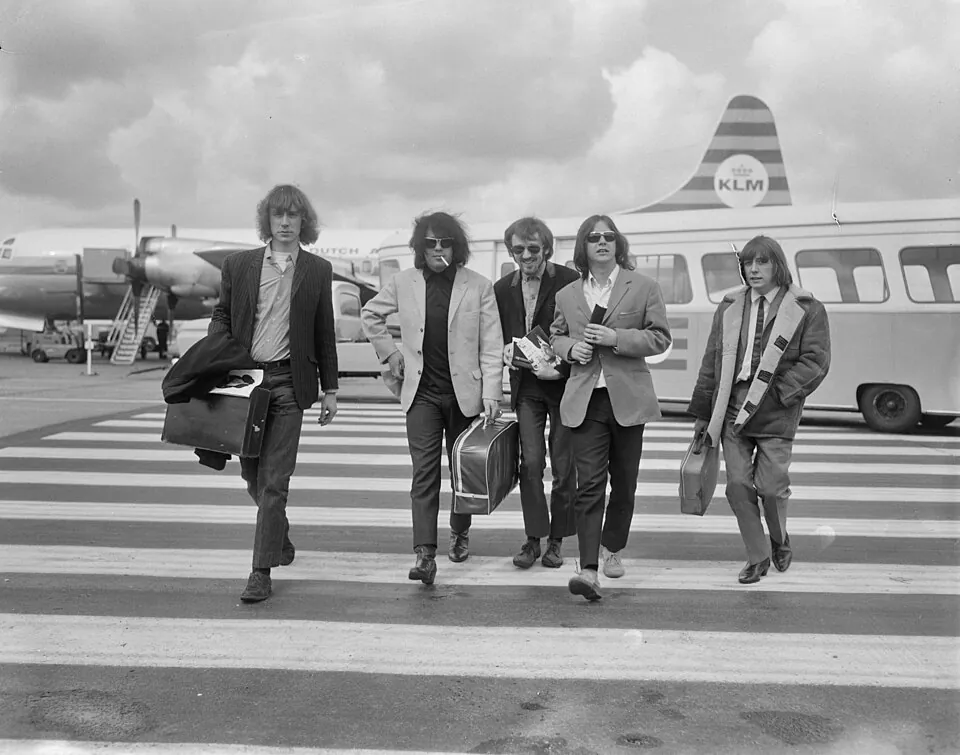
Formation & History
May and Taylor met at Sidcup Art College and assembled the early group with rhythm guitarist Brian Pendleton, bassist John Stax and drummer Pete Kitley; Viv Andrews and then Viv Prince followed behind the kit. Signed to Fontana in 1964, they placed “Don't Bring Me Down” at No. 10 and “Honey I Need” at No. 13 in the UK, while their self-titled debut reached No. 6. Get the Picture? broadened the amount of original material, but sustained chart success soon receded.
Emotions paired the band with producer Steve Rowland and orchestral arrangements that did not reflect all of the group's own preferences. A move to Columbia opened a more experimental phase: “Defecting Grey” anticipated S.F. Sorrow, recorded over many months at Abbey Road with producer Norman Smith. Taylor left after its delayed and poorly promoted release. The revised lineup made Parachute, which reached No. 43 in Britain, before further changes carried the name through Warner Bros. and Led Zeppelin's Swan Song label. May and Taylor later reunited, revisited S.F. Sorrow with David Gilmour and Arthur Brown in 1998, and played a final full electric concert in 2018. May died in 2020 after the group had completed the acoustic album Bare as Bone, Bright as Blood.
Sound & Style
The early records turn Bo Diddley and Chuck Berry-derived R&B into clipped guitar attack, pounding drums and May's coarse, urgent vocal delivery. By 1966–67, feedback, abrupt edits, acoustic colour and stranger song forms were entering the writing. That change is audible between the direct attack of Get the Picture?, the imposed brass and strings on Emotions, and the internally designed studio world of S.F. Sorrow.
On S.F. Sorrow, Mellotron, sitar, percussion, tape effects and stacked voices support Phil May's narrative rather than serving as isolated psychedelic decoration. Parachute exchanges the life story for two loosely connected album sides: compact opening pieces flow into one another, close harmonies soften the guitar weight, and pastoral passages sit beside the darker “Cries from the Midnight Circus” and “Sickle Clowns.” Later lineups moved toward harder guitar rock, but the tension between May's voice, Taylor's economical lead playing and the band's appetite for abrupt contrast remained recognizable.
Essential Albums
S.F. Sorrow
1968Phil May's story follows Sebastian F. Sorrow from birth and factory work through war, bereavement, disillusion and old age. Norman Smith's production binds the narrative to the music: the hard guitar entry of “S.F. Sorrow Is Born,” the marching pulse of “Private Sorrow,” the Mellotron and percussion of “Baron Saturday,” and the exposed closing voice of “Loneliest Person” form distinct scenes. Released in Britain in December 1968, the album preceded Tommy; describing it as an early rock opera is more useful than treating the disputed “first” label as its only achievement.
Key tracks: S.F. Sorrow Is Born · Baron Saturday · Loneliest Person
Open album guide → View on Amazon →Parachute
1970Recorded at Abbey Road after Dick Taylor's departure, Parachute is a different kind of concept album. Its first side moves through linked miniatures about town and country before “Cries from the Midnight Circus” breaks the surface; the second side balances the acoustic “Grass” with Wally Waller's heavier “Sickle Clowns” and the closing title track. Three-part harmonies, short reprises and Norman Smith's production give the record continuity without forcing every song into a single plot.
Key tracks: Scene One: The Good Mr. Square/She Was Tall, She Was High · Parachute · Grass
Open album guide → View on Amazon →Get the Picture?
1965The second album keeps the physical force of the debut but gives May and Taylor's writing more room. “You Don't Believe Me” and the title track are compact, riff-driven originals, while “You'll Never Do It Baby” pushes a rhythm-and-blues cover toward the group's abrasive stage sound. It captures the 1965 lineup before psychedelia and elaborate production changed the scale of their records.
Key tracks: You Don't Believe Me · Get the Picture · You'll Never Do It Baby
Open album guide → View on Amazon →Affiliate note: Amazon links on this page may earn RetroForge Records a small commission, at no extra cost to you.
Deeper Cuts
Emotions
1967Emotions sits awkwardly but revealingly between the beat-group years and the band's psychedelic reinvention. Producer Steve Rowland and arranger Reg Tilsley added brass and strings, sometimes over tracks the group had already shaped. “Death of a Socialite,” “The Sun” and “Growing in My Mind” nevertheless show May and Taylor moving toward more observational lyrics, unusual harmony and studio-conscious songwriting.
Open album guide → View on Amazon →Freeway Madness
1972After the first version of the band fragmented, Freeway Madness reopened the story on Warner Bros. with May, Wally Waller, Jon Povey, Skip Alan and guitarist Pete Tolson. “Havana Bound” and “Rip Off Train” favour muscular early-1970s rock, while “Peter” and “Over the Moon” preserve the group's melodic and acoustic side. It is less unified than Parachute, but it documents a genuine reconstruction rather than a simple return.
Open album guide → View on Amazon →Rage Before Beauty
1999Completed across a long gestation and released by Snapper in 1999, ...Rage Before Beauty reconnects May and Taylor with several former members instead of imitating one historic lineup. Newer songs sit beside a version of “Eve of Destruction” and a return to “Not Givin' In.” The varied personnel make it uneven by design, yet May's weathered voice and Taylor's lean guitar give the album a clear late-career identity.
Open album guide → View on Amazon →Why They Still Matter
The Pretty Things connect several histories that are too often told separately: British R&B, garage rock, psychedelia, the narrative album and the harder rock of the 1970s. David Bowie recorded “Rosalyn” and “Don't Bring Me Down” for Pin Ups; later punk and alternative musicians could hear in the early singles an aggression that did not depend on virtuoso polish. At the same time, S.F. Sorrow and Parachute reward attention to arrangement, sequencing and studio construction.
Their chart record also corrects a familiar myth. They were never wholly unknown: “Don't Bring Me Down” reached the UK Top 10, “Honey I Need” the Top 20, the debut album No. 6 and Parachute No. 43. What they lacked was continuity between those moments. Hearing the catalogue now makes the changes themselves the subject—from five-piece R&B to Abbey Road psychedelia, Swan Song hard rock, reunions and a final acoustic record.
Sources & Further Reading
Repertoire Records — The Pretty Things artist history
Official Charts — The Pretty Things chart history
The Guardian — Phil May obituary and band history
The Guardian — Phil May and The Pretty Things' musical development
Madfish Music — The Pretty Things catalogue and reissues
Connected archive routes
Explore This Band
Continue through the RetroForge knowledge graph
Curated paths into the people, records, events and ideas that give this subject its wider musical context.
Genres and scenes
Sounds and instruments
- Mellotron