The Move joined Roy Wood’s eccentric songwriting and multi-instrumental arrangements to the force of a Birmingham live band. Between 1967 and 1972 they placed ten singles in the UK Top 40, including the number-one Blackberry Way, yet their four studio albums followed a less commercial path through psychedelia, extended cover versions, heavy riffs and densely overdubbed studio experiments.
That split between singles and albums is central to the band’s identity. Carl Wayne fronted the original hit-making quintet; Wood became increasingly dominant as members departed; Jeff Lynne’s arrival in 1970 opened a second writing voice just as Wood, Lynne and Bev Bevan began developing Electric Light Orchestra in parallel. The Move therefore deserve to be heard as a changing group, not merely as an early chapter in ELO’s story.
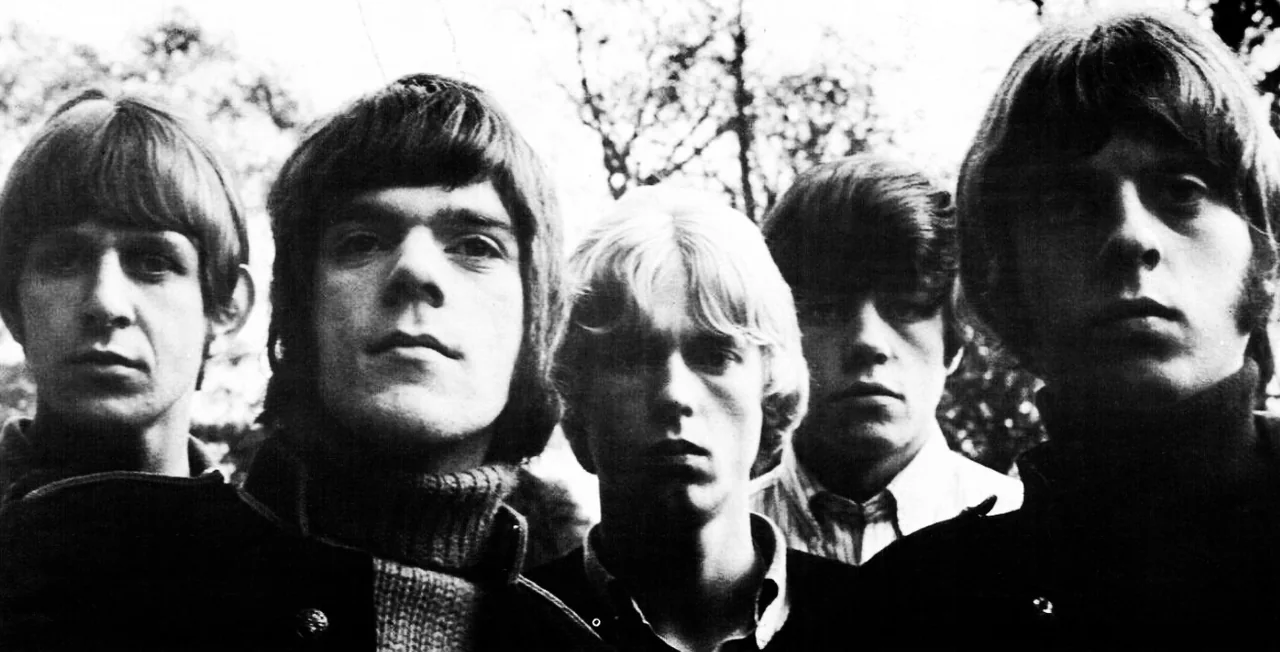
The Move in a 1967 Billboard trade advertisement for “I Can Hear the Grass Grow.”Photo: Deram/London Records / Wikimedia Commons · Licensed under Public domain. Converted to WebP for this page.
Formation & History
The Move formed in Birmingham in December 1965 by drawing five musicians from established local groups: Roy Wood, vocalist Carl Wayne, guitarist Trevor Burton, bassist Ace Kefford and drummer Bev Bevan. Wood wrote the run of early singles that established them nationally: Night of Fear, I Can Hear the Grass Grow, Flowers in the Rain and Fire Brigade all reached the UK Top Five. The self-titled debut followed in April 1968 and reached number fifteen on the UK album chart.
Kefford left in spring 1968, Burton moved to bass and then departed in 1969, and Rick Price briefly filled the bass role. Wayne left in early 1970. Jeff Lynne arrived from the Idle Race for Looking On, leaving Wood, Lynne and Bevan as the final trio. They recorded the Move’s last LP, Message from the Country, while simultaneously creating the debut Electric Light Orchestra album. The final Move single, California Man, appeared in 1972 with Lynne’s Do Ya on the B-side.
Sound & Style
The early singles depend on contrast. Wayne’s clear lead voice and the group’s massed harmonies carry Wood melodies that can sound nursery-like or wistful, while distorted guitar, Bevan’s emphatic drums and sudden changes of texture keep the arrangements unstable. Wood’s palette widened beyond guitar to cello, woodwind, brass and keyboards, allowing music-hall gestures and psychedelic colour to coexist with a hard rock foundation.
The albums progressively loosen that pop compression. Shazam gives six tracks room for instrumental development, spoken introductions and radically expanded covers. Looking On replaces the original quintet’s vocal focus with heavy riffing, cello and dense studio layering, while Lynne’s What? introduces a complementary writing voice. By Message from the Country, extensive overdubbing and the Wood–Lynne contrast point directly toward ELO without erasing the Move’s appetite for parody, country, rock and character songs.
Essential Albums
1968
Move
Regal Zonophone · Original 1968 release
Released in April 1968, the original mono Move captures the five-man lineup after four major singles had already established the band. Wood’s writing moves from the churning opening of Yellow Rainbow and the compressed fantasy of Kilroy Was Here to the institutional nightmare of Cherry Blossom Clinic. Carl Wayne, Trevor Burton, Ace Kefford and Wood divide lead vocals, so the record’s identity comes from ensemble contrast rather than one fixed frontman. Covers of Eddie Cochran and the 1930s standard Zing! Went the Strings of My Heart also show how rock-and-roll and music hall remained inside the psychedelic surface.
Key tracks: Yellow Rainbow · Flowers in the Rain · Cherry Blossom Clinic
Shazam contains only six tracks, split between three Wood compositions and three transformed covers. Hello Susie, first written for Amen Corner, becomes a hard-rock opener; Cherry Blossom Clinic Revisited enlarges the debut’s shorter song with quotations and an extended instrumental passage. The second side pushes Tom Paxton’s The Last Thing on My Mind, Ars Nova’s Fields of People and the Mann–Weil song Don’t Make My Baby Blue far beyond concise pop form. Spoken comments between tracks make the record feel staged, while the long performances preserve the weight of the live band more directly than the debut.
Key tracks: Hello Susie · Cherry Blossom Clinic Revisited · Fields of People
Looking On is the first Move album with Jeff Lynne and the first without Carl Wayne. Its seven tracks make the personnel change audible: Wood’s title track and Brontosaurus favour low riffs, distorted cello and compressed heaviness, while Lynne’s expansive What? introduces a different melodic and studio logic. Open Up Said the World at the Door shifts between writers and sections, and the long Feel Too Good closes with a loose vocal coda. Rather than a simple prototype for ELO, the album documents a short-lived trio discovering how much density it could generate without the original vocal frontman.
Key tracks: Looking On · Brontosaurus · Feel Too Good
The non-album singles are not supplementary trivia: they are half of the Move’s achievement. Night of Fear, I Can Hear the Grass Grow, Flowers in the Rain and Blackberry Way trace Wood’s development from compact psychedelic hooks to orchestral melancholy. Official Charts records seven UK Top Ten singles in all, while only the debut entered the main UK albums chart during the band’s original lifetime.
Message from the Country, released by Harvest in June 1971, is the final Move LP and the clearest companion to the first ELO sessions. Wood and Lynne use extensive overdubbing but retain separate personalities across the ten tracks: the title song and The Words of Aaron pursue dense, serious arrangements, while Ella James, Don’t Mess Me Up and Ben Crawley Steel Company keep the album stylistically unsettled. The later singles Tonight, Chinatown and California Man were not part of the original LP.
The Move show how unstable the borders of late-1960s British pop could be. A number-one single, an extended folk-rock cover, a distorted cello riff and a music-hall parody could all belong to the same catalogue. Their changing personnel prevented that range from settling into a formula: Wayne’s theatrical clarity, Wood’s arrangement instincts, Bevan’s force and Lynne’s later studio writing each pull the story in a different direction.
ELO is an important consequence, not the only reason to listen. The Move’s singles demonstrate exceptional compression, while the albums preserve experiments too eccentric or heavy for those singles. Heard together, they connect psychedelic pop to hard rock, progressive arrangement and glam without becoming fully reducible to any one of them.
RetroForge Records publishes original music and independent editorial guides. This historical band guide is not affiliated with the artist, labels or rights holders. No unlicensed album artwork is reproduced.